Andrew Neil Warns Against ‘Ethno-Christian Nationalism’ in the UK, Cites Dangers of Merging Faith and Politics
Andrew Neil warns against the rise of 'ethno-Christian nationalism' in the UK, urging for a separation of church and state. He discusses Britain's Christian heritage while cautioning against using religion for political gain and highlights concerns about religious extremism.

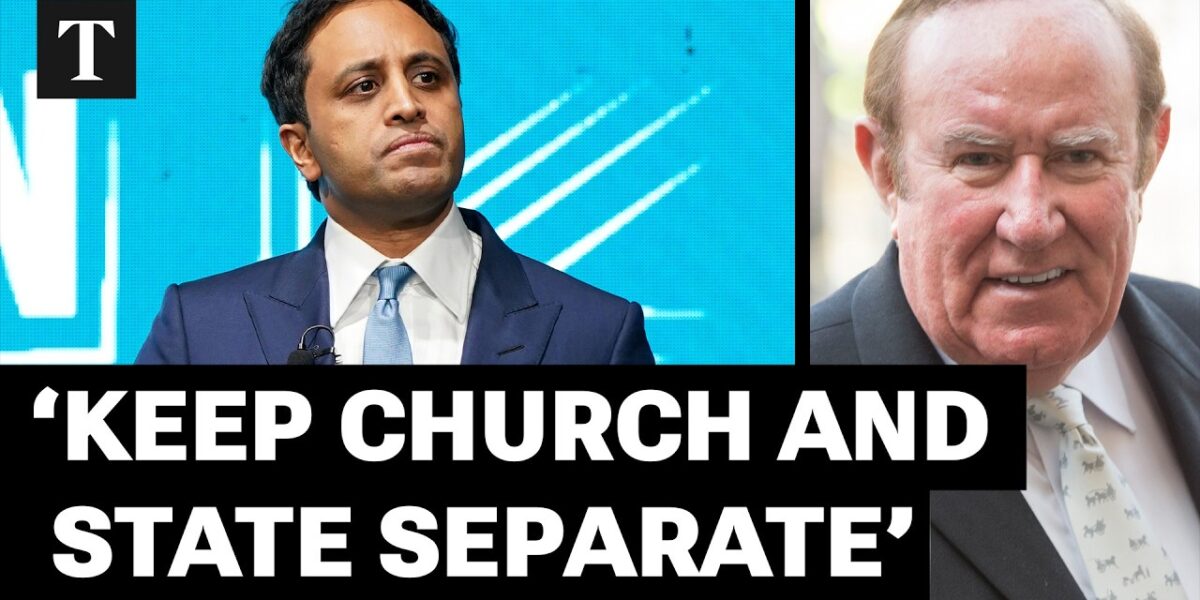
Andrew Neil Sounds Alarm on ‘Ethno-Christian Nationalism’ in Britain
Veteran broadcaster Andrew Neil has issued a strong warning against the rise of ‘ethno-Christian nationalism,’ a phenomenon he observes growing in the United Kingdom, mirroring trends seen in the United States. Neil expressed deep reservations about political parties and movements that use Christianity as a banner for campaigning, arguing that the government should not be involved in promoting or pushing any particular religion. His remarks, made during a recent discussion, highlight concerns about the potential for faith to be instrumentalized for political gain and the historical complexities of religion’s role in British society.
Christian Heritage vs. Contemporary Identity
Neil acknowledged Britain’s profound Christian heritage, stating, “There is no question. We are a country of Christian heritage. Can be no question of that. Christianity was the dominant religion for hundreds and hundreds of years and it has shaped us, our institutions, our attitudes, our values into the country that we are.” He emphasized that understanding British history and its present-day identity necessitates an understanding of this Christian legacy. However, he questioned whether Britain remains a ‘Christian country’ in the sense of a majority of its population identifying as Christian and adhering to its tenets.
Citing opinion polls, Neil noted that a small majority may no longer consider themselves Christian. Yet, he posited that many, including himself, still embody Christian values, even if they are not practicing adherents. “I was brought up as a Presbyterian and although I’m not a practicing Christian, I still retain a lot of the values that my Presbyterian upbringing gave me,” he shared, suggesting a widespread retention of moral frameworks derived from Christian teachings.
Separation of Church and State: A French and American Perspective
Despite acknowledging the historical significance of Christianity, Neil expressed strong skepticism about the government’s role in promoting it. He declared, “Whether it’s the job of the government to push this though, I’m deeply suspicious of.” His stance aligns with principles of separation of church and state, drawing parallels with American and French models. “I’m very American or French on these matters of separation of church and state,” he stated.
Neil reminded listeners that even within Christianity, historical disagreements and conflicts have been prevalent. “Let us not forget that despite our Christian heritage for hundreds of years, the Christians themselves argued among what Christianity meant,” he observed. He pointed to historical discrimination, such as the exclusion of non-Anglicans from Oxford and Cambridge for centuries, which spurred the development of universities in Edinburgh and Glasgow. He also noted the founding of the University of London to accommodate nonconformists. This historical context, he argued, demonstrates that the intertwining of religion and state has often led to division and exclusion, not unity.
The Dangers of Nostalgia and ‘Ethno-Christian Nationalism’
The discussion touched upon Reform UK’s platform, which aims to ‘restore Britain’s Christian heritage’ by, for instance, preventing churches from being converted into mosques. Neil interpreted this as potentially tapping into a nostalgic vision of Britain, characterized by a pre-immigration era of perceived idyllic village life. “I think, you know, nostalgia always sells, but we only remember from our school holidays the days when the sun shone. We don’t remember the days when it was pouring with rain and you couldn’t get out to play,” he remarked.
This sentiment, he warned, can morph into ‘ethno-Christian nationalism’—a concept he strongly opposes for the UK. This ideology, he explained, uses Christianity as a cultural or ethnic identifier rather than purely a religious one, often coupled with exclusionary sentiments. “There is a kind of ethno Christian nationalism abroad in America that I wouldn’t like to see coming to the United Kingdom,” Neil asserted.
He advocated for a modern, inclusive approach: “We’re a country in which all religions should be allowed to flourish and prosper as they see fit, always with a caveat that what they stand for, what they do, what they promulgate doesn’t interfere with the freedoms of the rest of us or doesn’t fly in the face of longstanding values and principles that our country holds dear.”
Addressing Extremism Within Religions
Neil shifted focus to contemporary challenges, expressing greater concern about specific instances of religious extremism than the general presence of diverse faiths. He specifically highlighted concerns within the Muslim community: “There is an element in Britain in in the Muslim religion of the most extreme preachers preaching medieval values from whatever the equivalent of the pope it is in the mosque and getting away with it.” He urged the Muslim majority and authorities to take a firmer stance against such elements, emphasizing that this does not represent the views of most British Muslims but is a “nasty side part of the diversity of religion at the moment.”
He concluded this point by stating, “I would rather we looked at that and left the Christians to sort out their own problems. They’ve been allowed around for long enough to be able to do that.” This suggests a belief that established religious communities should manage their internal issues without governmental intervention, while also highlighting the need to address problematic manifestations of any faith.
The BAFTA Incident: Involuntary Speech and Media Responsibility
The conversation then turned to a controversial incident at the BAFTA awards, where a participant with Tourette’s syndrome, John Davidson, involuntarily uttered a racial slur during a live broadcast. Neil, while acknowledging the film for which Davidson was nominated as a “wonderful film” that sheds light on Tourette’s, strongly criticized the BBC’s decision not to edit or bleep out the offensive word on its iPlayer platform.
Neil argued that the involuntary nature of the outburst should not preclude censorship for the sake of protecting viewers and maintaining dignity. “These are involuntary outbursts. They’re not meant… and it is in no way demeaning to the man himself to bleep it out. And it should be bleeped out,” he insisted. He found the continued presence of the uncensored footage “unbelievable” and suggested that Davidson himself would likely prefer it to be bleeped.
The discussion highlighted the complexities of balancing the rights and experiences of individuals with Tourette’s against the need to prevent deeply offensive language from being broadcast. Listeners’ comments shared during the program underscored this point, with one comparing the situation to censoring involuntary nudity for dignity and another, a person of color, expressing the personal hurt caused by hearing the slur, irrespective of its involuntary origin.
Neil concluded the segment by expressing hope that the controversy might encourage more people to watch the critically acclaimed film, thereby highlighting the important issue of Tourette’s syndrome. However, he reiterated his firm belief that the BBC should act swiftly to remove the offensive word from the broadcast.
The overall discourse presented by Andrew Neil emphasizes a nuanced perspective on religion in public life, advocating for the protection of religious freedom while cautioning against the politicization of faith and the dangers of exclusionary ideologies. He also underscored the responsibilities of media outlets in handling sensitive content, particularly when involuntary speech is involved.
Source: Andrew Neil: I Don’t Want American ‘Ethno-Christian Nationalism’ In the UK (YouTube)

Related Articles

Reform UK’s Euphoria Curtailed by By-Election Setback
Reform UK's ambitions have been tempered by a recent by-election loss in Gorton and Denton, suggesting a plateau in their support. While the party still holds significant appeal, factors like candidate perception and broader voter consolidation against them pose challenges. The result prompts a strategic re-evaluation for Reform and has implications for the wider political landscape.

Green Party Wins Historic By-Election in Labour Heartland
The Green Party has achieved an historic victory in the Gorton and Denton by-election, securing 40% of the vote and pushing Labour into third place. This result signals a potential realignment of voters and a significant challenge to Keir Starmer's leadership.

Green Party Stuns UK Politics in Shock By-Election Win
The Green Party has achieved a stunning victory in the Gorton and Denton by-election, a seat traditionally held by Labour for nearly a century. The result signifies a major upset, with Labour's vote share collapsing and highlighting deep voter dissatisfaction. Reform UK also saw gains but failed to secure the win, while Conservatives and Liberal Democrats experienced significant declines.