Amidst Domestic Setbacks, Trump Primes for ‘Initial Attack’ on Iran as Geopolitical Tensions Soar
Amidst a significant US military buildup in the Persian Gulf and a recent Supreme Court ruling curtailing his executive power on tariffs, President Donald Trump faces mounting pressure. Experts suggest these converging factors could make an initial military strike against Iran more likely, despite profound uncertainties regarding its objectives and the complexities of regime change. The situation underscores the precarious interplay between domestic political challenges and high-stakes foreign policy decisions.

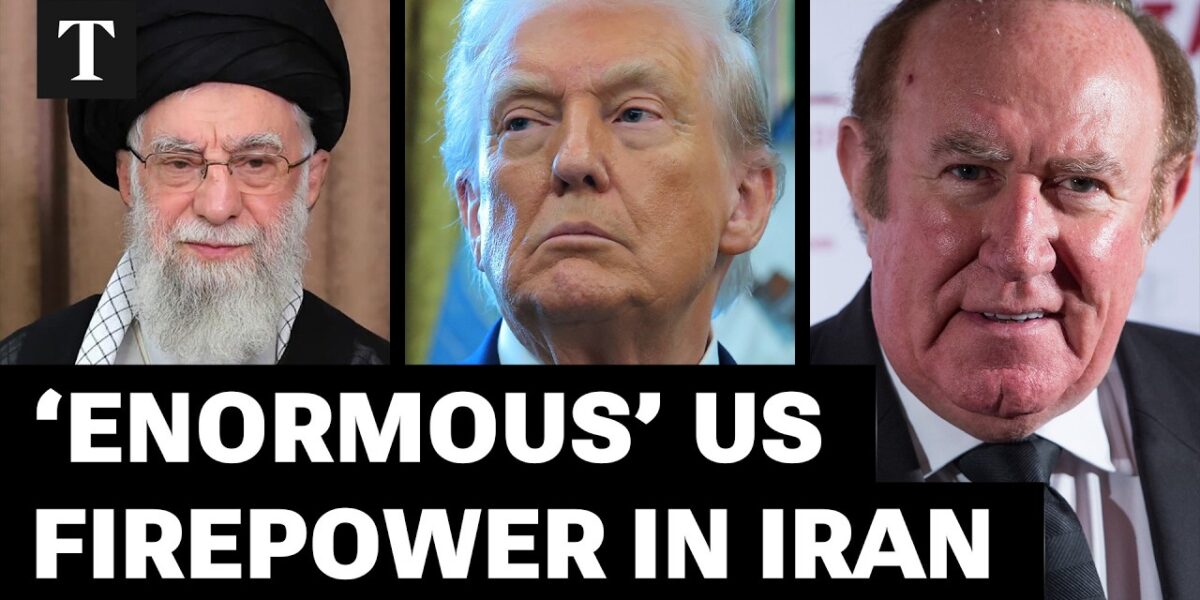
Amidst Domestic Setbacks, Trump Primes for ‘Initial Attack’ on Iran as Geopolitical Tensions Soar
The geopolitical landscape is fraught with peril as the United States, under the leadership of President Donald Trump, navigates a complex web of international confrontations and domestic political challenges. A significant military buildup in the Persian Gulf, coupled with a recent Supreme Court ruling that severely curtailed Trump’s executive power on tariffs, has created a volatile environment. Esteemed journalist and commentator Andrew Neil, among other analysts, has suggested that these converging pressures could paradoxically make an initial military strike against Iran more, rather than less, likely.
The situation in the Middle East is particularly tense, with a massive deployment of American military assets raising alarms across the globe. Concurrently, President Trump faces a critical test of his executive authority following a landmark Supreme Court decision that has stripped away some of his most potent tariff-setting powers, a cornerstone of his economic policy. This confluence of events has led to intense speculation about the administration’s next moves, with experts debating the true intent behind the military posturing and the potential ramifications of a president feeling cornered domestically.
Escalating Tensions: The US Military Buildup in the Persian Gulf
The current US military presence in the region is unprecedented in its scale and sophistication, prompting widespread concern and analysis. What began as a perceived deterrent or a bargaining chip in negotiations with Tehran has evolved into a deployment capable of sustaining prolonged military action, a clear departure from previous, more limited interventions.
More Than a Bargaining Chip?
Many initial observers speculated that the significant US military buildup – including aircraft carriers, bomber task forces, and Patriot missile systems – was primarily a strategic bluff. The idea was that President Trump was positioning these assets to demonstrate resolve and seriousness, compelling Iran to take diplomatic talks more seriously. However, as Andrew Neil and other military analysts have pointed out, the sheer magnitude of the deployment far exceeds what would be necessary for a mere show of force or a brief, punitive strike. “If it’s simply a bargaining tool, it’s overkill,” Neil asserted, echoing the sentiments of American military experts.
The deployment is not designed for a quick, in-and-out operation, such as the limited strikes seen in the past. Instead, it represents the capability to launch and sustain a comprehensive, multi-front attack over an extended period. Such an assembly of power, involving vast logistical support and complex coordination, is not easily achieved or maintained. Military strategists often argue that deploying forces of this scale without a genuine intent to use them is not only costly but also unsustainable and detrimental to military readiness and morale. The very act of assembling such a formidable force suggests a serious consideration of its application, shifting the narrative from a mere diplomatic lever to a genuine threat of military intervention.
The Elusive Objectives of a Potential Strike
One of the most critical and unsettling aspects of the current situation, as highlighted by Neil, is the profound lack of clarity regarding the United States’ ultimate objectives should military action be initiated. Without a clearly articulated set of goals, any military engagement risks becoming an open-ended quagmire with unpredictable and potentially disastrous consequences. “We do not know what are the objectives. What are the aims? What is hoped to be achieved by a military attack?” Neil questioned, underscoring a fundamental concern shared by many international policy experts.
The potential objectives could range from a narrow focus on degrading Iran’s nuclear capabilities or missile arsenals to the far more ambitious and destabilizing goal of regime change. Each of these objectives carries vastly different implications for the scope, duration, and aftermath of any military action. A limited strike on specific facilities, while still risky, is fundamentally different from an attempt to dismantle the existing government in Tehran. The ambiguity surrounding these aims creates a dangerous vacuum, making it difficult for allies to align, for adversaries to respond predictably, and for the international community to gauge the potential fallout. Past interventions, particularly in the Middle East, have demonstrated the severe consequences of embarking on military campaigns without a well-defined end-state, often leading to protracted conflicts, regional instability, and unintended humanitarian crises. Until the United States clearly articulates its purpose, the entire exercise remains fraught with peril and uncertainty.
Iran’s Resilience and Response Capabilities
While the United States possesses overwhelming military superiority, Iran is not a nation to be underestimated. With decades of experience in navigating regional conflicts and international pressure, Tehran has developed a sophisticated, albeit unconventional, defense strategy aimed at ensuring the survival of its regime.
A Wary Adversary with Mobile Assets
Iran has long anticipated potential military confrontations with external powers, particularly the United States and Israel. This foresight has allowed it to develop a strategy centered on resilience, asymmetric warfare, and the mobility of its assets. Unlike conventional forces that might be concentrated in easily targetable bases, Iran has invested heavily in mobile missile launchers, hidden command centers, and a network of proxy forces across the region. These assets are designed to be difficult to track and neutralize, complicating any aerial campaign.
As one American military analyst noted, Iran has had ample time to develop strategies to evade detection and absorb initial blows. Its leadership, particularly the Ayatollah, views survival as the paramount objective. This contrasts sharply with the American objective, which, for a “win,” would likely necessitate the complete eradication of the threat as perceived by Washington. This fundamental difference in objectives highlights a significant risk for the American side: Iran does not need to defeat the US outright; it merely needs to survive and inflict enough damage to make a prolonged engagement politically untenable for Washington. This resilience, combined with a willingness to absorb considerable losses, presents a unique challenge to any military strategy focused on decisive victory.
Underestimating Iran’s Military?
While Iran’s conventional military capabilities, particularly its air force, are largely outdated – described by Andrew Neil as “pre-1980” and having been “degraded by America and by Israel last summer” – it would be a mistake to entirely discount its capacity to inflict damage. The country has invested in smaller, more agile forces, including fast attack boats, drones, and a formidable missile arsenal, many of which are mobile and difficult to locate.
The United States undoubtedly possesses unparalleled air power, tracking capabilities, and advanced weaponry that can “discombobulate anything Iran has,” as Neil put it. A direct, conventional military confrontation would likely see Iran’s forces overwhelmed. However, Iran’s strategy is not to engage in a symmetric fight. Instead, it would likely leverage its asymmetric capabilities, launch retaliatory strikes against regional targets, disrupt shipping in vital waterways like the Strait of Hormuz, and activate its network of proxy groups to destabilize the broader Middle East. While these actions might not prevent an initial US attack, they could impose significant costs, both economic and geopolitical, making a US “victory” far from straightforward and potentially igniting a wider regional conflict. The question then becomes not just about military superiority, but about the ability to control escalation and manage the aftermath of any engagement.
The Complexities of Regime Change and Domestic Unrest
Beyond the immediate military considerations, any discussion of intervention in Iran inevitably confronts the thorny issue of regime change – a goal that has proven elusive and often counterproductive in modern history.
The Illusion of “Boots on the Ground”
A full-scale invasion of Iran, involving “boots on the ground,” is widely considered to be politically unfeasible and strategically undesirable for the United States. There is virtually “no appetite, any constituency in America for boots on the ground in Iran,” as Neil observed. The memory of protracted wars in Iraq and Afghanistan, with their immense human and financial costs, weighs heavily on the American public and political establishment.
This leaves air power as the primary tool for any military intervention. However, history offers few examples of regimes being toppled solely through aerial bombardment. While air strikes can degrade military capabilities, disrupt infrastructure, and sow chaos, they rarely lead directly to the collapse of a determined government. The hope, often, is that such external pressure will empower internal opposition forces to rise up. Indeed, there have been reports of renewed protests in Iran, particularly among students, demonstrating on weekends. However, relying on these nascent movements to overthrow a deeply entrenched, authoritarian regime through external aerial support alone is a precarious gamble. The logistical and political challenges of supporting such an uprising, coupled with the risk of unintended civilian casualties further alienating the populace, make it a high-stakes proposition.
The Absence of a Viable Alternative
Another critical factor complicating the prospect of regime change in Iran is the absence of a unified, credible, and ready-to-govern opposition. Unlike the situation in Venezuela, where an elected opposition leader had a clear claim to power, there is no equivalent in Iran. This lack of a coherent alternative raises the specter of chaos and civil strife in the event of a regime collapse, rather than a smooth transition to a more acceptable government.
Andrew Neil reflected on this challenge, acknowledging the widespread desire to see the end of the current “tyranny in Tehran.” He highlighted Iran’s immense potential: a “well-educated, entrepreneurial population with a culture going back 3,000 years.” A country with a “decent government,” even a mildly authoritarian one that respected basic human rights, particularly those of women, could “expand and prosper and become a real force in the world.” The “prize is huge,” Neil conceded. However, the path from the current regime to such a future, particularly through military means, remains a “mystery.” Without a clear succession plan or a strong, unified opposition, external intervention risks merely replacing one form of instability with another, potentially more dangerous, vacuum of power.
Trump’s Domestic Setback: Tariffs and Constitutional Power
Adding another layer of complexity to President Trump’s foreign policy considerations is a significant domestic legal defeat concerning his signature economic policy: tariffs. A recent Supreme Court ruling has delivered a major blow to his executive authority, reasserting congressional power over trade.
A Major Blow to a Signature Policy
The Supreme Court’s decision against President Trump’s tariff regime represents a profound setback for an administration that had made tariffs a central pillar of its economic and trade strategy. Tariffs, described by Neil as Trump’s “signature economic policy” and his “favorite word in the dictionary,” were deployed not only to pursue economic objectives but also, at times, to settle “personal vendettas.” The ruling specifically targeted the most powerful types of tariffs that Trump had in his arsenal, deeming them illegal.
This legal defeat undermines a key instrument through which Trump sought to exert leverage over trading partners and enforce his “America First” agenda. It signals a clear limitation on presidential power in an area where Trump had previously enjoyed considerable latitude, often acting unilaterally. The ruling, therefore, is not merely a technical legal adjustment but a substantive curtailment of the President’s ability to shape economic policy through executive fiat, forcing a re-evaluation of his trade strategy.
Reassertion of Congressional Authority
The Supreme Court’s decision is fundamentally a reassertion of the constitutional principle that legislative bodies, in this case, Congress, hold the power to levy taxes and tariffs. As Neil succinctly put it, “the constitution is quite clear that it is the congress that sets taxes and tariffs are a tax, not the president.” While Congress has, over time, delegated some tariff-setting authority to the President through acts in the 1960s and 1970s, these powers are now understood to be more circumscribed than the Trump administration had interpreted.
The ruling clarifies that the President’s remaining tariff powers are limited, and crucially, he must now report to Congress on their use. This development effectively places President Trump “on something of a leash,” as Neil observed, should Congress choose to exercise its oversight. This rebalancing of power between the executive and legislative branches is a significant constitutional moment, reaffirming the system of checks and balances envisioned by the Founding Fathers. It also carries immediate political implications, especially with the looming November elections, where control of Congress could further constrain the President’s agenda.
A Defense of Democracy Against Monarchy
Beyond the immediate policy implications, the Supreme Court ruling has been hailed by some, including Andrew Neil, as a profound defense of democratic principles against what they perceive as an overreach of executive power. Neil described the various opinions within the Supreme Court ruling as “beautifully written” and, in the context of America’s 250th anniversary, “effectively a defense of democracy against monarchy.”
The majority opinion, notably, garnered support across the ideological spectrum, with three liberal and three conservative justices, including two appointed by Donald Trump himself, concurring. This bipartisan consensus underscores the ruling’s grounding in constitutional principles rather than partisan politics. Neil sharply contrasted the judges’ thoughtful and well-reasoned decisions with President Trump’s furious reaction, which included attacking the judges and accusing the Supreme Court of “treachery” and being “traitors.” Such attacks, Neil argued, represented “the lowest ebb yet of this presidency,” likening Trump’s behavior to an “ex cathedra use of powers to pursue personal whims” – a stark comparison to historical monarchs, and even going so far as to suggest that “George the Third was a model of restrained and civilized leadership compared to” Trump’s conduct. This reassertion of the separation of powers and the judiciary’s role in upholding the Constitution is seen by many as a vital safeguard against unchecked executive authority.
The Interplay: Domestic Weakness, International Aggression?
The convergence of these two major developments – the escalating tensions with Iran and the domestic legal defeat on tariffs – creates a volatile and unpredictable dynamic. Analysts are now grappling with how a domestically constrained president might respond on the international stage.
A Perilous Link
Curiously, Andrew Neil suggested that the setback on tariffs might make an attack on Iran “more than likely.” This seemingly counterintuitive link posits that a president facing a significant domestic political defeat might be inclined to project strength abroad as a distraction or to reassert his authority. Foreign policy, particularly military action, often offers a president a degree of unilateral power not available in domestic policy, especially when facing a challenging Congress or an unfavorable court ruling.
Such a move could be an attempt to rally nationalist sentiment, shift media attention, or demonstrate a resolve that was challenged by the Supreme Court. However, this strategy carries immense risks. Launching military action under such circumstances could be perceived as impulsive or politically motivated, further eroding international trust and potentially leading to unintended escalations. Moreover, the uncertainty surrounding Trump’s remaining tariff powers continues to cloud the picture for America’s allies and trading partners, leaving them unsure of how to navigate the shifting landscape of US trade policy. The British government’s hesitation to announce retaliatory tariffs, as noted in the discussion, exemplifies this global uncertainty, as “nobody knows what to do,” not even, perhaps, President Trump himself.
Navigating a Shifting Geopolitical Landscape
The global implications of US-Iran tensions are vast, impacting oil markets, regional stability, and the broader international security architecture. Any military action, however limited, risks drawing in other regional and global powers, potentially igniting a conflict far beyond the immediate combatants. The role of international diplomacy, multilateral institutions, and the careful management of de-escalation mechanisms becomes paramount in such a volatile environment.
The current situation demands not only strategic foresight but also a clear understanding of red lines, objectives, and exit strategies. The confluence of a powerful military buildup, ambiguous goals, a resilient adversary, and a domestically challenged US presidency creates a cocktail of risk that could have profound and lasting consequences for the Middle East and the world.
Conclusion
The current geopolitical moment is defined by a dangerous convergence of factors: a formidable US military buildup in the Persian Gulf, the unsettling ambiguity surrounding the objectives of any potential military action against Iran, and a significant domestic legal defeat for President Donald Trump regarding his signature tariff policy. While the desire to curb Iran’s nuclear ambitions and address its destabilizing regional activities is understandable, the path to achieving these goals through military means is fraught with peril, particularly in the absence of clear objectives and a viable post-intervention strategy.
The Supreme Court’s reassertion of congressional power over tariffs highlights the vital role of constitutional checks and balances, even as it potentially pushes a domestically constrained president towards more decisive action on the international stage. The international community, allies and adversaries alike, watches with bated breath as the Trump administration navigates these complex challenges, hoping for clarity, restraint, and a commitment to diplomatic solutions over military confrontation. The stakes could not be higher for regional stability and global peace.
Source: Trump Primes For ‘Initial Attack’ On Iran | Andrew Neil (YouTube)

Related Articles
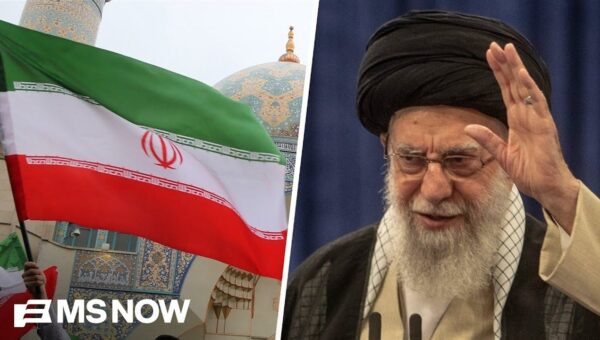
Iran Celebrates After Israeli Strikes Eliminate Top Leaders
Following Israeli airstrikes that reportedly killed Iran's Supreme Leader and top staff, celebrations have erupted among the Iranian diaspora. While a "monumental event," analysts caution against immediate expectations of a smooth democratic transition due to the IRGC's power and a divided opposition.
Dem Rep. Gomez: Trump Was Never Truthful About Peace
California Congressman Jimmy Gomez criticized the Trump administration's handling of intelligence regarding Iran, stating the President was "never truthful" about his intentions. Democrats plan to force a vote on a War Powers resolution, arguing the recent military actions lacked justification and congressional approval.
Trump Open to Iran Talks After Attacks, Shifts on Regime Change
President Trump has agreed to negotiate with Iran's new leadership following recent U.S. and Israeli attacks, signaling a potential shift from his regime change objective. The move has drawn scrutiny from former officials who question the strategic coherence of U.S. policy.