America’s Immigration Impasse: A ‘Front Yard Battle’ Threatening National Cohesion and Prosperity
The U.S. immigration system, stalled by political gridlock since 1986, has become a 'front yard battle' threatening national prosperity and cohesion. This dysfunction creates an exploited underclass, undermines the rule of law, and inadvertently strengthens organized crime, despite immigration's historical economic benefits. A comprehensive, bipartisan reform is urgently needed to address this unsustainable crisis.

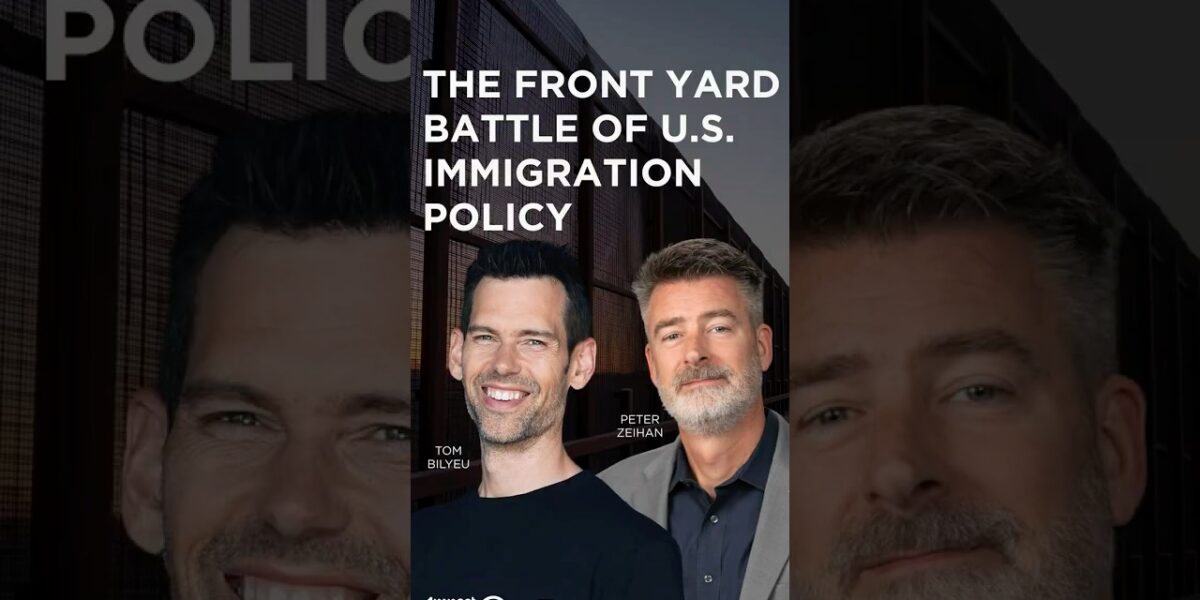
America’s Immigration Impasse: A ‘Front Yard Battle’ Threatening National Cohesion and Prosperity
The United States finds itself locked in a protracted and increasingly perilous struggle over its immigration policy, a stalemate described as a “front yard battle” that threatens to unravel the nation’s economic vitality, cultural fabric, and the very rule of law. Decades of political inertia, marked by the absence of meaningful reform since 1986, have culminated in a dysfunctional system that satisfies no one, exacerbates societal divisions, and creates a dangerous “nether world” for millions.
At the heart of the crisis lies a fundamental paradox: a nation built by immigrants, historically reliant on their contributions for growth and innovation, has deliberately allowed its immigration system to decay into a state of chronic dysfunction. Experts warn that the current trajectory, characterized by a relentless focus on enforcement without corresponding pathways to regularization, is not only economically irrational but also socially corrosive, creating an environment ripe for exploitation and undermining the foundational principles of American society.
The Long Shadow of Stalled Reform: Four Decades of Legislative Gridlock
The stark reality is that the United States has not enacted comprehensive immigration reform in nearly four decades. The last significant legislative overhaul, the Immigration Reform and Control Act (IRCA) of 1986, represented a grand bargain: it granted amnesty to nearly three million undocumented immigrants who had entered the country before 1982, coupled with enhanced border enforcement and employer sanctions designed to deter future illegal immigration. While IRCA aimed to resolve the issue of a large undocumented population and curb future flows, its enforcement mechanisms proved inadequate, and the political will for subsequent, necessary adjustments quickly evaporated.
Since IRCA, numerous attempts at reform have faltered. From the bipartisan efforts of the early 2000s, including the proposed McCain-Kennedy bill, to the comprehensive immigration reform push under President Obama, each initiative has succumbed to intense partisan polarization, ideological purity tests, and a deep-seated inability for lawmakers to find common ground. Both sides of the political aisle, as one observer notes, have “deliberately made that impossible,” prioritizing political posturing over practical solutions. This legislative paralysis has left the nation operating under an antiquated framework, ill-suited to the complexities of a 21st-century globalized world and the dynamic realities of migration.
The Economic Imperative: Why Immigration Has Been America’s Enduring Strength
From an economic perspective, the current hostility towards immigration, particularly the idea of reducing it to zero, is deemed “incredibly stupid.” For over 150 years, immigration has been an indispensable engine of American success, fueling industrial revolutions, technological advancements, and economic expansion. Immigrants have consistently filled critical labor gaps, from agriculture and construction to healthcare and technology, often taking jobs that native-born workers are less willing to do. They are disproportionately entrepreneurial, starting businesses at higher rates and contributing to innovation and job creation.
The economic benefits of immigration are multi-faceted:
- Labor Force Growth: As the U.S. population ages and birth rates decline, immigration becomes crucial for maintaining a robust workforce. Immigrants tend to be younger and have higher labor force participation rates, counteracting demographic trends that would otherwise lead to labor shortages and a shrinking tax base.
- Innovation and Entrepreneurship: Immigrants are overrepresented among patent holders and founders of high-tech startups. Their diverse perspectives and skills drive innovation, creating new industries and expanding existing ones.
- Economic Demand: Immigrants are consumers, buying goods and services, paying taxes (sales, property, and often income taxes, even if undocumented through ITINs), and contributing to local economies.
- Fiscal Contributions: Numerous studies have shown that immigrants, both authorized and unauthorized, contribute billions of dollars annually in taxes, often paying into systems like Social Security and Medicare from which they may never fully benefit.
At a time when the U.S. faces significant demographic challenges—an aging population, declining fertility rates, and a looming Social Security solvency crisis—curtailing immigration is akin to “gutting the labor market.” It exacerbates these long-term trends, threatening future economic growth and the nation’s ability to sustain its social safety net. The current policy framework, by restricting legal pathways and creating a climate of fear, actively discourages the very demographic and economic contributions that have historically underpinned American prosperity.
The Cultural Conundrum: Assimilation, Integration, and the ‘Underclass’
While the economic argument for immigration is compelling, the cultural dimension presents a more complex, often contentious, debate. The concern, as articulated, is that an “unrestricted immigration system where people are not registered” can lead to the creation of a “permanent underclass of people who are not assimilated.” This, it is argued, results in American culture “competing in its own front yard.”
This perspective touches on deep-seated anxieties about national identity, social cohesion, and the capacity of society to absorb new populations. However, it’s crucial to differentiate between the concepts of assimilation and integration, and to understand how legal status profoundly impacts both. Assimilation often implies a complete shedding of one’s original cultural identity in favor of the host culture. Integration, on the other hand, suggests a process where immigrants participate fully in society while retaining aspects of their heritage, contributing to a richer, more diverse national tapestry.
The core issue highlighted is not necessarily immigration itself, but the lack of legal status. When individuals cannot obtain legal status, they are effectively pushed into the shadows. This creates a cascade of negative consequences that actively *hinder* integration and create the very “underclass” feared:
- Economic Marginalization: Without legal status, immigrants often cannot obtain official identification, open bank accounts, or access formal employment. This forces them into a cash-based, informal economy, making them vulnerable to exploitation, wage theft, and denying them access to credit and other financial services essential for upward mobility.
- Social Isolation and Fear: Living in constant fear of deportation, many undocumented individuals are reluctant to interact with official institutions, including law enforcement, schools, and healthcare providers. This creates a barrier to civic engagement and community participation.
- Undermining Rule of Law: The most significant cultural and societal impact of this “underclass” is its effect on the rule of law. If people “won’t go to the police if there’s a problem,” because they fear deportation or legal repercussions, then a segment of the population becomes effectively unprotected by the state. This creates an “underbelly that undermines rule of law at every level.” It allows organized crime, human traffickers, and exploitative employers to operate with impunity, knowing their victims are unlikely to seek official recourse.
The argument is not that culture *must* be homogenous, but that a shared commitment to the rule of law and participation in formal societal structures is essential for stability. Legal status, far from being a mere bureaucratic formality, is the gateway to this participation. It empowers individuals, allows them to report crimes, access services, and contribute openly to society, thereby strengthening, rather than fragmenting, the national fabric.
The ‘Nether World’: A Perfect Storm for Crime and Instability
The current U.S. immigration policy has inadvertently created what is described as a “nether world,” a dangerous limbo where migrants are prosecuted and subjected to enforcement actions while simultaneously being denied viable options for regularization. This contradictory approach, the commentary suggests, has forged “the perfect storm” for a host of undesirable outcomes:
- Increased Crime Rates: When a significant portion of the population lives outside the formal legal system, it creates conditions ripe for crime. Vulnerable individuals, unable to access legal protection or recourse, become targets for criminals. The reluctance to report crimes due to fear of deportation means that criminal activity often goes unpunished, emboldening perpetrators.
- Spread of Organized Crime and Cartels: The absence of legal pathways for migration funnels desperate individuals into the hands of human smugglers and transnational criminal organizations. These groups thrive on the illegality and desperation of the situation. Once established, their networks facilitate not only human trafficking but also drug smuggling, extortion, and other illicit activities, allowing them to “spread across the border nearly as easily.” Legal status, by providing legitimate avenues, would significantly weaken the cartels’ business model.
- Drug Proliferation: The same networks that traffic people are often involved in drug trafficking. By creating a chaotic and uncontrolled border environment, coupled with an unprotected underclass within the country, the current policy inadvertently makes it easier for drugs to “get into every community very, very easily.”
This “nether world” is a self-perpetuating cycle of instability. Enforcement-only approaches, without accompanying regularization options, merely push the problem further into the shadows, making it harder to track, control, and address. It expends vast resources on reactive measures while neglecting proactive solutions that could integrate individuals, strengthen communities, and enhance national security.
The Dire Consequences of Political Paralysis
The consequences of this prolonged political paralysis are profound and far-reaching. The U.S. is simultaneously grappling with a demographic decline, a gutting of its labor market, and an increase in organized crime and social instability, all exacerbated by its broken immigration system. The argument is clear: “There’s nothing about this moment on either side that makes any sense.”
The human cost is immense, marked by family separations, humanitarian crises at the border, and the daily struggles of millions living in fear and uncertainty. Economically, the nation foregoes billions in potential tax revenue and innovation. Socially, it fosters division and mistrust, creating a parallel society that operates outside the formal structures of governance and law. Security-wise, it empowers criminal enterprises and makes effective border management more challenging.
A functional immigration system, one that balances security with economic needs and humanitarian considerations, is not a radical idea but a pragmatic necessity. It would involve:
- Securing the Border Effectively: Moving beyond walls and towards smart technology, increased personnel, and streamlined processing for asylum seekers and legal crossings.
- Creating Robust Legal Pathways: Expanding visas for skilled workers, agricultural laborers, and family reunification, aligned with economic needs and demographic realities.
- Regularization for Long-Term Residents: Developing a fair and efficient process for undocumented individuals who have lived and contributed to the U.S. for years to earn legal status, often tied to criteria like continuous presence, lack of criminal record, and tax payments.
- Streamlined Asylum Processing: Ensuring humane and efficient processing for those genuinely seeking asylum, in compliance with international and domestic law.
- Employer Verification: Implementing a universal, reliable employer verification system to prevent the hiring of undocumented workers, thereby removing the economic incentive for illegal immigration.
These components, often proposed in past comprehensive reform efforts, represent a balanced approach that addresses both enforcement and integration. The current piecemeal, often punitive, approach is demonstrably failing on all fronts.
Conclusion: A Call for Pragmatism and Bipartisan Action
The “front yard battle” over U.S. immigration policy is not merely a political talking point; it is a critical challenge with tangible, detrimental impacts on the nation’s future. The current state of affairs, born from decades of political intransigence, is economically self-defeating, culturally divisive, and a direct threat to the rule of law. By creating a permanent underclass and empowering criminal networks, the U.S. has inadvertently engineered a crisis that undermines its own prosperity and security.
The path forward demands a radical shift from partisan gridlock to pragmatic, bipartisan problem-solving. It requires acknowledging that a comprehensive approach – one that combines secure borders with realistic legal pathways, and offers regularization options for long-term residents – is not an act of capitulation but a strategic imperative. Until such reform is achieved, the United States will continue to struggle in this self-made “nether world,” paying an ever-increasing price in economic potential, social cohesion, and national security.
Source: The Front Yard Battle of U.S. Immigration Policy (YouTube)

Related Articles

Trump’s Judicial Clash: A Threat to Constitutional Order?
Former President Trump's public criticism of Supreme Court rulings and perceived attempts to circumvent judicial authority have raised alarms about a potential constitutional crisis. Legal experts emphasize the judiciary's reliance on public trust and adherence to the rule of law, especially in the face of executive challenges.

Judge Threatens Trump Administration with Criminal Contempt
A Minnesota federal judge has threatened the Trump administration's ICE agency with criminal contempt for repeatedly violating court orders. This action is part of a growing trend of federal judges asserting their authority against perceived defiance from the administration.


Judge Jeanine Pirro Concedes in Trump-Linked Prosecution Attempt
Jeanine Pirro, a U.S. Attorney linked to Donald Trump, has reportedly halted efforts to indict six members of Congress after a grand jury unanimously rejected the case. This development is seen as a significant setback and a victory for the rule of law, raising questions about accountability for prosecutorial overreach.