America’s Collapse: A Historical Echo of Empires
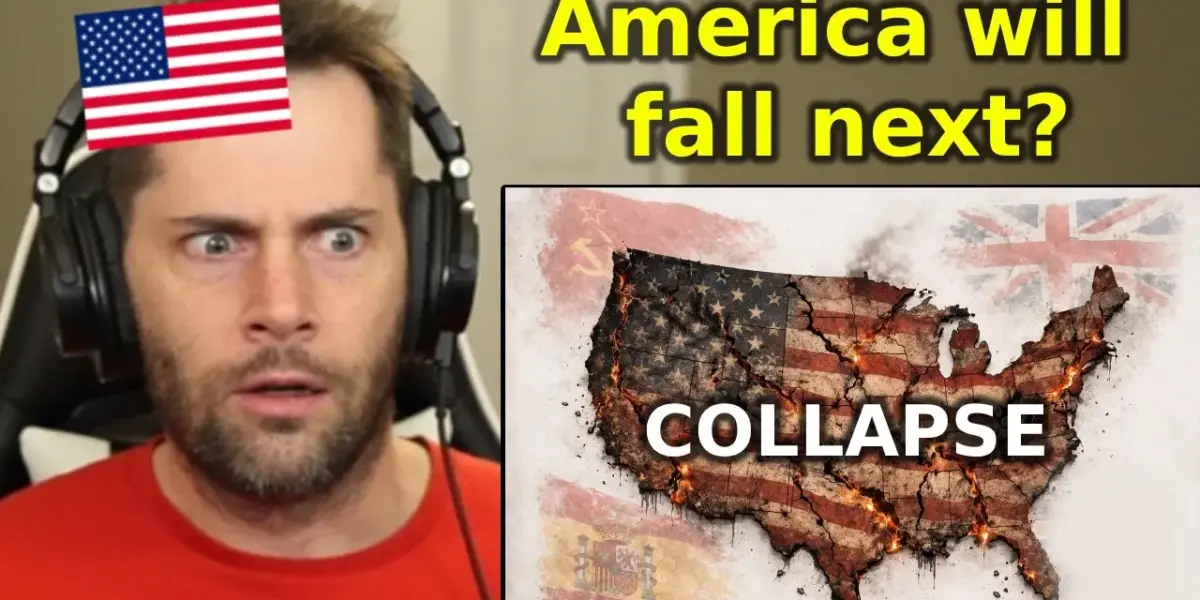
An average American's reaction to a video detailing a seven-stage collapse pattern reveals unsettling historical parallels between the U.S. and fallen empires like Spain, Britain, and the Soviet Union, suggesting America is already deep within this cycle.

America’s Collapse: A Historical Echo of Empires
A recent analysis, presented through the lens of an “average American” reacting to a video by Parallel Truth, posits a chilling historical parallel: the United States may be following a seven-stage collapse pattern that has historically dismantled global superpowers. This perspective, while unsettling, compels a deeper examination of the nation’s current trajectory by drawing stark comparisons to the downfalls of Spain, Great Britain, and the Soviet Union.
The Seven Stages of Imperial Decline
The core of the argument lies in a recurring historical sequence that allegedly leads to the demise of dominant nations. The video, and the reaction to it, outlines these stages:
- Stage 1: Military Overextension: Empires expand their military commitments beyond their economic capacity, leading to unsustainable costs.
- Stage 2: Currency Debasement: To meet financial obligations, a nation begins to devalue its currency, often through inflation or reducing its intrinsic value.
- Stage 3: Debt Spiral: Persistent deficits lead to a cycle of borrowing, default, and restructuring, creating an insurmountable debt burden.
- Stage 4: Loss of Productive Capacity: Wealth accumulation without corresponding production leads to reliance on imports and a decline in domestic industry.
- Stage 5: Social Decay: Economic hardship fuels crime, emigration of skilled individuals, declining trust in institutions, and societal fragmentation.
- Stage 6: Loss of Reserve Currency Status: International confidence wanes, leading allies to diversify, and trade to shift to other currencies.
- Stage 7: Total Collapse: The final stage, characterized by sudden implosion rather than gradual decline, often triggered by the failure of the reserve currency and inability to fund the military.
The reaction to the video highlights a prevalent sentiment among Americans: a degree of denial or disbelief that such a fate could befall the United States. Phrases like “couldn’t happen to us” and “there’s definitely a large part of denial I in me” capture this sentiment. However, the compelling historical examples presented—Spain in the 16th and 17th centuries, Great Britain in the 20th century, and the Soviet Union in the late 20th century—force a confrontation with the possibility.
Historical Parallels and American Realities
The analysis meticulously details how each historical superpower succumbed to this pattern:
Spain, once the wealthiest empire controlling vast amounts of gold and silver, bankrupted itself through relentless military campaigns across multiple continents. Its currency, the Spanish real, was once globally accepted, but currency debasement and a failure to maintain productive capacity led to its decline.
Great Britain, ruling the largest empire in history with the pound sterling as the global reserve currency, was financially crippled by two World Wars. Despite its vast holdings, military overextension and the subsequent debasement of the pound led to the loss of its empire and economic power.
The Soviet Union, a 20th-century superpower with immense military might, collapsed not from external invasion but from internal economic exhaustion. Its military overextension, coupled with a stagnant and inefficient centrally planned economy, led to currency failure and eventual dissolution.
The critical, and perhaps most disturbing, aspect of the analysis is the assertion that the United States is already deep within this pattern, having completed five of the seven stages. The reaction points to several concerning parallels:
- Military Overextension: The U.S. maintains hundreds of military bases and troops in numerous countries, with a defense budget exceeding that of the next ten nations combined. This global presence, while projecting power, is presented as a significant drain.
- Currency Debasement: The shift from the gold standard to a fiat currency, coupled with significant increases in the money supply, particularly in recent years, is seen as a modern form of currency debasement, leading to a substantial loss of purchasing power.
- Debt Spiral: The national debt, exceeding $36 trillion and representing over 120% of GDP, with interest payments alone nearing $1 trillion annually, is highlighted as a critical indicator of a debt spiral.
- Loss of Productive Capacity: The outsourcing of manufacturing and a growing reliance on imports for essential goods are presented as evidence of a declining ability to produce domestically, mirroring Spain’s fate.
- Social Decay: Declining trust in institutions, rising crime, homelessness, drug crises, and political polarization are cited as symptoms of social decay, aligning with the fifth stage.
The video suggests that the U.S. is currently at Stage 5, social decay, a stage that preceded complete collapse for the Soviet Union and Britain. The concern is amplified by the fact that collapse can occur at any stage, not necessarily at Stage 7.
Why This Matters
The analysis, despite its grim prognosis, serves as a vital call to awareness. It moves beyond vague anxieties about national decline to offer a structured, historically grounded framework for understanding potential vulnerabilities. For Americans, this perspective challenges the long-held belief in the nation’s exceptionalism and permanence. It suggests that power, even on the scale of the United States, is not immune to historical forces and cyclical patterns of rise and fall.
The discussion also touches upon the self-inflicted nature of some of these potential problems. The video implies that a refusal to acknowledge reality and a belief in the permanence of power are inherent to the collapse process. The reaction from the American viewer suggests that while many problems are recognized, the scale and historical context are often overlooked, contributing to a collective complacency.
Implications, Trends, and Future Outlook
The implications of this analysis are profound. If the U.S. is indeed following this pattern, the future outlook is one of significant challenge. The potential loss of reserve currency status (Stage 6) and subsequent total collapse (Stage 7) are not distant theoretical possibilities but, according to this framework, potential near-term events. Trends like the rise of alternative economic blocs (BRICS), central banks diversifying into gold, and increased trade in non-dollar currencies are presented as early signs of Stage 6.
The future hinges on whether the U.S. can deviate from this historical script. This would likely require a radical shift in policy, a willingness to confront uncomfortable truths about its economic and military commitments, and a concerted effort to rebuild domestic productive capacity and social cohesion. The current political climate, characterized by deep divisions, does not appear conducive to such a unified response.
Historical Context and Background
The concept of imperial decline is not new. Historians have long studied the factors that led to the fall of empires, from Rome to the Ottomans. The video’s contribution is in identifying a specific, repeatable pattern across different eras and geopolitical contexts. The emphasis on economic factors—military spending, currency management, and productive capacity—over purely military conquest or political ideology is a key takeaway. The historical examples of Spain, Britain, and the Soviet Union, while distinct in their specifics, share this common thread of unsustainable overextension and internal economic rot.
The reaction highlights how little this historical context is discussed or understood by the general American public. This lack of awareness is, ironically, presented within the video itself as a component of the collapse process—a refusal to learn from history until it’s too late.
In conclusion, the analysis presented offers a stark, historically informed warning. While the notion of American collapse is deeply uncomfortable and perhaps even unbelievable to many, the parallels drawn with past empires are detailed and, to the reacting viewer, disturbingly plausible. The challenge for the United States, as suggested by this perspective, is to break free from a historical pattern that has, time and again, led to the downfall of even the most dominant powers.
Source: American Reacts to "How the USA Will Completely Collapse" (YouTube)

Related Articles

Iran War Escalates, Allies Join Fight for Strait of Hormuz
The conflict in the Middle East intensifies as Iran faces expanded strikes from Israel and retaliatory attacks across the region. The U.S. deploys thousands more troops and offers a 15-point deal, while the Houthis of Yemen join the fray with a missile attack on Israel. Allies are preparing to help secure the vital Strait of Hormuz.

Trump’s ‘Loser’ Comments Reveal Deep Insecurity, Risky Foreign Policy
Donald Trump's controversial "loser" comment reveals a deep insecurity driving his foreign policy, leading to poorly planned actions like the escalating Iran crisis. This pattern of surrounding himself with less capable individuals, rather than challenging experts, poses significant risks for international stability and suggests a dangerous approach to critical global decisions.


Iran Escalates Global Conflict, Threatens World Economy
Yemen's Houthi rebels have officially joined the conflict, launching ballistic missiles at Israel and escalating regional tensions. This move threatens vital shipping lanes like the Red Sea's Bab al-Mandab strait, potentially causing catastrophic economic consequences. Meanwhile, US soldiers have been injured in Iranian missile strikes, adding to the mounting human and financial costs of the escalating war.