American Tackles European Flag Quiz, Surprised by Knowledge
An American participant, expecting to fail a European flag quiz, was surprised to score 32 out of 46. The experiment revealed unexpected recognition of flags, aided by multiple-choice options and strategic elimination.

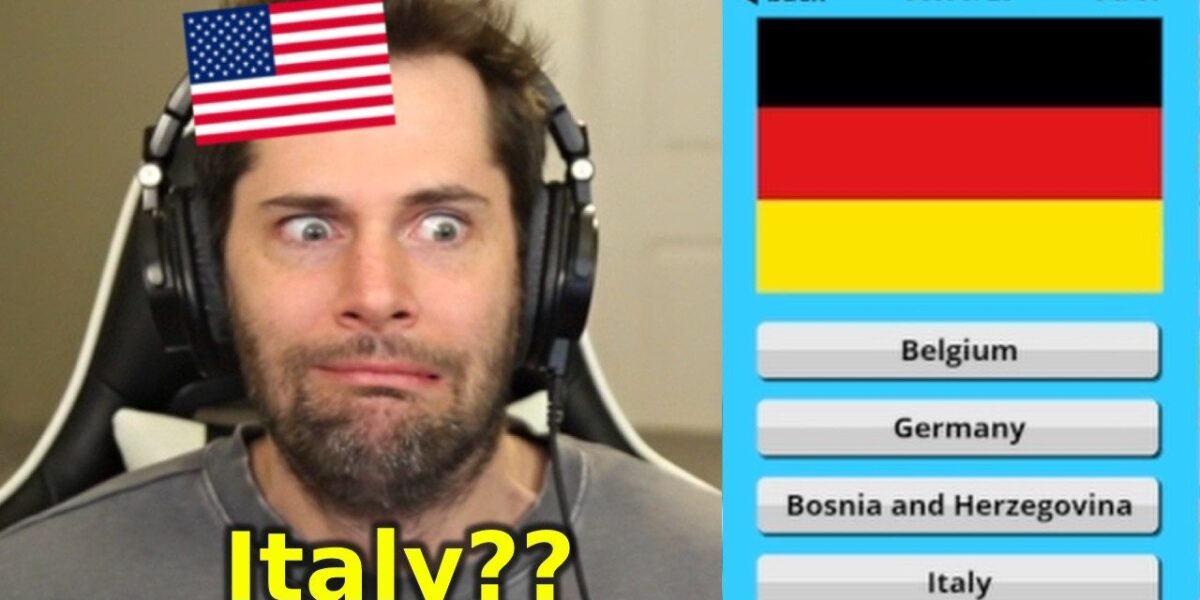
American Attempts European Flag Quiz, Exceeds Expectations
In a surprising display of latent geographical knowledge, an average American individual embarked on a European flag quiz, anticipating a dismal performance but ultimately exceeding their own expectations. The experiment, documented in a recent YouTube video, aimed to test the common perception that many Americans lack familiarity with international symbols. However, the participant discovered a greater repository of flag recognition than initially believed, attributing some success to visual cues and strategic elimination.
Initial Apprehension and Unexpected Success
The video opens with the participant expressing significant doubt about their ability to identify European flags. “To be honest, most Americans, like myself, aren’t very knowledgeable about this kind of stuff,” they admitted, bracing for the possibility of scoring zero out of 46 questions. The first flag presented was entirely unfamiliar, prompting a moment of hesitation. “I literally have never seen this flag in my entire life. I don’t have the faintest idea what this is,” they stated. Fortunately, the quiz format included multiple-choice options, offering a lifeline.
To their astonishment, the first guess, a choice for Bosnia and Herzegovina, turned out to be correct. This initial success seemed to boost confidence, leading to a declaration: “Wait a minute. Maybe I do know flags. Wait, this is easy. What? Who ever doubted me? This is so easy.” This sentiment, however, was short-lived as the subsequent flags presented a greater challenge.
Navigating the Complexities of European Heraldry
The quiz revealed the inherent difficulty in distinguishing between flags with similar color schemes or design elements. The participant noted the prevalence of three vertical or horizontal stripes and the challenge of differentiating between them. Flags like those of San Marino, Montenegro, Finland, and Ukraine required careful consideration and process of elimination. Similarly, flags with two horizontal bands, such as those potentially representing Malta, Poland, or Monaco, proved to be particularly confusing.
“This is so like actually really fun. Like really cool because when I see the flag and I see the list, something in your brain through just even as an American just living life, like I have clearly absorbed a lot more flag information than I thought.”
The participant acknowledged that exposure to international sports on television and current events, such as the Russia-Ukraine war, had inadvertently contributed to their recognition of certain flags. The Ukrainian flag, for instance, was identified solely due to its prominence in recent news coverage. This highlights how global events can seep into public consciousness, even without direct educational efforts.
The Role of Multiple Choice and Strategic Guessing
A significant factor in the participant’s improved performance was the multiple-choice format. “The multiple choice is very helpful,” they repeatedly emphasized. The ability to eliminate known flags or visually dissimilar options significantly increased the odds of a correct guess. This strategy became particularly apparent when faced with a series of flags that appeared similar. “I’m kind of able to eliminate countries that I’ve already guessed, which is helping a lot,” they observed, questioning if this strategic elimination bordered on “cheating.”
The quiz also featured flags that were immediately recognizable due to their iconic status. The flags of the United Kingdom, France, and Switzerland were correctly identified with little hesitation, with the participant noting that these were symbols most Americans would likely know. The distinctive red cross on a white background of the Scandinavian flags also proved easier to identify.
Surprises and Near Misses
Despite the overall success, there were moments of uncertainty and frustration. The participant expressed dismay at not recognizing the Russian flag, despite its global significance. “I don’t know why I don’t know the Russian flag. For as much as the US talks about Russia. Yeah, I don’t know,” they mused.
The quiz also presented flags that were completely new to the participant, such as those from Vatican City, North Macedonia, and Kosovo. These required pure guesswork, often influenced by the sound of the country’s name or a vague sense of its geographical location. The excitement of a correct guess, even if based on a hunch, was palpable. “Every guess is going my way. Holy cow. I can’t wait to see my score at the end. This is genuinely exciting. I’m having a great time,” they exclaimed.
Final Score and Reflections
By the end of the quiz, the participant achieved a score of 32 out of 46 correct answers. This result far surpassed their initial expectations of scoring zero. Reflecting on the experience, they expressed profound satisfaction. “32 out of 46. I am perfectly happy with that. This is beyond my wildest dreams,” they stated. The participant concluded that the visual format and multiple-choice options were instrumental, but also acknowledged an underlying, perhaps underestimated, level of flag recognition.
The experiment served as a personal revelation, suggesting that even without dedicated study, exposure to global imagery can foster a degree of familiarity with international symbols. The participant’s journey from apprehension to accomplishment underscored the idea that knowledge can be acquired in unexpected ways, and that perceptions of collective ignorance might not always hold true.
Looking Ahead
The participant’s surprisingly strong performance on the European flag quiz opens the door for further exploration into their geographical and cultural knowledge. Future videos could delve into quizzes on other continents, national capitals, or even more obscure international trivia. The success also invites viewers to test their own knowledge and reflect on how they have acquired their understanding of global symbols.
Source: American Tries the Europe Flag Quiz (YouTube)

Related Articles


Trump: Iran Strikes Ahead of Schedule, Expects ‘Great Deal for World’
Three U.S. service members have been killed amid escalating conflict with Iran, President Trump confirmed. He stated that strikes are ahead of schedule, with senior Iranian leaders killed, and expressed optimism for a "great deal for the world" despite ongoing talks with Iranian officials.


Trump Agrees to Talks with Iran After Major Strikes
President Donald Trump has agreed to talks with Iran's leadership following coordinated strikes that reportedly killed key figures, including the Supreme Leader. While Trump claims significant military successes, U.S. strategy remains unclear, and public opinion shows limited support for the actions amid rising American casualties.


Trump’s Putin Stance: US Strategy and Global Implications
Analysis suggests Donald Trump's approach to the Ukraine war involves pressuring Kyiv, but US involvement is crucial for resolution. China's influence and the 'MAGA' agenda's geopolitical implications are key factors.