American Psycho: Bale’s Twisted Masterpiece
Christian Bale's career-defining performance as Patrick Bateman in 'American Psycho' is a chilling exploration of 1980s yuppie culture and consumerism. The film, based on Bret Easton Ellis's novel, dissects superficiality through the eyes of a violent investment banker, leaving audiences questioning reality.

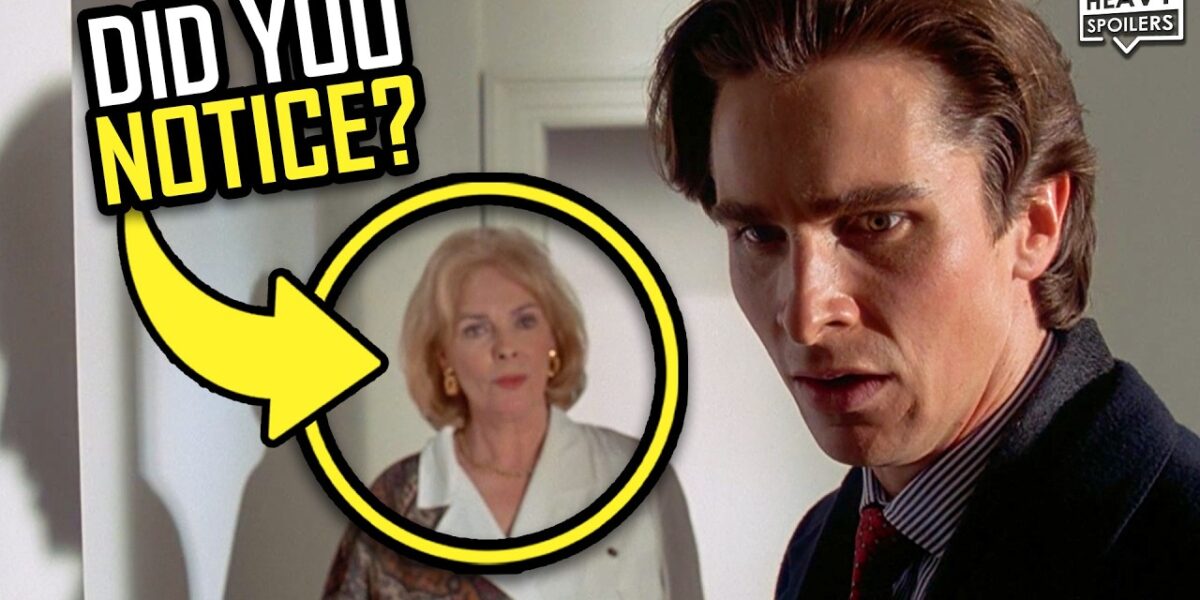
Christian Bale’s Chilling Performance Anchors ‘American Psycho’
Christian Bale’s career-defining role as Patrick Bateman in Mary Harron’s 2000 film American Psycho remains a touchstone in modern cinema. Based on Bret Easton Ellis’s controversial 1991 novel, the film dissects the superficiality of 1980s New York high society through the eyes of a seemingly successful investment banker with a penchant for extreme violence. While the book courted controversy for its graphic depictions, the film, released in the wake of Next Friday, became a critical and commercial success, cementing Bale’s status as a leading man and a master of transformation.
A Symphony of Subtlety and Shock
The film opens with a striking visual: a stark white background splattered with what appears to be blood, accompanied by a haunting piano melody. This jarring imagery is quickly subverted, revealing itself to be merely ingredients for a gourmet meal. John Clayton’s evocative score sets a tone of deceptive elegance, mirroring the hollow lives of the elite Patrick Bateman inhabits. The cacophony of diners loudly consuming their meals, the clinking silverware, and the exorbitant prices of dishes like $570 swordfish meatloaf, all serve as sharp critiques of rampant consumerism and the insatiable hunger for status.
The Elusive Dorsia and the Facade of Identity
The elusive restaurant Dorsia quickly emerges as a symbol of ultimate status, a ‘McGuffin’ that highlights the characters’ perpetual dissatisfaction. More profoundly, the film explores the theme of mistaken identity and anonymity. Characters frequently misremember or fail to recognize each other, a subtle yet potent commentary on the superficiality of their relationships. Patrick Bateman himself is largely known only by his affiliation with Pierce & Pierce, underscoring how little substance lies beneath his meticulously crafted persona. Even his friends, like Bryce and McDermott, are barely distinguished, their individual identities rendered irrelevant in this world of performative success.
Virtue Signaling and Hidden Psychosis
A pivotal early scene sees McDermott spewing anti-Semitic remarks about Paul Allen. Bateman, rather than out of genuine moral conviction, intervenes to correct him, not out of sincerity but to maintain his own image of superiority. This act of ‘virtue signaling’ reveals Bateman’s profound indifference to genuine issues, a characteristic that extends to his relationships, his views on women, and current events. His every action is a calculated performance designed to uphold a flawless facade.
The Unveiling of the True Self
Bateman’s descent into his darker impulses is hinted at early on. At a nightclub, his internal rage surfaces when denied service, a fleeting moment of violent fantasy captured only in a mirror’s reflection. This visual motif emphasizes that the public perception of Bateman is merely a reflection, a carefully constructed image hiding a far more sinister reality. His apartment, a sterile, monochromatic space, further amplifies this theme. Production designer Gideon Pond meticulously curated the art and furnishings, aiming for a look that was aspirational yet unsettling, deliberately devoid of comfort or lived-in warmth.
Art as a Mirror to the Psyche
The art adorning Bateman’s apartment serves as a powerful allegory for his own fractured identity. Allan McCollum’s ‘Plaster Surrogates,’ illusions of paintings that are essentially frauds, perfectly mirror Bateman’s own existence as a performance rather than a genuine person. Robert Longo’s ‘Men in the City’ series, depicting figures in contorted, distressed poses, reflects both the alienation of corporate life and Bateman’s suppressed desire for violence. Richard Prince’s ‘Marlboro Man’ reimagines the iconic cowboy image, forcing viewers to confront the constructed nature of masculinity – a theme that resonates deeply with Bateman’s manufactured alpha-male persona.
The art pieces, including Cindy Sherman’s self-portraits and Henry Moore’s unsettling sketches of figures in distress, collectively underscore Bateman’s artificiality. His morning routine, beginning with a glance at his reflection in a poster for ‘M. Butterfly’—a play referencing the French Revolution’s struggles, ironic given Bateman’s privileged existence—further highlights his self-obsession. The iconic scene of him peeling off a moisturizing mask is a potent metaphor for shedding layers of his persona, revealing the emptiness beneath.
Studio Turmoil and Casting Battles
The path to bringing American Psycho to the screen was fraught with challenges. Lionsgate, initially hesitant about Christian Bale, eventually relented after a tumultuous period that saw Leonardo DiCaprio briefly attached to the project. Oliver Stone was slated to direct, with a cast that included James Woods, Cameron Diaz, and Jared Leto. However, creative differences and DiCaprio’s departure for ‘The Beach’ led to the project’s return to Harron and Bale. The film’s controversial nature even drew the attention of feminist activist Gloria Steinem, who reportedly lobbied DiCaprio against taking the role. Ironically, Steinem was dating Bale’s father at the time, leading to speculation that Bale’s acceptance of the role was partly to irk her, a rumor Bale dismissed.
Bale’s Immersive Transformation
Christian Bale’s commitment to the role was extraordinary. He reportedly adopted Bateman’s meticulous morning routine, spoke exclusively in an American accent on set, and even met with author Bret Easton Ellis in character, a meeting Ellis described as deeply unsettling. Bale’s interpretation of Bateman was famously inspired by Tom Cruise’s intense, seemingly hollow demeanor in a David Letterman interview. This dedication extended to his physical transformation, a hallmark of his career, as he fully embodied the character’s obsession with appearance and control.
The film’s dark humor, a surprising element given the book’s notoriety, is a key factor in its enduring appeal. Bale masterfully navigates Bateman’s descent, making him both terrifying and darkly comedic. The subtle nods to Norman Bates, Patrick’s surname a clear homage, further enrich the character’s lineage within the horror genre.
The Wealthy and the Wounded: Family and Origins
While the film focuses on Bateman’s present, the novel offers glimpses into his past. His parents are mentioned, with his mother in a care facility and his father’s emotional detachment hinted at. The introduction of his brother, Sean, in Ellis’s other novels, Rules of Attraction and Less Than Zero, reveals a shared universe and a family legacy of psychological complexity. Sean’s own disinterest in material possessions, contrasted with Patrick’s obsession, suggests differing coping mechanisms within the same ‘psycho coin.’ A viral marketing campaign for the film revealed emails from Bateman hinting at a childhood devoid of communication, where ‘no’ was an incomprehensible concept, further illuminating the void at the core of his being.
The Unreliable Narrator and the Ambiguous Ending
Ultimately, American Psycho thrives on its ambiguity. Bateman’s narration is notoriously unreliable, leaving the audience to question the reality of his violent acts. The film masterfully blurs the line between fantasy and reality, leaving viewers to grapple with the true extent of Bateman’s psychosis. The ending, much like the film itself, offers no easy answers, solidifying its status as a complex and enduring examination of identity, consumerism, and the darkness that can lie beneath a polished surface.
Source: AMERICAN PSYCHO (2000) Breakdown | Film Analysis, Easter Eggs, Making Of & Ending Explained (YouTube)

Related Articles

The Shining: Kubrick’s Chilling Masterpiece Deconstructed
Explore the labyrinthine horror of Stanley Kubrick's 'The Shining.' This deep dive unpacks the film's unsettling hotel design, psychological terror, and enduring mysteries. Discover hidden details and theories that continue to fuel debate.


From Blockbuster Beginnings to Box Office Bombshells
From the thrilling opening of 'Indiana Jones and the Dial of Destiny' to the chaotic conclusion of 'Jurassic World Dominion,' some of Hollywood's most anticipated films have stumbled, starting strong but ending with a fizzle. This list explores the top 10 movies that promised greatness but ultimately failed to deliver.
Villains We Actually Root For: Top 50 Justified Movie Antagonists
Discover the movie villains whose questionable actions stem from deeply relatable and even justifiable motives. From Magneto's fight for mutant survival to Killmonger's quest for justice, these antagonists make us question the true meaning of heroism.