American Ignorance on Display Online
Americans online are showcasing a surprising lack of global awareness and a tendency to make inaccurate, boastful claims. From questioning walkable cities to misunderstanding international law, these posts reveal a disconnect from reality. The video highlights a need for greater global understanding and critical thinking.

American Ignorance on Display Online
The internet can be a powerful tool for connection and learning. However, sometimes it reveals a less flattering side of humanity. A recent video highlighted some truly baffling statements made by Americans online. These posts show a surprising lack of global awareness and a tendency to brag about things that aren’t quite true. It’s a stark reminder that not everyone sees the world the same way we do.
Priorities Out of Whack: Moon vs. Livable Cities
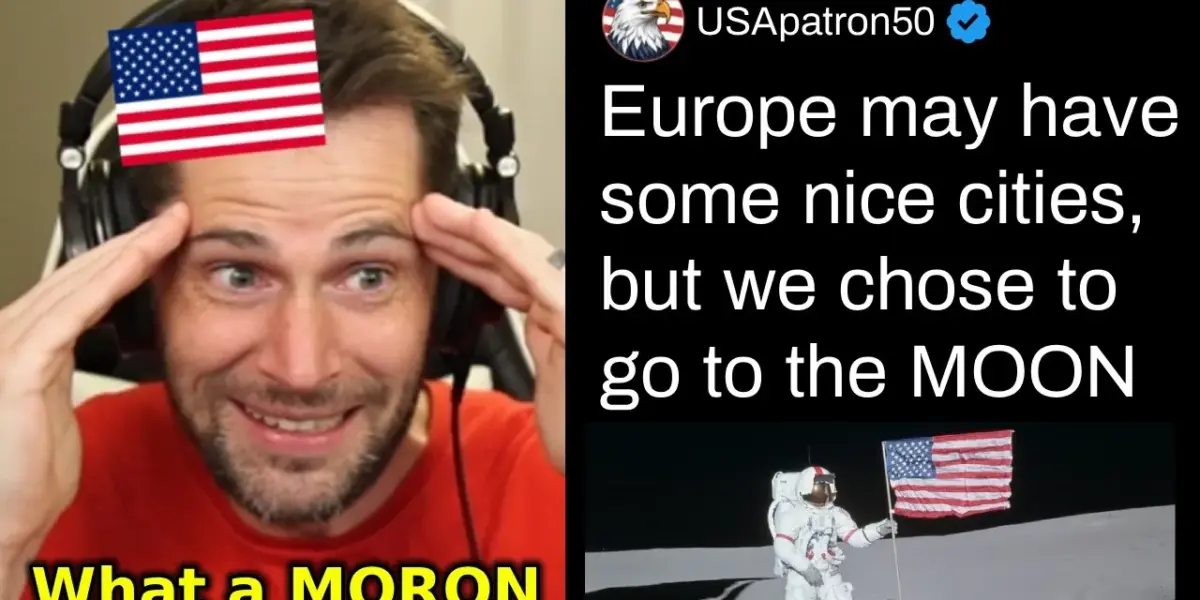
One particularly striking post questioned why Europe chose “walkable cities” when America “chose to go to the moon.” The implication was that walking in cities is somehow less impressive than space travel. The video’s creator pointed out how this highlights skewed priorities. While landing on the moon was a remarkable achievement, it was a brief moment in history. Europe, on the other hand, has focused on building cities that are practical, pleasant, and benefit people for generations. It’s a choice between a fleeting moment of national pride and long-term quality of life for citizens.
Education Rankings: A Myth of American Superiority
Another common theme was the belief that America is number one in education. One American confidently stated this, only to be corrected by a reply pointing to a source that ranked the US seventh. A quick online search revealed the truth: the US actually ranks much lower, around 31st. This wasn’t just a simple mistake; it was a confident assertion of a false claim. The video’s host expressed frustration, noting how easy it is to look up accurate information. The idea of bragging about something that isn’t even true makes the error a thousand times worse.
Misunderstanding Freedom and Global Law
A disturbing post claimed that Europeans were burning American flags and that the US president had made it illegal. This statement revealed a profound misunderstanding of both free speech and international law. While the video’s creator, an American, dislikes flag burning, they acknowledged it’s a protected form of expression in the US. More importantly, the post showed a complete inability to grasp that one country’s laws do not apply in other sovereign nations. The idea that a US president could outlaw actions in Europe is not just incorrect; it’s fundamentally illogical.
The World Revolves Around America?
Several examples demonstrated a belief that the entire world centers on the United States. One person asked for clarification on which “Prague” was being discussed, listing cities in Nebraska and Oklahoma alongside the capital of the Czech Republic. This suggests a mindset where American locations are assumed to be the default or most important. The video’s host explained that for most of the world, “Prague” refers to the major European capital. This kind of thinking shows a lack of exposure to other cultures and a tendency to view the US as the only significant place on Earth. It’s like living in a bubble, unaware of the vast world outside.
This insular view extended to the internet itself. One American asked if a Facebook page was “foreign,” implying that if it wasn’t from the US, it must be. The response, “This is the internet,” highlights the absurdity. The original poster then clarified their definition: “If it’s not in the United States of America, it’s foreign.” This reveals a basic failure to understand that other countries have their own perspectives and cultures. For them, “foreign” simply means “not American,” a self-centered viewpoint that ignores the reality of a globalized world.
Pizza Snobbery and American Exceptionalism
Even something as simple as pizza became a source of nationalistic pride and criticism. An American questioned why “Italian pizza looks so bad,” describing it as “uneven and disproportionate” compared to the “normal” American style. This completely disregarded the fact that Italy is the birthplace of pizza. The creator of the video, while admitting American-style pizza looks different and perhaps less appealing to them, acknowledged that the original Italian version is what it’s supposed to be. To criticize the authentic dish based on an Americanized version shows a deep disrespect for culinary heritage and a misplaced sense of superiority.
Another post asked, “Why is it so difficult for some people to love America?” The author insisted that despite flaws, America is “still the greatest nation in the world,” attributing any criticism to a lack of American “modesty” or “humility.” This sentiment, likely intended to provoke, was met with sarcastic replies pointing out that it’s precisely this perceived arrogance and self-centeredness that can alienate others. The examples provided in the video seem to support this criticism, showcasing a pattern of ignorance and ego.
Food as a Human Right: America’s Vote Against
Perhaps the most concerning example involved a vote at the UN. When the United Nations proposed making food a human right in 2021, only two countries voted against it: the United States and Israel. An American commented, “Translation: in 2021 the UN wanted to make America pay for everyone else’s food and America said no.” This interpretation reveals a deeply ingrained belief that global cooperation is merely a scheme to exploit America. It suggests a mindset that views helping others as a burden, rather than a moral imperative or a path to global stability.
The video’s host contrasted this with the vast sums the US spends on military actions, like bombing Iran. The implication is clear: America is willing to spend billions on conflict but balks at the idea of ensuring basic human needs like food for others. This highlights a profound disconnect in priorities and a rejection of global responsibility, reinforcing the image of a self-centered nation. It’s a sad commentary when a country capable of such immense wealth and power chooses to stand against feeding the hungry.
Why This Matters
These online statements, while sometimes humorous in their absurdity, are more than just isolated incidents. They reflect a broader cultural tendency within parts of the United States. This tendency includes a lack of global awareness, an overemphasis on nationalistic pride that often overshadows critical self-reflection, and a resistance to acknowledging the country’s flaws. It impacts how Americans are perceived internationally and can hinder productive dialogue about global issues. Understanding these viewpoints, even the most misguided ones, is crucial for fostering better international relations and encouraging a more informed and empathetic citizenry.
Implications, Trends, and Future Outlook
The internet has amplified voices that might have once been confined to smaller circles. This has created both opportunities for connection and challenges in combating misinformation and ignorance. The trend of nationalistic rhetoric, often fueled by online platforms, shows no signs of slowing down. For the US, a continued disconnect from global realities could lead to diplomatic isolation and missed opportunities for collaboration on critical issues like climate change, public health, and economic stability. Moving forward, fostering critical thinking skills and promoting global education will be essential to counter these trends. The hope is that more Americans will engage with the world beyond their borders, not just through space exploration, but through understanding and empathy.
Historical Context and Background
The idea of American exceptionalism – the belief that the United States is unique and holds a special place among nations – has deep historical roots. From its founding principles to its rise as a global superpower, this narrative has often shaped national identity. However, this exceptionalism can sometimes morph into a sense of superiority or isolationism, leading to the kind of viewpoints seen in the video. Historically, periods of great national confidence have sometimes been accompanied by a reduced willingness to engage with or understand other cultures. The internet age has simply made these internal dialogues more public and, at times, more jarring.
Source: Sh*t Americans Say On the Internet (American Reaction) #2 (YouTube)

Related Articles


Vaccine Hesitancy: A Doctor’s Warning on Health Risks
A doctor warns that jokes about science and vaccines can have dangerous real-world health consequences. The rise of misinformation is linked to outbreaks of preventable diseases like measles and the rejection of essential newborn care.

Netanyahu Death Hoax: Fact-Check Debunks Viral AI Claims
False claims about the death of Israeli Prime Minister Benjamin Netanyahu have resurfaced online, often suggesting viral videos are AI-generated. Fact-checkers and AI experts have largely debunked these rumors, explaining visual anomalies as common camera effects rather than AI manipulation.

Iran Conflict Could Shatter MAGA’s Nationalist Dreams
Sending US troops to Iran presents immense military challenges and a significant political risk for the MAGA movement. The nationalist ideals of MAGA clash with the realities of foreign intervention, potentially alienating its base.