Alex Jones Accuses Trump of Demonic Possession
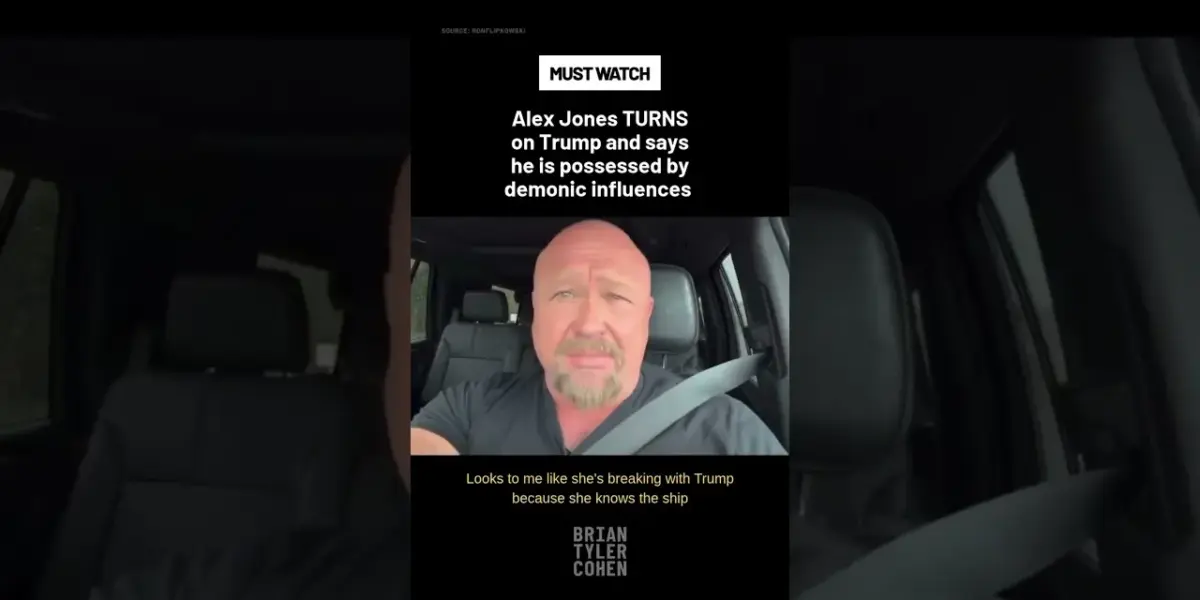
Alex Jones has publicly stated that former President Donald Trump is "possessed by demonic influences" and acting like a "supervillain." This marks a significant break from Jones's previous strong support for Trump. The accusations also involve claims about Trump's wife and the Jeffrey Epstein case.

Alex Jones Accuses Trump of Demonic Possession
Alex Jones, a prominent figure known for his controversial claims, has recently made startling accusations against former President Donald Trump. In a public statement, Jones declared that Trump is “possessed by demonic influences” and is acting like a “supervillain.” This dramatic turn from a long-time supporter marks a significant moment, raising questions about the shifting allegiances and public narratives surrounding political figures.
A Stark Break from Support
Jones’s words represent a direct and severe criticism of Trump. He stated, “when Trump’s calling for wiping out whole civilizations and acting like a supervillain, I have to come out and say I don’t support it.” This is a sharp contrast to Jones’s previous strong backing of Trump. The commentary suggests a deep disillusionment, with Jones expressing pity and praying for Trump’s freedom from these alleged influences. He described the situation as a “nightmare for America and the world.”
Questions Surrounding Epstein Allegations
A significant part of Jones’s statement focused on the Jeffrey Epstein case. He claimed that Trump’s wife held a press conference announcing the reality of Epstein’s crimes. According to Jones, she also called for victims to be held accountable and for Congress to cover up the matter. Jones presented this as being in direct opposition to Trump’s stated positions, suggesting it as a reason for her alleged “breaking with Trump.” He speculated that she might be distancing herself because she “knows the ship’s sinking” and has “found out the truth.”
Elon Musk and Howard Lutnick Mentioned
The transcript also touches upon Elon Musk and Howard Lutnick. Jones mentioned that Musk had stated eight months prior that he was in possession of files related to a cover-up. However, Jones admitted he never saw evidence of these files. He also referenced Lutnick, suggesting Lutnick denied knowing Epstein but had, in fact, visited the island. Jones implied that Musk might be protecting Lutnick, implying guilt by association or a shared secret.
Jones’s Stance on Truth and Reporting
Despite the extraordinary nature of his claims, Jones maintained that he is committed to telling the truth and reporting facts. He said, “I’m going to tell the truth, report on the facts, no matter what it is.” This assertion comes as he launches severe personal attacks and conspiracy-laden accusations against a former president.
Why This Matters
Alex Jones’s public denouncement of Donald Trump, particularly with accusations of demonic possession, is significant for several reasons. Firstly, it highlights the volatile and often unpredictable nature of political alliances, especially within fringe media circles. Jones has historically been a vocal supporter of Trump, and this vocal opposition signals a potential shift in the narratives being pushed by some of his followers. Secondly, the repeated invocation of conspiracy theories, such as those surrounding Jeffrey Epstein, by prominent figures continues to fuel public distrust and misinformation. The way these claims are presented, even when framed as factual reporting, can have a considerable impact on public perception and discourse. It also raises concerns about the spread of unsubstantiated allegations and their potential to disrupt legitimate investigations or discussions.
Implications and Future Outlook
The implications of such statements are far-reaching. For Trump’s supporters, hearing such accusations from a once-loyal ally could cause confusion or reinforce existing doubts. For his detractors, it might be seen as further evidence of his controversial nature. The mention of Epstein and alleged cover-ups, even if lacking concrete proof in Jones’s telling, taps into existing conspiracy theories that have gained traction online. This kind of rhetoric can contribute to a climate of extreme polarization and distrust in institutions. Looking ahead, it underscores the power of online personalities to shape public opinion, often through sensationalism and unsubstantiated claims. The future may see continued blurring lines between fact and fiction in political commentary, especially as figures like Jones continue to engage in highly charged rhetoric.
Historical Context
Alex Jones has a long history of promoting conspiracy theories and making inflammatory statements. His platform, InfoWars, has been a source of numerous controversial claims, including those related to the Sandy Hook Elementary School shooting, which led to significant legal repercussions for Jones. His support for Donald Trump was once a cornerstone of his platform, with Jones often seen as a vocal advocate for Trump’s political agenda. This current stance represents a notable departure, suggesting that even within the most ardent supporter bases, disagreements and accusations can reach extreme levels. The use of terms like “demonic influences” and “supervillain” draws from a long tradition of demonizing political opponents, a tactic that has been present throughout history but is amplified in the digital age.
Source: Alex Jones TURNS on Trump and says he is possessed by demonic influences (YouTube)

Related Articles


UK Offers Iran Negotiation Insight to Aid Trump’s Stalled Deal
The UK is offering its diplomatic expertise to the US to help President Trump navigate complex negotiations with Iran. As talks loom amidst uncertainty and strained UK-US relations, London believes its experience can aid in achieving a settlement and reopening the Strait of Hormuz. Discussions also highlight the UK's defense readiness and its role in regional stability.


Trump Health Scare Sparks Probe into Medical Records
An urgent investigation has been launched into Donald Trump's medical records following a recent health scare. The probe aims to uncover how private health details were exposed and whether privacy laws were violated. This situation highlights the critical need for robust data security and patient confidentiality, even for public figures.

Melania Trump Breaks Silence on Epstein, Stuns Washington
Melania Trump has issued a surprising statement clarifying her past connection to Jeffrey Epstein, stating she is not a victim and did not meet her husband through him. The statement has caught many, including the media and political circles, off guard. Meanwhile, Donald Trump faces criticism from his own base over his stance on Iran, with some viewing it as a departure from his "America First" policy.