Airports Chaos, Iran Tensions, and Big Tech Lawsuits Dominate News
Airports nationwide are grappling with severe disruptions due to a TSA staffing shortage caused by the DHS shutdown. Meanwhile, tensions with Iran escalate as peace talks falter and a landmark jury verdict finds Meta and YouTube negligent in a case concerning social media's impact on minors. The popular wellness trend of peptides also faces scrutiny over regulation and safety.

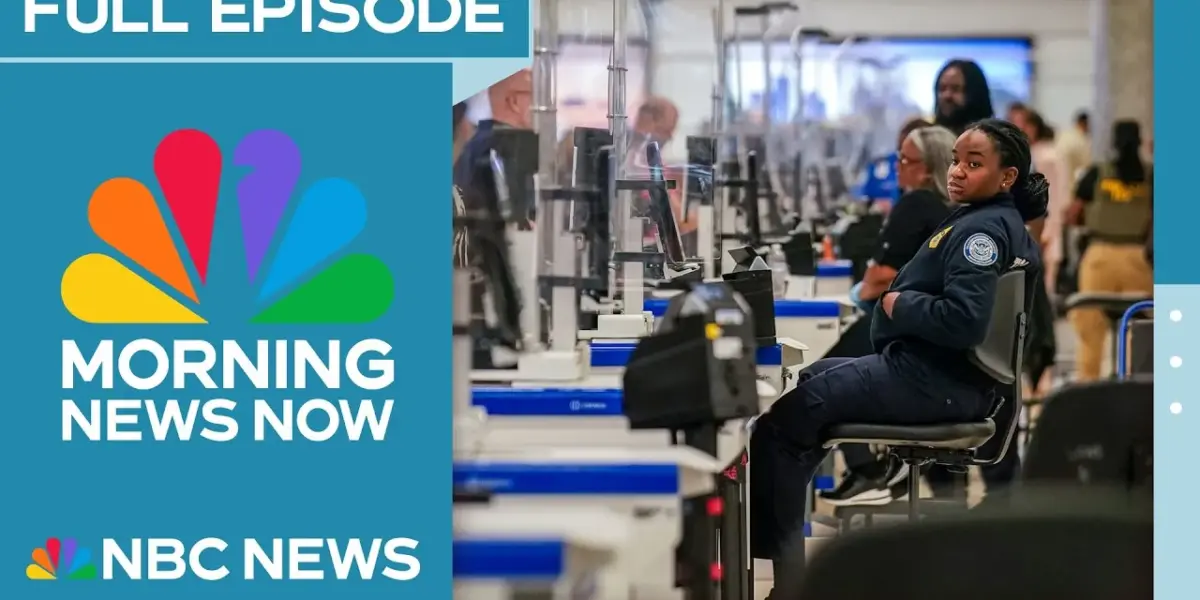
TSA Shortage Sparks Airport Chaos Amid DHS Shutdown
Airports nationwide are experiencing unprecedented crowds and lengthy security lines as the Transportation Security Administration (TSA) faces a severe staffing shortage. The crisis is a direct result of the ongoing partial shutdown of the Department of Homeland Security (DHS), now in its 41st day. Travelers are facing the longest wait times in history, with no immediate end in sight.
The head of the TSA has issued a stark warning to lawmakers, stating the situation could worsen significantly. “We are being forced to consolidate lanes and may have to close smaller airports if we do not have enough officers,” the acting administrator stated. He emphasized that the level of disruption is “unprecedented and unacceptable” and seriously undermines the security of U.S. transportation systems.
Lawmakers remain at an impasse over a funding deal that would restore pay for TSA employees. Many TSA officers have been working without pay for weeks, leading to financial hardship. Reports indicate some are defaulting on loans, draining retirement savings, and losing childcare. This has led to a significant number of call-outs, exacerbating the chaos at airports.
President Trump has deployed ICE agents to assist at airports in an effort to ease the burden, but this has not resolved the core issue. Republicans and Democrats are locked in a dispute over immigration enforcement reforms, which Democrats insist must be included in any DHS funding package. While Republicans initially believed a deal was close, Democrats argue that recent Republican offers contained none of the previously discussed reforms.
The shutdown is also impacting other DHS agencies. A Coast Guard admiral warned that the shutdown is eroding mission readiness for critical upcoming events and preventing the payment of utility bills for essential infrastructure. Lawmakers are under pressure to reach an agreement before their scheduled two-week recess.
Iran Tensions Escalate Amid Peace Talk Rejection
The Middle East remains a focal point of international concern as tensions between the U.S. and Iran continue to escalate. Israel’s Defense Minister announced the killing of the commander of Iran’s Navy, who was allegedly responsible for blocking the Strait of Hormuz. This comes after Iran reportedly rejected a 15-point peace plan submitted by the U.S. through Pakistani intermediaries.
Sources indicate the U.S. proposal included demands related to Iran’s nuclear program, uranium enrichment, ballistic missiles, and support for proxy groups. Iran’s Foreign Minister publicly stated the U.S. plan was a “non-starter.” In response, Iran has put forward its own proposal, calling for an end to U.S. and Israeli attacks, compensation for damages, and recognition of Iranian sovereignty over the Strait of Hormuz.
President Trump has approved the deployment of over a thousand paratroopers to the Middle East, while Iranian officials are closely monitoring U.S. troop movements. Despite U.S. Central Command reporting strikes on over 10,000 military targets in Iran, the nation still demonstrates the ability to threaten the Strait of Hormuz and strike neighboring countries.
On Capitol Hill, lawmakers expressed frustration during a closed-door briefing on the conflict with Iran. Concerns were raised about the mission’s clarity, particularly regarding the potential deployment of ground troops and the ability to protect them. The White House maintains it is fulfilling its duties, but lawmakers are seeking a unified justification for the war.
Landmark Verdict: Meta and YouTube Found Negligent in Child Addiction Trial
In a significant legal development, a jury has found Meta (parent company of Instagram) and YouTube negligent for designing their platforms to be addictive to young users. The verdict, reached in Los Angeles, orders the tech giants to pay a total of $6 million in damages to a 20-year-old woman who claimed she developed depression and anxiety from social media use as a minor.
This landmark case, considered a bellwether, centered on whether social media platforms pose dangers to minors. Plaintiffs argued that the platforms’ design, algorithms, and features were engineered to foster addiction. Internal company documents presented during the five-week trial suggested that platforms like Instagram aimed to maximize the time children spent on the app.
Meta CEO Mark Zuckerberg testified that the company’s goals have evolved and highlighted newer safety features for teens. YouTube owner Google argued the platform is not a social media site and that the case misunderstands its function. Both companies have announced their intention to appeal the verdict.
This ruling follows a recent New Mexico jury’s decision to award the state $375 million against Meta for allegedly creating an environment conducive to child sex predators. Legal experts suggest this verdict could impact the roughly 1,500 similar cases awaiting trial, potentially shifting the legal landscape for social media companies.
Wellness Trend: Peptides Under Scrutiny
A new wellness trend gaining traction on social media involves peptides, promoted for a wide range of benefits from wrinkle reduction and injury recovery to improved sleep. Influencers often share their experiences with injectable peptides, touting their effectiveness.
Peptides are short chains of amino acids, the building blocks of proteins, and play essential roles in the body, including hormone signaling. Some peptides, like insulin and GLP-1, are FDA-regulated medications used to treat conditions such as diabetes. Cosmetic peptides used in skincare are also common.
However, a significant concern is that many peptides promoted for general wellness are not regulated by the FDA and may not have undergone rigorous human testing. Health Secretary Robert F. Kennedy Jr. recently indicated that the FDA might soon act on allowing more currently restricted peptides for use by compounding pharmacies, which are a source for many of these products.
Dr. Kavita Patel, an NBC News medical contributor, explains that while some peptides are essential and regulated, the unregulated ones carry risks. The worst-case scenario for unproven peptides could range from them being ineffective to causing harmful side effects, especially when administered without proper medical oversight.
Weather and International News Briefs
Severe storms are forecast for the Upper Midwest, with potential for large hail, damaging winds up to 75 mph, and isolated tornadoes. The system is expected to bring cooler temperatures to the region. Meanwhile, the West continues to experience heat, with fire alerts in effect across several states due to dry and windy conditions.
In international news, a bus plunged into a river in Bangladesh, killing at least 24 people. The United Nations General Assembly adopted a resolution declaring the trafficking of enslaved Africans a grave crime against humanity and called for reparations. The Church of England inaugurated its first female Archbishop of Canterbury, Dame Sarah Mullally.
Work continues on rebuilding the Francis Scott Key Bridge in Baltimore, which collapsed two years ago after a cargo ship collision. Officials estimate the design for the new bridge is 70% complete, with an expected opening in 2030 and a projected cost of up to $5.2 billion.
Source: Morning News NOW Full Episode – March 26 (YouTube)

Related Articles


Trump Flirts With Host, Dodges Iran Human Rights Question
During an interview, Donald Trump deflected a question about the human rights situation in Iran. Instead of answering, he reminisced about a past lunch and complimented the interviewer's appearance. This exchange highlights a trend in political communication where personal interactions can overshadow serious global issues.


Gov’t Shutdown Grips Nation as Markets Plunge
The U.S. government shutdown continues, causing historic airport delays and deepening political gridlock as lawmakers reject compromise deals. Meanwhile, Wall Street experienced a sharp sell-off, with the Dow entering correction territory amid rising global oil prices and escalating tensions with Iran over control of the Strait of Hormuz.


Iran Bombs U.S. Planes, Escalating Mideast Conflict
Iran has directly attacked U.S. aircraft stationed in Saudi Arabia, confirmed by satellite imagery showing significant destruction. This escalation follows other recent incidents and comes amid threats of continued conflict, with officials estimating the war could last several more weeks.