Airport Chaos Hides Plan to Silence Millions of Voters
Long airport lines, fueled by unpaid TSA workers, serve as a distraction from a new bill that could disenfranchise millions of eligible voters. Critics argue the SAVE Act, requiring strict documentation for voting, disproportionately harms women and minority groups, representing an "engineered exclusion" rather than election integrity.

Airport Chaos Hides Plan to Silence Millions of Voters
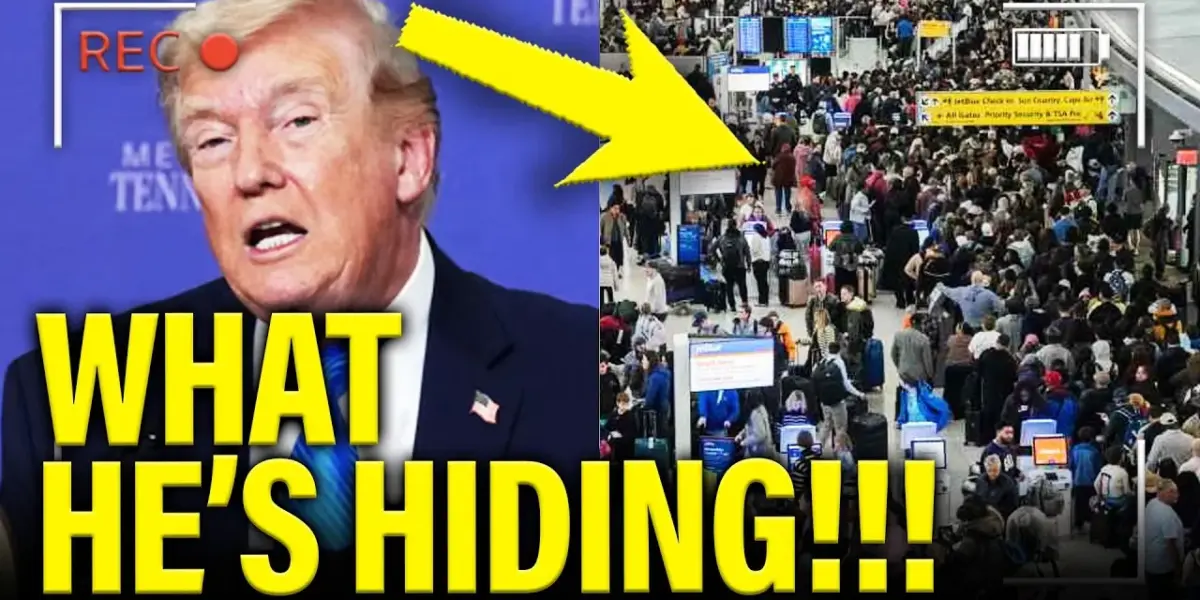
Long lines at airports across America have become a common frustration for travelers. Recently, at Hartsfield-Jackson Atlanta International Airport, the world’s busiest, TSA Pre-Check lines stretched outside and wrapped around multiple times. Passengers stood in the cold, trying to catch flights. This chaos isn’t just an inconvenience; it’s a symptom of deeper issues and, some argue, a deliberate distraction.
These scenes unfolded while thousands of TSA employees worked without pay for weeks. Many missed paychecks, faced eviction, and some even donated plasma to make rent. Over 450 TSA officers have quit. The government’s response involved sending ICE agents to hand out water and, according to reports, play on their phones. This action was widely criticized as ineffective and lacking the necessary skills for airport security.
One union leader compared the ICE agents’ help to giving someone with pneumonia a teaspoon of cough syrup. Meanwhile, former President Trump declared the situation a national emergency 41 days after the TSA employees first missed a paycheck. He signed an executive order to pay them, framing it as a way to stop “Democrat chaos.”
A Question of Priorities
Physicians and analysts have questioned why the situation became an “emergency” only after it became a public inconvenience, particularly affecting those who could influence decision-makers. The argument is that the emergency existed when workers missed their first, second, and third paychecks, and when passengers started missing flights. The timing of the emergency declaration suggests it was driven by political necessity rather than genuine concern for the workers or the system’s breakdown.
This situation is contrasted with the swift allocation of funds for military actions. For example, “Operation Epic Fury” saw hundreds of millions of dollars allocated before any bombs dropped, with significant daily costs for aircraft carrier groups. This rapid funding for military operations stands in stark contrast to the 41-day delay in paying essential workers, raising questions about national priorities and values. Billions were also allocated to ICE, while other parts of Homeland Security faced funding issues.
“If you found your money in bombs, you can find a way to make voting accessible. If it was an emergency when the airports got inconvenient, then at that emergency now democracy gets restricted.”
The “Starve the Beast” Playbook
Some critics suggest a deliberate strategy is at play. They point to plans like those outlined in “Project 2025,” which, according to some interpretations, advocate for starving government agencies to create chaos. The idea is to let the public become frustrated, then offer private security companies, which lack oversight and accountability, as a solution. This could lead to the privatization of TSA, with ICE agents already present in airports potentially becoming a permanent fixture.
A clip from Steve Bannon suggested that using ICE at airports could be a “test run.” The idea is to normalize Americans showing their papers to federal agents and to “normalize the checkpoint, normalize the demand, normalize the fear.” This, he argued, would prepare people for ICE to be present at polling places in future elections, making the demand for identification at the ballot box seem less unusual.
The SAVE Act: Undermining Democracy
While the nation was focused on airport lines, a bill called the Safeguard American Voter Eligibility (SAVE) Act has been moving through Congress. Supporters claim it’s about election integrity and building trust. However, critics argue it’s a structural dismantling of voting access, designed to disenfranchise millions of eligible American citizens.
The SAVE Act would require documentary proof of citizenship, such as a passport or certified birth certificate, just to register to vote. It also demands stricter photo ID to cast a ballot and limits online, mail, and third-party voter registration. Updating voter registration after moving could require in-person verification.
Disproportionate Impact on Vulnerable Groups
This bill would disproportionately harm women, particularly those who have changed their last names after marriage. Their birth certificates might have their maiden names, while their driver’s licenses show married names. This common and legal life event could create a bureaucratic barrier to voting. The cost and time required to update documents would be a significant hurdle for many.
Low-income women, single mothers, and transgender individuals would face even greater challenges. The bill could also negatively impact Black, Latino, younger, and lower-income voters, who are less likely to have readily accessible passports or updated documentation. Approximately 21 million eligible American voters may not have easy access to the required documents.
Critics argue that the bill does not address a widespread problem of non-citizen voting, which is already illegal and rare. Instead, it places the burden of proof on the voter, relying on federal databases that can incorrectly flag eligible citizens. It’s seen as engineered exclusion rather than election integrity.
A Playbook for Exclusion
The strategy mirrors what happened with the TSA. When systems are underfunded or chaotic, and the inconvenience affects those in power, solutions are found quickly. The SAVE Act, however, is designed to happen quietly, registration form by registration form, documentation gap by documentation gap. Unlike airport lines, there won’t be dramatic footage of frustrated voters.
Senator Lisa Murkowski, a Republican, stated that the documentation required by the SAVE Act is not just inconvenient for many Alaskans but financially and logistically impossible. The time required to obtain these documents is something working people, single mothers, and rural communities cannot afford to lose.
The core argument is that if the government can find billions for military actions and quickly resolve airport inconveniences for the politically connected, it can and should find ways to make voting accessible. The SAVE Act, they contend, is not about election integrity but about engineered exclusion, potentially silencing millions of voices and fundamentally altering American democracy.
Source: Trump CRISIS is ULTIMATE DISTRACTION from THIS… (YouTube)

Related Articles
Government Shutdown Hits Record; ICE Agents Deployed at BWI Airport
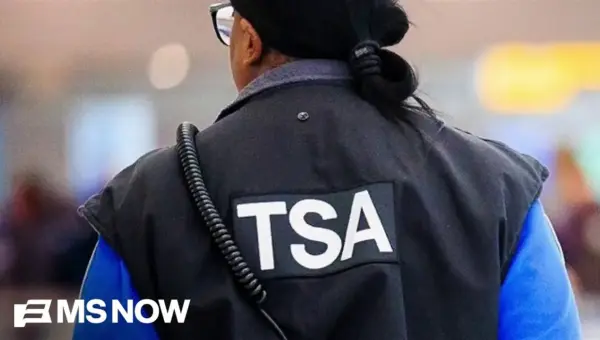
The US government shutdown has become the longest in history, now spanning 44 days. ICE agents have been deployed to BWI Airport amid rising TSA call-out rates due to lack of pay. Lawmakers remain at an impasse, with no clear end in sight.

Trump Orders Back Pay for TSA, Easing Airport Woes
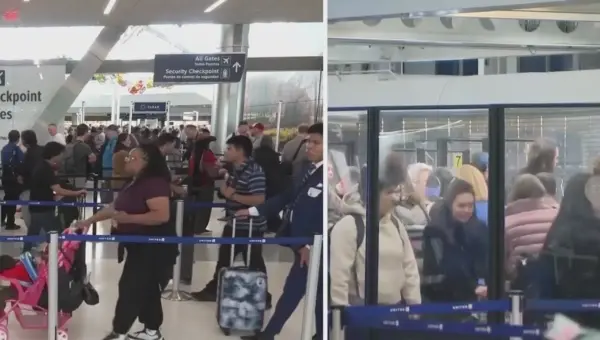
President Trump has issued an executive order to provide back pay to TSA workers affected by the government shutdown. This aims to ease long airport lines and financial hardship for employees who have gone over a month without pay. ICE officers have been deployed to assist, with mixed results, while calls for political compromise grow louder.

Trump Weaponizes Pain for Voter Suppression, Critics Claim
A heated exchange reveals accusations that Donald Trump intentionally prolonged a government shutdown to weaponize public pain. Critics claim this strategy aimed to force the passage of a voter suppression bill, rejecting multiple Democratic proposals to fund the TSA. The debate also touched on historical funding decisions for agencies like ICE.