Air Safety Fears Soar After Deadly Crash
A fatal crash at LaGuardia Airport has triggered a national review of air safety, revealing a pattern of close calls and communication issues at U.S. airports. Investigators are examining technology and staffing, as calls grow for urgent safety upgrades.

Air Safety Fears Soar After Deadly Crash
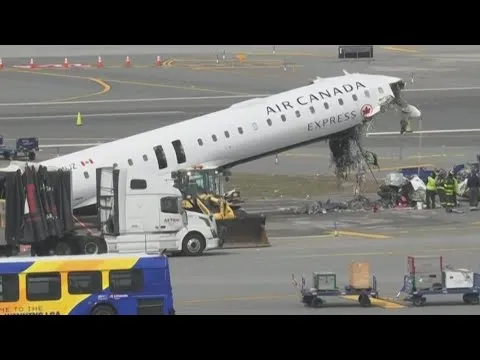
A fatal crash at New York’s LaGuardia Airport has put a spotlight on air safety. The accident killed two pilots and has investigators looking closely at how it happened. While the investigation is just beginning, it has highlighted growing concerns about communication issues and safety systems at airports across the United States.
Communication Breakdown Suspected in LaGuardia Tragedy
The crash on Sunday night involved an Air Canada passenger jet and an airport fire truck. The National Transportation Safety Board (NTSB) believes a breakdown in communication may have played a role. Investigators are trying to figure out who was in charge of controlling ground traffic at the time. There is conflicting information about whether it was the main controller or another controller responsible for specific areas. Ground controllers are responsible for managing all planes and vehicles on taxiways, but usually not active runways.
Investigators are examining the three minutes leading up to the crash. They are looking into the airport’s automatic runway safety system and if staffing levels were adequate. The two pilots who died were early in their careers.
A Pattern of Close Calls Across U.S. Airports
The LaGuardia tragedy is not an isolated incident. Federal data shows there have been 26 serious runway incidents involving both commercial and private planes in the U.S. over the last five years. The Federal Aviation Administration (FAA) logged over 1,620 runway incursions in 2023 alone. These are events where a plane, vehicle, or person is in the wrong place on the runway.
- Boston: A jet had to slam on its brakes during takeoff because another plane crossed the runway in front of it.
- Chicago: Southwest Airlines planes twice had to stop their landings because runways were not clear.
- Washington D.C.: At Reagan National Airport, planes were cleared to cross active runways while others were cleared for takeoff, leading to multiple incidents.
- Nashville and San Diego: Pilots received conflicting instructions and had to abort flights at the last moment.
- Austin: A cargo jet nearly collided with a passenger plane after both were cleared for the same runway.
These events are classified by the FAA as the most severe category, just one step away from an actual crash. They are often the result of multiple factors coming together.
Calls for Upgraded Safety Technology
The LaGuardia crash is prompting renewed calls for upgrades to ground safety technology nationwide. One key technology being discussed is Runway Status Lights. These are red lights embedded in the pavement that signal an unsafe runway situation. They work automatically and do not rely on air traffic controllers. They turn on instantly when there is a risk of a collision. This is important because, as seen in the LaGuardia incident, air traffic controllers can be distracted.
What Happens Next
Investigators will continue to review cockpit audio, air traffic control communications, and airport system data in the coming weeks. Officials stress that no single cause has been determined yet. Air safety is a complex issue involving technology, human factors, and system management.
Global Impact
While this report focuses on U.S. airports, the issues raised are relevant globally. Air travel is a massive international industry. When safety concerns arise in a major aviation market like the U.S., it can affect international travel standards and regulations. Countries often look to the U.S. for guidance on aviation safety. Any significant changes or identified weaknesses in U.S. safety protocols could lead other nations to review their own systems. This could result in stricter international flight rules or increased inspections for flights arriving from or departing to the U.S.
Historical Context
Airport safety has been a growing concern since the dawn of commercial aviation. Early aviation accidents often led to the creation of new safety regulations and organizations. For example, the NTSB was formed in 1967 to investigate transportation accidents and recommend safety improvements. The FAA, established in 1958, sets and enforces safety standards for civil aviation. Incidents like the 2016 near-miss at JFK Airport, where a jet almost landed on a taxiway with people on it, have also led to increased scrutiny and calls for technological upgrades. This current focus on runway incursions and communication is part of a long-standing effort to make air travel as safe as possible.
Economic Considerations
Airport operations and air traffic control are expensive. Upgrading technology like Runway Status Lights requires significant investment. However, the cost of an accident, both in human lives and economic disruption, is far greater. Accidents can lead to airport closures, flight cancellations, and damage to the reputation of airlines and airports. The FAA’s budget and staffing levels are also critical factors. Insufficient staffing can lead to overworked controllers, increasing the risk of errors. Decisions about investing in new technology and ensuring adequate staffing are therefore economic decisions with direct safety implications.
Future Scenarios
Several scenarios could unfold. One possibility is that the investigation leads to immediate, widespread implementation of new technologies and stricter staffing requirements at U.S. airports. This would likely increase safety but could also lead to higher operating costs and potentially fewer flights in the short term. Another scenario is that the investigation reveals a need for more gradual changes, focusing on specific airports with the highest risk. A less likely but possible scenario is that the findings are not significant enough to prompt major systemic changes, and the focus remains on existing protocols, with the risk of future incidents continuing.
Source: Close calls at US airports come under increased scrutiny | NewsNation Live (YouTube)

Related Articles
LaGuardia Runway Reopens After Deadly Crash, Safety Lapses Exposed
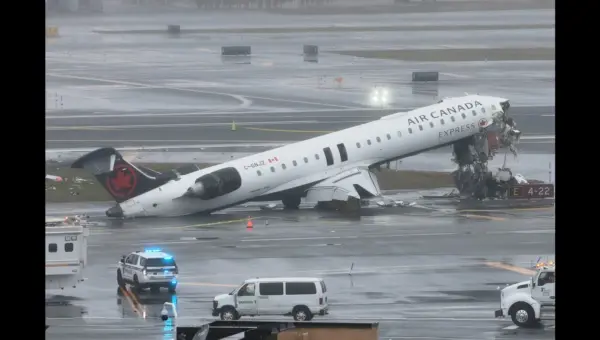
LaGuardia Airport's main runway has reopened after a fatal crash involving an Air Canada Express jet and a fire truck. The incident, which killed two pilots, exposed critical failures in airport safety systems, including ground surveillance and transponder use.

Missing Transponder Fueled LaGuardia Near-Disaster
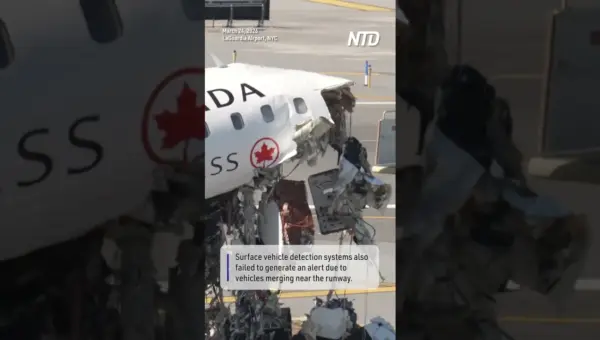
A fire truck lacking a crucial transponder was involved in a near-collision at LaGuardia Airport. The NTSB is investigating this and other issues, highlighting potential gaps in ground vehicle safety protocols. This incident serves as a stark reminder of the importance of technology in preventing airport accidents.


LaGuardia Crash Exposes Airport Chaos, Border Policy Fallout
A deadly crash at LaGuardia Airport has exposed critical weaknesses in U.S. aviation security, exacerbated by TSA staffing shortages and controversial ICE deployments. The incident highlights the strain on travel infrastructure amidst ongoing debates about border policy and geopolitical tensions with Iran.