Air Power’s ‘Catastrophic Failure’ in Iran War: Expert Warns
Political science professor Robert Pape warns the current U.S. and Israeli war on Iran could be the most catastrophic failure of air power ever. He argues that overconfidence in "smart bomb" precision and the "five-ring theory" overlooks critical political consequences and the enemy's ability to retaliate. Pape emphasizes the need for backup plans, cautioning that a lack of foresight leads to unintended escalation.

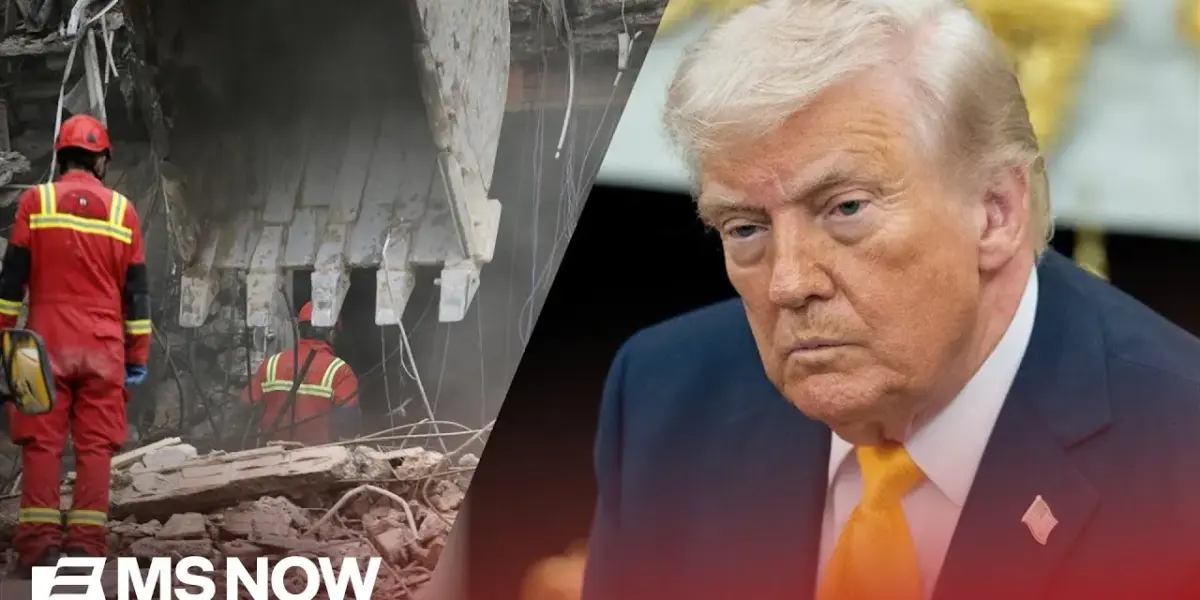
Expert Warns of “Catastrophic Failure” in Iran War
Political science professor Robert Pape warned that the ongoing U.S. and Israeli war on Iran could be the most significant failure of air power in history. Speaking on March 18th, Pape discussed the intense and sustained air campaign against Iranian targets, which has included strikes on military installations, missile launchers, and tragically, a school. He highlighted the common U.S. military assumption that air superiority alone can win wars, often overlooking the need for ground troops and backup plans.
The Illusion of Precision Air Power
Pape explained that the development of “smart bombs” and advanced targeting systems, like laser-guided and GPS-guided munitions, has created an “illusion of control.” While these technologies allow for remarkable accuracy, hitting targets within meters, they don’t account for the political and strategic consequences. “We were so confident in the precision revolution and the ability of air power to kill leaders through this five-ring targeting,” Pape stated. “We were so confident we didn’t come in with a backup plan.”
He traced the evolution of bombing accuracy from early World War I balloons to the sophisticated systems of today. While World War II bombers could only guarantee half their bombs landed within 1,000 feet, modern technology allows for strikes within five meters 80-90% of the time. This technical leap, Pape argued, led to a dangerous overconfidence, making air power a “seductive” tool that leaders believe offers benefits without significant costs.
The “Five Ring Theory” and its Pitfalls
Pape discussed the “five-ring theory,” developed by Air Force Colonel John Warden, which targets leadership, command and control, critical infrastructure, psychological operations, and offensive missile capabilities. This model, which aims to win wars solely through air power without ground forces, has been a dominant strategy since the 1991 Gulf War. Pape has long argued against this approach, emphasizing that it fails to address the enemy’s “lashback capability” – their ability to retaliate and inflict damage.
“My argument has always been, okay, you tell me you’re right. Maybe Professor Pape is wrong that for the first time in history, maybe your plan is really going to work. And I’ve been saying this for 30 years, okay? And I’m saying all I’m asking is bring some backup in case just in case you’re wrong because if you don’t, you’re going to create a catastrophic situation.”
He cited the bombing of Kosovo in March 1999 as an example. Despite hitting 51 targets, including Slobodan Milošević’s home, the air campaign led to a Serb backlash. This resulted in an invasion of Kosovo, displacing a million civilians and creating a prolonged crisis. Pape believes this pattern of underestimating political consequences and overestimating the control offered by air power is repeating in the current conflict.
The Moral Dimension and Unintended Consequences
The discussion also touched upon the moral justifications for the war. While acknowledging Iran’s oppressive regime and its human rights abuses, Pape and host Chris Hayes questioned the morality and strategic wisdom of the U.S. and Israeli actions. Hayes expressed doubt about the stated motivations, suggesting they might not be genuinely concerned with the Iranian people’s dignity.
Pape argued that attacking an evil enemy can inadvertently create opportunities for that enemy to inflict more harm. He pointed to the potential for retaliation, noting that even in the early stages of the conflict, significant costs are already being incurred. The conversation also briefly touched upon historical U.S. involvement in Iran, including the 1953 coup that installed the Shah, highlighting a complex past that complicates simple moral assessments of current actions.
Looking Ahead: The “Escalation Trap”
Pape’s central thesis, detailed in his book “Bombing to Win,” is that the overreliance on precision air power without adequate backup plans leads to an “escalation trap.” This occurs when tactical successes create strategic failures, leading to unforeseen and negative outcomes. The current war in Iran, he fears, may be another instance of this pattern, potentially resulting in the most catastrophic failure of air power seen to date. The long-term implications and the potential for further escalation remain critical questions moving forward.
Source: ‘Longtime DISASTER’: Political science professor Robert Pape discusses war in Iran with Chris Hayes (YouTube)

Related Articles

G7 Allies Clash Over Iran War Strategy, Urge Focus on Russia
G7 foreign ministers met in Paris, revealing deep divisions over the U.S. war with Iran. European allies urged the U.S. to pressure Russia, linking its actions to the conflict and fearing support for Ukraine will wane.

Iran Blocks China Ships, Exposing Beijing’s Weak Grip
Iran's recent decision to block Chinese ships at the Strait of Hormuz is exposing the limits of Beijing's influence in the Middle East. This action is causing delays and cancellations for Chinese manufacturers, turning a perceived geopolitical win into an economic strain.
Trump’s “Walk Away” Tactic Signals Tougher Stance on China
Retired Air Force Brigadier General David Stillwell believes President Trump's strategy of being willing to walk away from negotiations puts pressure on China. This tactic, combined with US global actions and strengthened alliances, signals a more assertive American foreign policy.