Air Canada Jet Crashes at LaGuardia After Runway Collision
An Air Canada jet crashed at LaGuardia Airport after colliding with a fire truck on Runway 4, killing the pilot and co-pilot. Chilling audio reveals an air traffic controller admitting fault after clearing both the aircraft to land and the truck to cross the same runway. The NTSB is investigating the incident, focusing on air traffic control procedures and staffing.

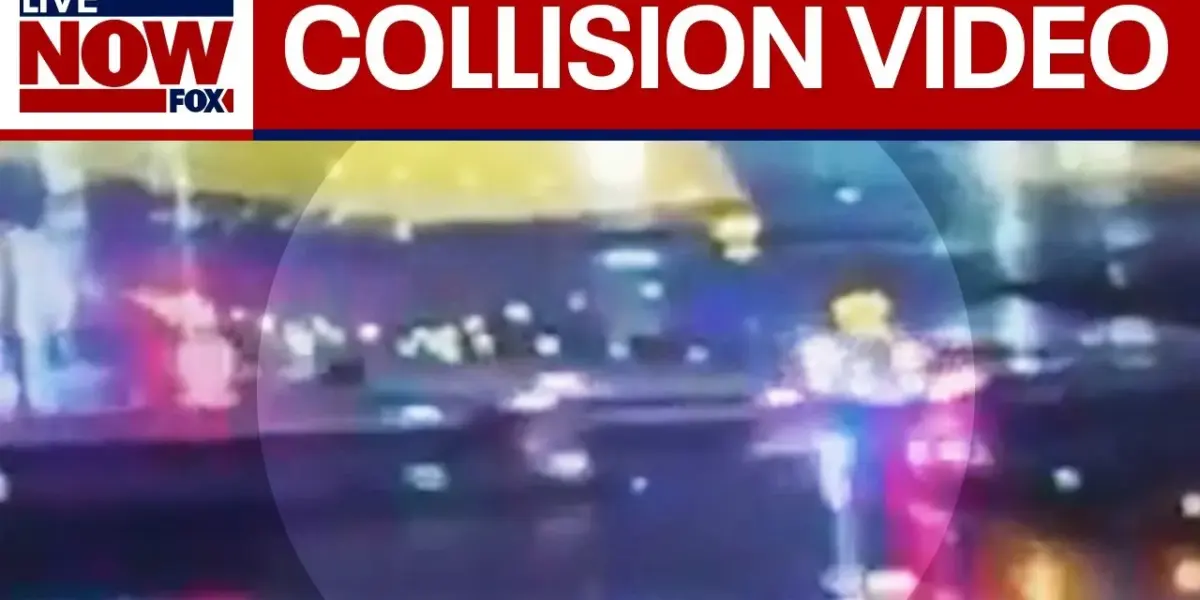
Air Canada Jet Collides With Fire Truck at LaGuardia
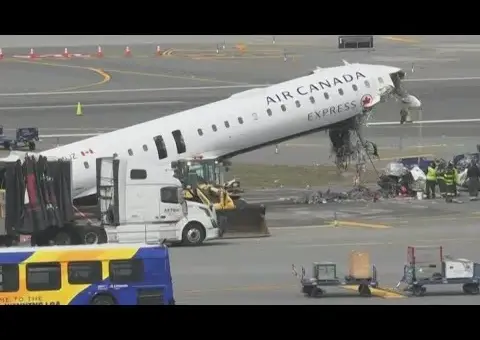
A deadly crash occurred at New York’s LaGuardia Airport on Wednesday night when an Air Canada jet collided with a fire truck on Runway 4. The incident, which happened shortly after 6 p.m. EST, resulted in the deaths of the pilot and co-pilot of the Air Canada Embraer E190 aircraft. The jet was attempting to land when it struck a fire truck that was crossing the same runway.
Chilling Audio Reveals Air Traffic Controller’s ‘Mistake’
Newly released audio recordings capture the tense final moments before the collision and its immediate aftermath. In one recording, an air traffic controller can be heard saying, “I messed up.” The audio reveals a chaotic exchange between the tower, the approaching Air Canada flight, and ground vehicles.
The transcript includes an exchange where the tower clears the fire truck, identified as “Truck one in company,” to cross Runway 4 at Delta. Shortly after, the controller instructs the Air Canada jet, “Frontier 4195. Just stop there, please. Stop. Stop. Stop.” The audio indicates the fire truck was cleared to cross the same runway the Air Canada jet was cleared to land on. Experts suggest this was a critical error.
Investigation Focuses on Air Traffic Control and Staffing
The National Transportation Safety Board (NTSB) is investigating the crash, with a key focus on the actions of the air traffic controller and the staffing levels in the tower at the time. While initial reports suggested only one controller might have been working both ground and tower frequencies, Department of Transportation Secretary Pete Buttigieg stated this was inaccurate. However, he did not reveal the exact number of personnel present.
Randy Clatt, from the Foundation for Aviation Safety, commented on the audio, stating, “It’s pretty clear that that airplane was cleared to land on runway 4. And it’s also clear that air traffic controllers cleared the fire truck and company… to cross runway 4, the same runway that the Air Canada jet was cleared to land on.” He added that there seemed to be “a little hesitation in the air traffic controller’s voice when he cleared them across like he was reviewing if that was okay or not.”
Clatt noted that while it’s not ideal, it’s not unusual for a single controller to manage both ground and tower operations, especially during late-night hours when traffic is lighter. However, he suggested that the FAA might be facing controller shortages that are not fully apparent from official statements. “They are probably shorter of controllers than that statement would have led us to believe,” he said.
Pilot Actions and Aircraft Performance
The video footage of the crash circulating on social media shows the fire truck crossing the runway directly in front of the Air Canada jet. Experts believe the pilots likely applied maximum braking upon seeing the truck, but it was too late to avoid the collision. Passengers reported hearing the plane braking hard.
“I’m very sure that once they saw the truck in front of them, they were max breaking,” Clatt explained. “When these guys were landing, you know, they have a primary job of putting the airplane down on the runway safely… and then they will reverse the engine. So there’s a point there where there’s a lot of workload in a few seconds. And probably what they are not doing is looking several thousand feet down the runway for a vehicle on the runway.” Visibility was also poor due to it being night and the runway being wet.
The aircraft’s reversers were engaged, indicating the pilots’ desperate attempt to stop. The NTSB will examine the flight data recorder and cockpit voice recorder to understand the precise sequence of events and when the pilots became aware of the hazard.
Fire Truck’s Mission and Vehicle Awareness
The fire truck was responding to a report from a United Airlines pilot about an odor on board another aircraft. Firefighters driving on airport grounds are required to be acutely aware of active runways and follow strict procedures for crossing them, which includes clearance from both ground and tower controllers.
“They are required to be very well aware and are,” Clatt stated. “I’m sure the driver of that truck had crossed active runways multiple times every day for as long as he’d been there. That sort of thing is drilled into everyone.” However, he acknowledged that the angled nature of taxiway Delta to Runway 4 could have made it difficult for the truck driver to see an approaching aircraft.
Broader Aviation Safety Concerns
The incident at LaGuardia highlights growing concerns about aviation safety, including runway incursions and potential staffing issues within the FAA. Clatt mentioned that there have been nearly 500 runway incursions in the first four months of the current fiscal year, with about 10% being close calls. While the majority involve pilot errors, a significant portion includes issues with other vehicles on the runway.
“We see them on a regular basis despite the rules,” he said. “It’s a problem and it always has been. But when you have a risk that isn’t really addressed more aggressively, it’s inevitable that bad things are going to happen.” He described aviation as “not inherently dangerous but is extremely unforgiving.” The proximity of LaGuardia to dense urban areas and its unique layout were noted but deemed less significant to this specific accident than the direct runway conflict.
Relief Amidst Tragedy: Averted Greater Catastrophe?
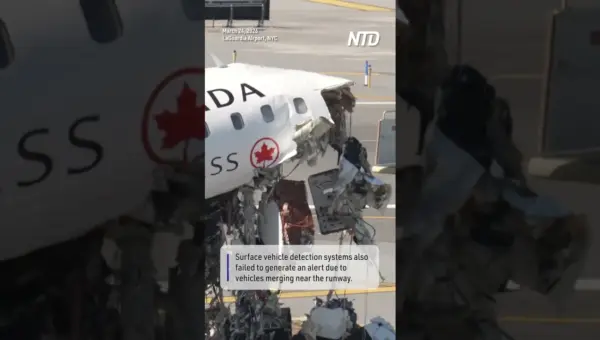
Despite the tragic loss of the two pilots, aviation experts believe the outcome could have been far worse. The nose of the Air Canada jet absorbed much of the impact, and the fire truck’s structure may have also played a role in mitigating damage. The fact that the plane did not strike the truck with its wing, which contains fuel tanks, likely prevented a much larger fire and explosion.
“We could have certainly had a much much more serious collision and aftermath and with a lot more people hurt,” Clatt observed. He also commended the passengers and remaining flight attendants for their efforts during the evacuation, noting that overwing hatches had to be opened, suggesting the primary exits may have been compromised.
What’s Next?
The NTSB’s full investigation is expected to take months. Findings will likely address air traffic control procedures, staffing protocols, and the specific actions of the controller and vehicle operators. This incident, the first fatal accident at LaGuardia in nearly three decades, underscores the need for continued vigilance in aviation safety, especially amid increasing air traffic and potential resource constraints.
Source: WATCH: Deadly LaGuardia crash caught on video (YouTube)

Related Articles
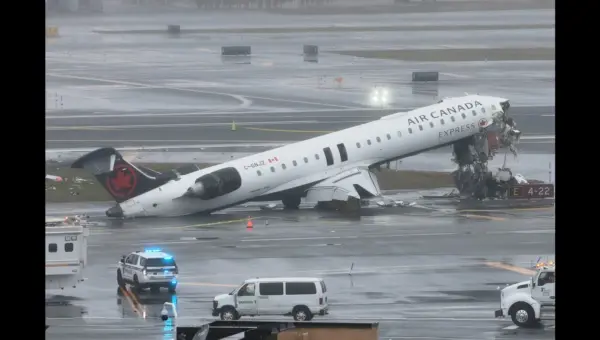
LaGuardia Runway Reopens After Deadly Crash, Safety Lapses Exposed
LaGuardia Airport's main runway has reopened after a fatal crash involving an Air Canada Express jet and a fire truck. The incident, which killed two pilots, exposed critical failures in airport safety systems, including ground surveillance and transponder use.
Air Safety Fears Soar After Deadly Crash
A fatal crash at LaGuardia Airport has triggered a national review of air safety, revealing a pattern of close calls and communication issues at U.S. airports. Investigators are examining technology and staffing, as calls grow for urgent safety upgrades.
Missing Transponder Fueled LaGuardia Near-Disaster
A fire truck lacking a crucial transponder was involved in a near-collision at LaGuardia Airport. The NTSB is investigating this and other issues, highlighting potential gaps in ground vehicle safety protocols. This incident serves as a stark reminder of the importance of technology in preventing airport accidents.