AI Sparks Job Losses: Real Estate Offers Shelter
As AI rapidly automates jobs, particularly in white-collar sectors, real estate is emerging as a potential refuge for financial stability. Experts warn of significant job displacement, making traditional career paths uncertain. However, strategic investment in housing offers a way to build passive income and financial independence.

AI Sparks Job Losses: Real Estate Offers Shelter
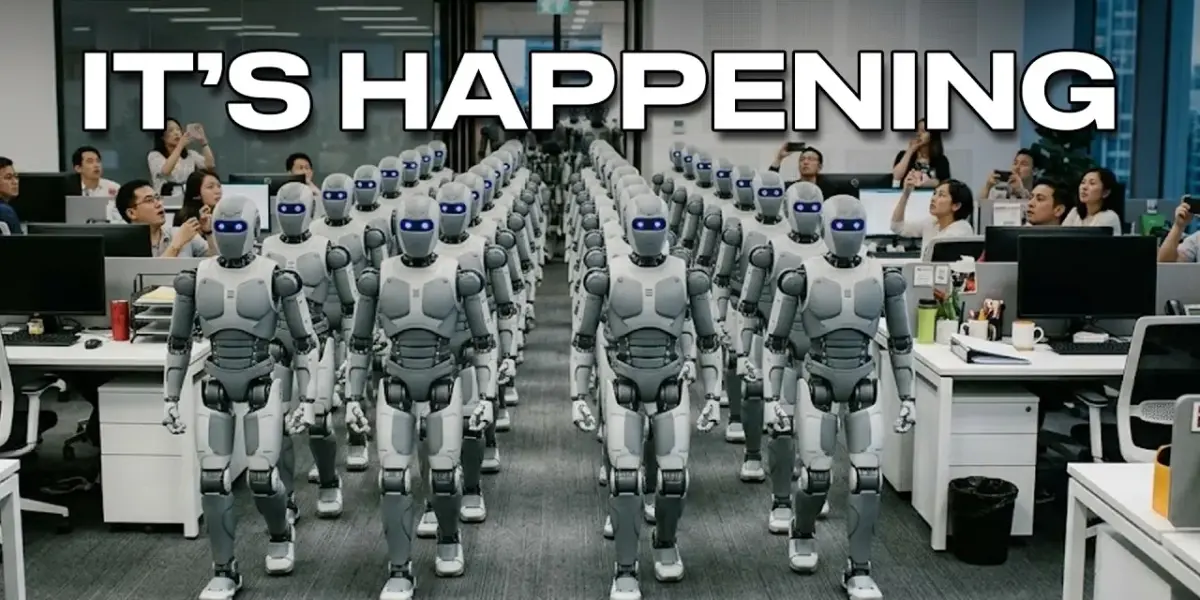
Artificial intelligence is rapidly changing the job market. Many experts believe AI could eliminate a significant number of jobs, especially entry-level white-collar positions. This shift is causing concern for college graduates and workers across various industries. Some forecasts suggest that AI might replace up to half of all white-collar jobs in the next five years. This could lead to widespread unemployment, with some predicting rates as high as 20%.
The AI Impact on Industries
Professions like marketers, coders, designers, lawyers, and accountants are seen as particularly vulnerable. Companies are already using AI to perform tasks that once required human workers. For example, IBM has replaced hundreds of HR roles with AI. Microsoft has noted that AI is now writing a substantial portion of its code, and they recently laid off 9,000 employees. Amazon is also reducing its workforce, with a target of 30,000 job cuts. Even government jobs are affected, with projections of 317,000 positions being impacted.
The speed at which AI is advancing is a major concern. Unlike past technological changes, AI’s impact is expected to be faster and broader. This rapid change could disrupt the entire economic model. The World Economic Forum estimates that 92 million white-collar jobs could be lost to AI by 2030.
Understanding the Economic Shift
Historically, job openings and the stock market, like the S&P 500, have moved together. When companies do well, they hire more people. However, a divergence has been observed since the launch of advanced AI tools like ChatGPT. This suggests that companies are becoming more efficient through AI, potentially reducing their need for human labor, even when profits are high.
The value of certain skills is also changing. Many high-paying jobs have historically been based on specialized knowledge that was not widely available. AI, however, provides access to vast amounts of information instantly and cheaply. This makes readily available knowledge less valuable in the job market.
Navigating the Future: Adapt or Be Left Behind
Facing this potential job displacement, individuals have a choice: adapt to AI or risk being replaced. Entrepreneurs, for instance, are seen as having an advantage. Instead of asking if AI will replace them, they ask how they can use AI to increase their productivity and reach. This proactive mindset of using technology to scale and improve services is key.
Some roles are considered less susceptible to AI replacement. These often involve complex human judgment, creativity, and emotional intelligence. Examples include policymakers, entrepreneurs, mediators, social workers, and artists. These jobs require skills that AI currently cannot replicate, such as empathy, leadership, and artistic expression.
Real Estate as a Stable Investment
In this changing economic landscape, real estate is presented as a more stable asset. The fundamental need for housing remains constant, regardless of technological advancements. Investing in real estate can be viewed as building a business rather than just holding a job.
For example, a single-family home can generate passive income. If a typical property can provide $1,000 per month, owning several such properties could potentially replace a traditional salary. To replace an average annual income of $85,000, one might need six to seven properties generating passive income. This provides a potential path to financial independence.
Accessing Capital for Investment
Concerns about the capital needed for real estate investment can be addressed through various means. Homeowners may have significant equity in their properties that can be borrowed against. Additionally, retirement savings like 401(k)s and IRAs, or investments held by others, can be converted into real estate assets. This suggests that financial resources are available for those willing to pursue this path.
The message is clear: the time to prepare for these economic changes was yesterday. However, for those who recognize the urgency, it is still possible to take control of their financial future. Becoming an owner of assets, rather than solely relying on employment, offers a way to navigate the AI-driven job market successfully. This involves understanding how to use AI and other tools to build wealth and secure one’s livelihood.
Source: AI Is Replacing Jobs FAST… Here’s How to Survive (2026 Warning) (YouTube)

Related Articles


AI Threatens White-Collar Jobs, Reshaping U.S. Workforce
Artificial intelligence is poised to significantly reshape the U.S. job market, raising concerns among recent graduates and experienced professionals about future employment. While some lawmakers call for regulation, experts emphasize adaptation and learning to work with AI.


Claude AI Takes Control of Your Computer
Anthropic's new Claude feature, Computer Use, allows the AI to control your computer with simple prompts, even from your phone. This raises questions about job security and AI's role in the workplace. The tool offers advanced automation but comes with considerations compared to open-source alternatives.


Investors Buy $500M in Real Estate Amidst Uncertainty
Investors deployed over $500 million in real estate transactions during 2025, focusing on value-add opportunities, irreplaceable assets, and strategic new developments. Despite market uncertainty and higher interest rates, the approach centered on identifying distressed sellers and properties with clear paths to increased income.