AI Solves War’s Deadliest Logistical Puzzle: Medical Triage
Modern warfare presents unprecedented logistical challenges, particularly in mass casualty medical care. NATO's TIDE Hackathon is exploring AI-driven solutions to optimize the complex allocation of medical resources, moving beyond human capacity to save lives on the battlefield.

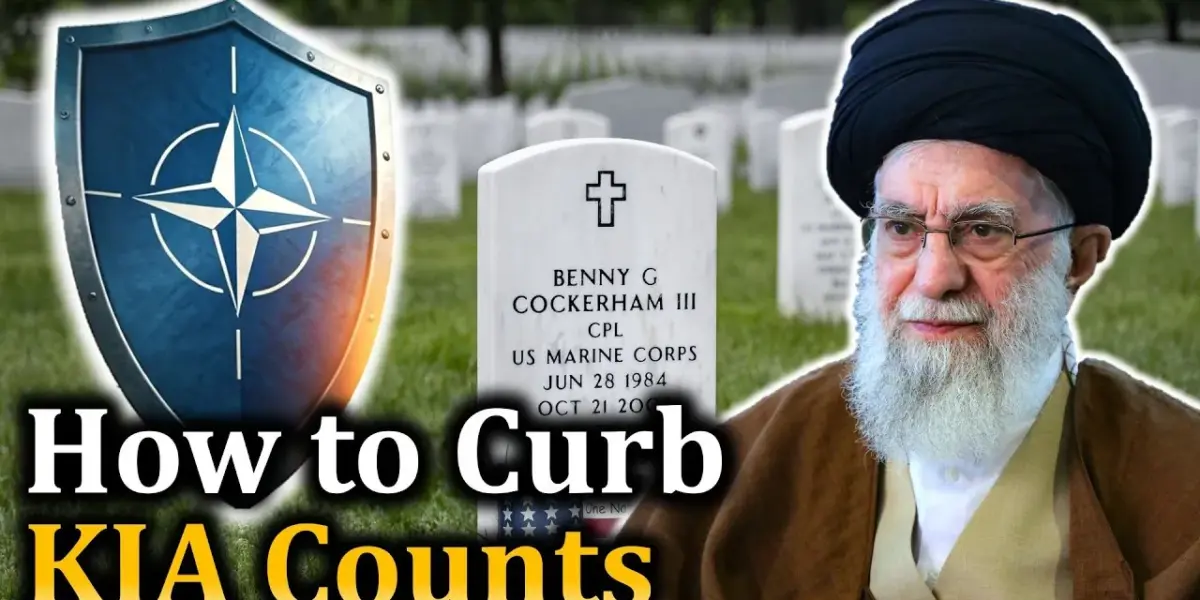
AI Solves War’s Deadliest Logistical Puzzle: Medical Triage
In the brutal calculus of modern warfare, the adage holds true: “Amateurs talk tactics. Professionals study logistics.” While the world’s attention often fixates on troop movements and weaponry, the true sinews of war are often found in the complex, life-or-death challenges of supply and support. For nations like Iran, currently embroiled in conflict, and for potential adversaries like China or Russia, and for those on the front lines like Ukraine, a particularly thorny logistical problem is emerging as paramount: the efficient and effective allocation of medical resources in the face of mass casualties.
This isn’t merely a matter of having enough bandages or field hospitals; it’s a sophisticated network problem that goes far beyond traditional triage. Imagine a battlefield scenario where hundreds of wounded soldiers arrive simultaneously. The decisions made in the critical minutes and hours that follow can literally mean the difference between life and death. While civilian hospitals grapple with similar, albeit less intense, challenges daily, the modern battlefield amplifies this complexity exponentially.
The Exponential Complexity of Battlefield Medicine
Previously, medical evacuation might have been limited to a single nearby field hospital or a local civilian facility. However, advancements in medical transportation—ambulances, helicopters, and planes—have created a vast network of potential destinations. Each hospital possesses unique specialties, varying distances from the front lines, and a finite number of beds. When faced with just two wounded soldiers and two available beds, each at a different specialized hospital, the allocation seems simple: send the patient with a lung injury to the pulmonary specialist and the patient with blood loss to the general surgical unit.
This is a challenge the United States currently faces on a relatively small scale, with a handful of casualties in recent conflicts. However, as the number of wounded escalates, so does the complexity. Ukraine, enduring a prolonged and intense conflict, is grappling with this daily. For Russia, the scale of potential casualties could strain even rudimentary allocation systems. For Iran, facing a high volume of casualties with limited resources, the problem becomes exponentially more daunting. The introduction of varying injury severities, the critical nature of certain conditions (like catastrophic blood loss), and the trade-offs between proximity and specialized care create a dizzying array of decisions.
An incorrect allocation can lead to overwhelmed specialized units while others sit idle, resulting in preventable deaths due to poor resource management. What makes this logistical challenge unique is its immediacy. Unlike other logistical problems that might allow for hours, days, or even weeks of planning, battlefield medical allocation demands near-instantaneous decisions. The sheer scale and interconnectedness of the problem make it too complex for any single individual to manage, and attempting to divide the task among multiple people would lead to catastrophic coordination failures.
NATO’s Innovative Approach: The TIDE Hackathon
Recognizing the urgency and the potential for catastrophic failure in future large-scale conflicts, NATO’s Allied Command Transformation (ACT) has been at the forefront of developing solutions. The TIDE Hackathon, an event designed to foster innovation among allies, industry, and partner nations, has become a crucial proving ground for such challenges. TIDE, an acronym for Technology for Information and Decision Execution superiority, aims to bridge the gap between the diverse operational methods of NATO’s 32 member states and their partners.
This year’s hackathon featured three key competitions, all centered on transforming vast amounts of data into actionable insights. While one focused on cyber intrusions and another on informed targeting in multi-threat environments, the third, and most relevant to our discussion, was the creation of a digital health web decision support tool. As Christophe Albert, a medical subject matter expert at NATO ACT, noted, the goal was to develop solutions for complex medical logistics scenarios involving a high volume of patients, where urgency and life-or-death decisions are the norm.
The challenge was clear: develop an AI decision support tool that connects NATO’s medical network, providing real-time visibility of multinational medical capabilities and availability. This highlights the increasing integration of Artificial Intelligence (AI) into military operations beyond just targeting systems, encompassing operational decisions and long-term strategic planning. The ability of AI, particularly Large Language Models (LLMs), to process vast amounts of complex information, such as NATO’s extensive coordination standards, is proving invaluable.
AI as the Solution: The “Bytes on the Ground” Approach
The need for such tools is underscored by past successes. A Ukrainian team won a previous TIDE Hackathon with the Delta Situational Awareness System, which became a vital command and control system during the invasion. Another Ukrainian team developed “Panacea,” a natural language thesaurus for medical drugs, addressing the critical interoperability issue of diverse medical supplies donated to Ukraine, where different countries use different names for the same medications.
The winner of this year’s medical competition was the Dutch team “Bytes on the Ground.” Their solution, like others, recognized that at its core, the medical logistics nightmare is a complex mathematical problem. However, AI offers a crucial advantage: the ability to think creatively and adapt to unforeseen circumstances, going beyond pre-programmed decision trees. The “fog of war” is inherently chaotic, making it impossible to anticipate every contingency.
The “Bytes on the Ground” tool incorporated three critical elements:
- Human-in-the-Loop: The AI provides recommendations, but a human operator must approve or override each one. This human oversight not only ensures final decision-making authority but also trains the AI, helping it learn from mistakes and refine its algorithms over time.
- Reduced Information Overload: The interface deliberately limits the information presented to decision-makers. While detailed data is available, presenting only essential information (e.g., total available beds rather than granular details about specific hospital specialties) prevents cognitive overload during high-stress situations.
- Integration with Mapping Tools: To mitigate AI’s tendency to “hallucinate” or generate inaccurate route information, the tool leverages traditional mapping programs for actual routing, ensuring the physical transportation of patients is handled reliably.
Why This Matters: Proactive Preparedness in an Uncertain World
The implications of these advancements are profound. The TIDE Hackathon serves as a showcase, with individual allies then deciding whether to further develop promising tools, pursue partnerships, or integrate them into their own systems. The problem of medical logistics under duress is not going away. It is a persistent reality in Ukraine, a concern for civilian populations targeted by attacks, and a looming threat for potential conflicts in Europe and the Indo-Pacific.
For nations like Iran, the need for such solutions is immediate, though the transparency of their situation is limited. For the allied nations, the proactive approach to developing these AI-driven decision support tools is a strategic imperative. The current geopolitical climate, marked by increasing instability, underscores the urgency. Having a robust solution in place *before* a crisis erupts is not just prudent; it is essential for preserving lives and maintaining operational effectiveness.
The Future Outlook
The integration of AI into battlefield medicine represents a paradigm shift. It moves beyond simple automation to intelligent decision support, capable of managing complexity that would overwhelm human capacity. As AI technology continues to evolve, we can expect even more sophisticated tools that can predict resource needs, optimize patient flow, and even assist in real-time medical diagnostics. The TIDE Hackathon and similar initiatives are vital in accelerating the adoption of these technologies, ensuring that allies are better prepared for the logistical nightmares of future conflicts. The race is on to ensure that when the wounded arrive, the right patient gets to the right specialist at the right time, every time.
Source: The Hardest Logistical Problem in Modern Warfare, and How Allies Are Trying to Solve It (YouTube)

Related Articles

U.S. Iran Tensions Rise Amid Shifting Alliances
Rising tensions between the U.S. and Iran are creating a volatile geopolitical situation. With conflicting signals on de-escalation and potential shifts in alliances like NATO and U.S.-Israel relations, the path forward remains uncertain. The global economy and regional stability hang in the balance.


Trump’s War Talk Stuns Financial Crowd
Donald Trump's recent speech in Miami focused on his foreign policy, particularly his critical views on NATO and his vision for international relations. He declared the U.S. would no longer defend NATO allies, questioned the value of existing alliances, and suggested renaming the Strait of Hormuz. The speech also touched on his personal views of success, his allies, and his perceived role as a global peacemaker.
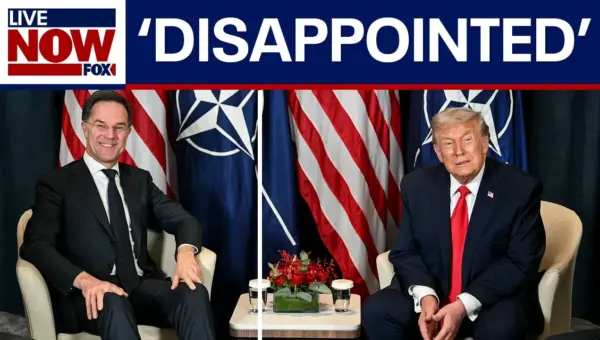
Trump Critical of NATO as Iran Conflict Escalates
President Trump voiced frustration with NATO's lack of involvement in the Iran conflict while the U.S. military prepares for a sustained campaign. Reports indicate significant damage to Iran's military, but tensions remain high with ongoing missile strikes and a recent attack on a Saudi air base wounding U.S. personnel.