AI Simulates Reality, Inspiring New Creative Tools
AI is making it easier to simulate reality with technologies like ray tracing. While early simulations were rough, AI now helps create realistic images faster. This breakthrough is opening new creative possibilities for artists and developers.

AI Learns to Simulate Reality, Sparking Creative Breakthroughs
Imagine a computer program that can perfectly recreate what a real-world scene looks like. This is the power of ray tracing, a technology that simulates how light travels and bounces around. While not new, this process has been dramatically enhanced by recent AI advancements, making incredibly realistic images possible for more creators than ever before. A recent demonstration highlights how complex AI models can learn to simulate reality, even when the initial results are far from perfect.
The core idea behind ray tracing is simple: trace the path of light rays from a virtual camera through a digital scene. Each ray bounces off surfaces, reflecting and refracting light until it reaches its source or escapes the scene. By simulating millions of these rays for every pixel on a screen, a highly realistic image can be built. Think of it like drawing a picture by following countless tiny threads of light back to their origin.
The Challenge of Early Simulations
However, achieving this realism is a long and computationally intensive process. Early attempts at ray tracing, even when done perfectly, produced very rough images. If you only simulate one light path, or ‘sample,’ for each pixel, the result is noisy and incomplete. It looks like a blurry mess, not a clear picture.
Adding more samples, like two or a hundred, improves the image quality gradually. But to get a truly photorealistic image, millions of samples are needed. This can take a very long time, even with powerful computers. The journey from a noisy, unrefined image to a beautiful, finished picture is often long and requires patience.
AI’s Role in Accelerating Realism
This is where artificial intelligence steps in. AI models, trained on vast amounts of data, can learn to predict and fill in the missing details in these simulations much faster. Instead of calculating every single light ray, AI can intelligently guess what the final image should look like based on patterns it has learned. This significantly speeds up the rendering process.
For example, AI can be used to ‘denoise’ images, removing the speckles and imperfections that come from using fewer samples. This allows artists and developers to achieve high-quality results with less waiting time. This capability is transforming industries like gaming, film production, and architectural visualization, where realistic rendering is crucial.
A New Way to Share the Creative Process
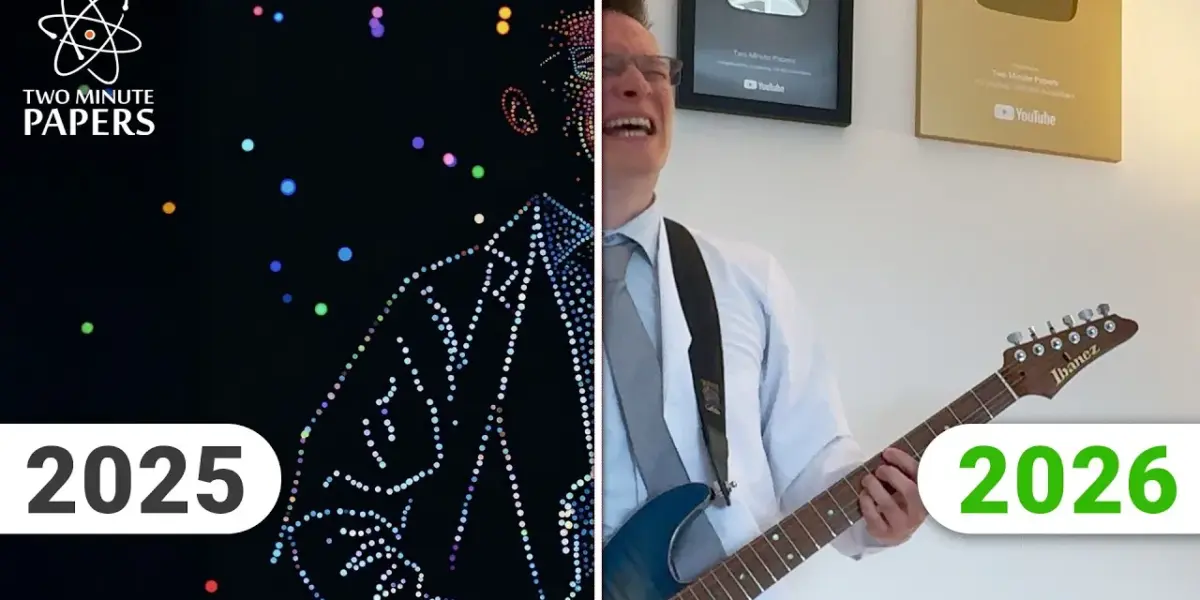
The experience of creating these complex simulations can be deeply rewarding. One researcher described the moment of seeing a nearly finished, high-quality render as emotional and beyond words. To share this feeling, a unique approach was taken: a song was written about ray tracing, capturing the journey from initial struggle to final success.
This highlights a broader trend: making complex AI and computer graphics concepts more accessible. The creator of the ray tracing simulation also shared a free, master-level course. This course teaches the physics of light and guides students through coding their own simulation from scratch. The goal is to make this advanced knowledge available to everyone, regardless of their ability to pay.
Why This Matters
The ability to simulate reality more efficiently with AI has significant real-world implications. For game developers, it means more immersive and visually stunning virtual worlds. Filmmakers can create more believable special effects and animated characters. Architects and designers can generate highly realistic visualizations of their projects, helping clients understand complex designs more easily.
Furthermore, the democratization of these tools is crucial. By offering free courses and open-source resources, more people can learn and experiment with these powerful technologies. This fosters innovation and allows a wider range of voices to contribute to the creation of digital content. As AI continues to advance, we can expect even more sophisticated and accessible tools for simulating and creating our digital realities.
Source: The Algorithm That Made Me Cry (YouTube)

Related Articles


Finland Tops Happiness Chart, UK Falls to 29th
Finland has once again been named the world's happiest country, while the UK dropped to 29th in the latest World Happiness Survey. The report explores the complex ways happiness is measured and highlights unique Finnish concepts of well-being, alongside concerning trends in youth happiness.

ChatGPT Adds Library Tab, Google Overhauls AI Studio
This week's AI news highlights significant updates from major players. ChatGPT now features a Library tab for easier document management, while Google has overhauled its AI Studio, merging it with an app builder to simplify the creation of multiplayer experiences. We also look at Midjourney V8's performance, user hopes and fears about AI from an Anthropic study, and quick updates from Gamma, OpenAI, and Claude.


Ukraine Gains AI Drone Edge: Russia’s Jamming Weakened
Ukraine is integrating advanced AI drone software from Shield AI, significantly boosting its capabilities against Russian jamming. The Hivemind system enables autonomous flight and swarm tactics, challenging traditional military doctrine and potentially weakening Russia's electronic warfare advantage.