AI Robots Lead Humanity’s Martian Exploration Drive
Advanced AI robots are poised to lead humanity's exploration of Mars, acting as intelligent partners to overcome the planet's harsh conditions. This development promises to unlock Martian secrets and drive technological innovation, despite the significant costs involved.

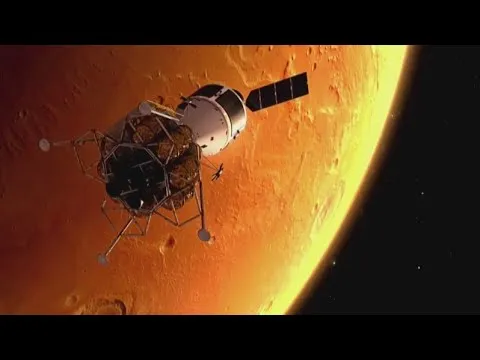
AI Robots Lead Humanity’s Martian Exploration Drive
Humans dream of reaching Mars, but advanced robots with artificial intelligence may pave the way for our exploration of the Red Planet. This new approach offers a powerful partnership, making the costly journey more achievable and potentially unlocking Mars’ secrets.
Why We Want to Go to Mars
Mars is an incredible planet to explore. Scientists believe it might have once held simple, alien life. While we may not find complex creatures walking on the surface, exploring caves or digging into the ground could reveal primitive life forms. The chance to discover life that did not originate on Earth is a strong reason for this mission. Furthermore, space exploration always leads to new technologies. Many inventions we use daily, like smartphones and microwaves, were developed because of space missions.
The Harsh Reality of Mars
Mars is very different from Earth. The temperatures are extreme, and the environment is toxic. It looks beautiful, like a desert landscape, but it’s a harsh place. Without a spacesuit, a person would freeze solid when the sun goes down. Even the sunlight can be dangerous without protection. So, how can humans not only survive on Mars but also explore and study it?
AI and Robotics: The New Astronauts
The way we envision humans going to Mars is changing. This change is driven by the rise of robots with human-like intelligence. While humans will still go, the revolution in robotics and artificial intelligence on Earth is creating a new kind of explorer. These AI robots could be the perfect astronauts. They don’t need to eat, breathe, or generate waste. They only need to be recharged. If these robots have human-level intelligence, or even more, they become powerful partners in exploring Mars.
A Worthwhile, Expensive Goal
Sending humans and advanced robots to Mars is a worthwhile goal. However, it is also very expensive. The cost is expected to be extremely high. Despite the cost, the prospect of discovering alien life and advancing our technology makes the mission compelling. This new era of exploration, powered by intelligent machines, could redefine humanity’s presence beyond Earth.
Global Impact
The development of intelligent robots for space exploration has broad implications. It suggests a future where AI and robotics play an even larger role in scientific discovery and human endeavors. This could accelerate our understanding of the universe and our place within it. The technological advancements spurred by such missions will likely benefit life on Earth in unforeseen ways, similar to how past space programs have.
Historical Context
Humanity has always looked to the stars, from early astronomical observations to the space race of the 20th century. The Apollo missions to the Moon, for example, were driven by geopolitical competition but resulted in significant technological leaps and scientific knowledge. The current focus on Mars, with its potential for life, echoes earlier scientific quests. The use of robotics in space is not new, with probes like Voyager and rovers on Mars already providing invaluable data. However, the integration of advanced AI into these robotic explorers represents a new chapter, moving beyond simple data collection to more autonomous and intelligent investigation.
Economic Considerations
Space exploration missions are incredibly expensive. The cost of developing, building, and launching the necessary technology for a Mars mission is immense. This financial aspect is a major factor in how and when such missions can be undertaken. While the transcript mentions the high cost, it doesn’t detail specific figures or funding sources. However, the potential for technological spin-offs, resource discovery (though not discussed in the transcript), and the prestige associated with leading such endeavors can provide economic incentives for nations and private companies involved.
Future Scenarios
One likely scenario is a phased approach to Mars exploration, starting with advanced robotic missions that are more capable than current rovers. These robots, powered by AI, could scout locations, conduct complex experiments, and even prepare for future human arrivals. A second scenario involves a public-private partnership, where government agencies collaborate with private companies to share the immense costs and risks. A third, though perhaps less likely in the immediate future, is a scenario where breakthroughs in propulsion or life support dramatically reduce the cost and complexity, accelerating human missions. The success of these scenarios hinges on continued technological development, sustained funding, and international cooperation.
Source: Is Mars the next frontier of space exploration? | Jesse Weber Live (YouTube)

Related Articles


AI Moguls’ Unchecked Power Sparks Alarm Over Humanity’s Future
A new report scrutinizes OpenAI CEO Sam Altman's alleged disregard for the consequences of AI, fueling broader concerns about unchecked power in Big Tech. Critics warn that a lack of empathy and introspection among AI leaders poses risks to jobs, democracy, and humanity itself, calling for urgent regulation and democratic input.


Artemis II Crew Relives Launch; Moon Landing Eyed by 2028
The Artemis II crew reflected on their mission, with launch being a standout moment they'd relive. As the Orion capsule prepares for splashdown, discussions turn to the future, with hopes of lunar landings by 2028 and significant technological and commercial advancements.


OpenAI’s Sam Altman: Genius or Sociopath?
A new New Yorker report scrutinizes OpenAI CEO Sam Altman, portraying him as a power-hungry leader whose ambition may have overshadowed the company's operational stability. The article raises serious questions about his leadership style and the true nature of OpenAI's rapid rise.