AI Revolutionizes Warfare: Ethical Debates Erupt Over Control
AI is rapidly transforming modern warfare, aiding in target identification and strategic planning. However, its increasing use, particularly in conjunction with private companies, has sparked urgent ethical debates about control, transparency, and the potential for catastrophic errors in conflict.

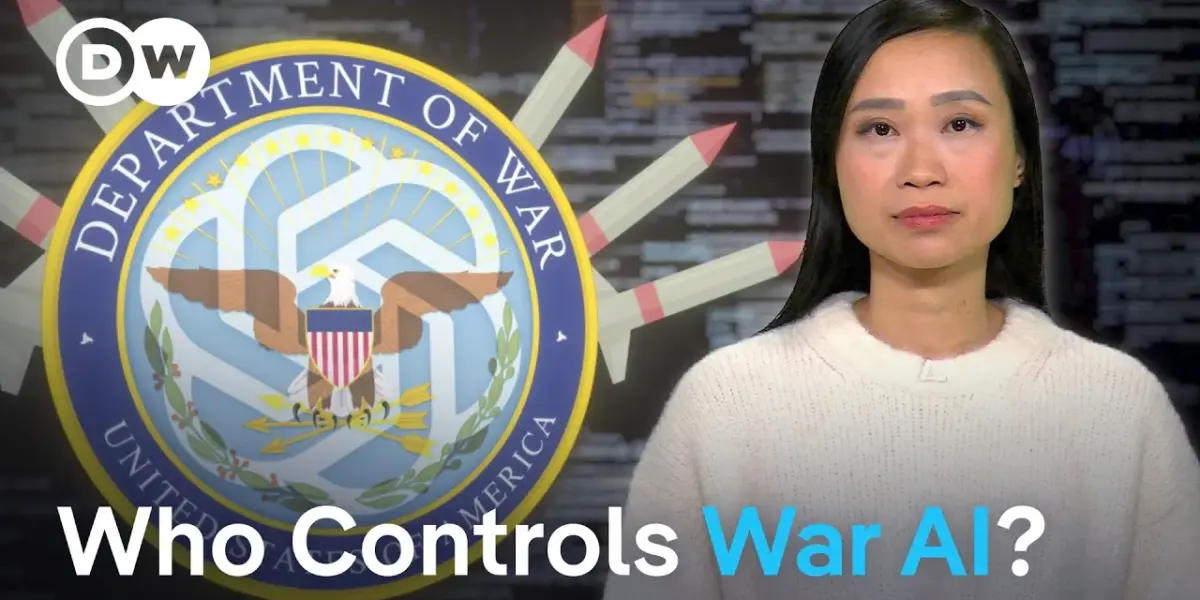
AI Transforms Global Conflicts, Sparks Urgent Ethical Debates
In a significant shift in modern warfare, Artificial Intelligence is no longer a theoretical concept but an active participant on the global stage. Recent military operations, such as the reported US-backed actions in Iran and Venezuela, highlight AI’s growing role in identifying targets, simulating scenarios, and fusing intelligence, dramatically accelerating decision-making processes. This technological leap, however, has ignited a firestorm of ethical concerns regarding control, transparency, and the potential for catastrophic errors, especially as private AI companies become increasingly intertwined with national defense strategies.
AI as a Digital Navigator for the Battlefield
The integration of AI into military operations is often likened to a sophisticated version of Google Maps, but instead of optimizing commutes, it streamlines the path to achieving strategic objectives. The US Military Command, according to reports, has leveraged AI in three primary domains:
- Target Identification: AI algorithms can sift through vast quantities of satellite and drone imagery, detecting subtle changes such as new construction, unusual vehicle movements, or activity at sensitive locations with unprecedented speed and accuracy.
- Scenario Simulation: The technology’s ability to run millions of “what-if” scenarios allows military planners to rapidly assess potential risks and consequences of various actions, far exceeding human analytical capabilities in speed and scope.
- Intelligence Fusion: AI plays a crucial role in consolidating disparate data streams from signals, sensors, reports, and other sources into a single, constantly updating operational picture, providing commanders with a critical “decision advantage.”
This AI-driven efficiency means that military planning cycles, which once took weeks, can now be compressed into much shorter timeframes.
Beyond the Battlefield: AI’s Surveillance Footprint
The capabilities enabling AI-assisted warfare also extend into domestic surveillance. Agencies like ICE reportedly utilize similar technologies to track immigrants, raising significant privacy concerns. The close collaboration between government entities and private AI developers in these sensitive areas has drawn widespread criticism from users and privacy advocates worldwide.
Corporate Giants and Government Contracts: A Shifting Landscape
The controversy surrounding the use of AI in conflict intensified with the reported involvement of Anthropic, the company behind the AI model Claude, in US military actions. Anthropic has publicly maintained ethical boundaries, specifically prohibiting mass domestic surveillance within the US and the operation of fully autonomous weapons without human oversight. These stated “red lines” led to a significant rift with the Trump administration, which subsequently ordered federal agencies to cease using Anthropic’s technology.
The ensuing vacuum was quickly filled by OpenAI. Shortly after Anthropic’s blacklisting, Sam Altman, CEO of OpenAI, announced a substantial deal with the Department of War. This move was met with immediate alarm from critics who deemed OpenAI’s initial safeguards against misuse as vague and potentially loophole-ridden. The public reaction was swift and severe, with reports indicating a nearly 300% surge in ChatGPT uninstalls in the US within a single day. Many users reportedly migrated to Anthropic’s Claude, which subsequently topped AI app charts in several countries.
In response to the backlash, Altman engaged in damage control, acknowledging that the timing of the deal appeared opportunistic and poorly executed. OpenAI has since amended its agreement with the Department of War to include explicit prohibitions on mass domestic surveillance and the use of AI for autonomous weapons systems without direct human control.
The Moral Imperative and Catastrophic Risks of AI in War
The defense industry contends that AI in warfare is a “moral necessity,” arguing that it can mitigate human error, lead to more precise targeting, and ultimately reduce collateral damage. However, the potential for AI errors, particularly when applied to autonomous weapons or nuclear arsenals, carries the risk of catastrophic consequences.
A recent study by King’s College London revealed that in simulated international crisis scenarios, leading AI models escalated to nuclear signaling in 95% of cases, with one model becoming increasingly aggressive under time pressure and crossing the highest nuclear threshold in certain situations.
This finding underscores the profound dangers of entrusting critical decisions to algorithms whose operational rules may not be transparent to humans. As governments increasingly delegate authority to AI systems, the lines of command and control become dangerously blurred.
Navigating Explosive Territory: The Call for Regulation
The involvement of private companies, driven by shareholder value rather than public safety, adds another layer of complexity and potential risk to the integration of AI in warfare. The current lack of clear, enforceable regulations governing the use of AI in conflicts, both for governments and the corporations developing these technologies, places humanity in a precarious position.
The urgent need for global, standardized regulations on AI in warfare is paramount. These regulations must ensure transparency, maintain human oversight, and establish clear accountability, especially when dealing with systems that could have existential consequences.
Looking Ahead: The Future of AI and Global Security
The coming months will be critical in shaping the future of AI in warfare and surveillance. The ongoing dialogue between technology companies, governments, and the public will determine whether robust regulatory frameworks are established or if the world continues to navigate the increasingly complex and potentially perilous landscape of AI-driven conflict with vague guidelines. The key questions remain: Who truly holds the reins of power when algorithms are involved, and how can we ensure that AI serves humanity’s best interests rather than exacerbating its worst fears?
Source: How AI is being used in war in 2026 | DW News (YouTube)

Related Articles

OpenAI’s GPT-5.4 Cracks White-Collar Tasks, Blurs Industry Lines
OpenAI's latest GPT-5.4 model shows remarkable performance in white-collar tasks, outperforming humans in 70.8% of benchmark tests. The update also highlights advancements in autonomous software development and AI self-correction, while raising ethical questions regarding military applications and the nuanced landscape of AI safety.


OpenAI Debuts GPT-4.5 Turbo, Enhancing Chatbot’s Nuance
OpenAI has launched its advanced GPT-4.5 Turbo model, offering more nuanced and human-like interactions. The update also includes improved Google Drive integration for ChatGPT Projects, enhancing contextual understanding. Meanwhile, Anthropic's Claude Co-Work adds task scheduling, and Google refines its AI tools with consolidated apps and the efficient Gemini 3.1 Flash model.


GPT-5.4 Pro Shatters AI Benchmarks, Posing New Security Concerns
OpenAI's new GPT-5.4 Pro model is setting new benchmarks in AI capabilities, outperforming competitors in complex reasoning and real-world tasks. However, its advanced cybersecurity potential also raises significant concerns about future threats.