AI Revolutionizes Textile Recycling, Tackling Fashion Waste Crisis
AI is set to revolutionize textile recycling, offering a solution to the global fashion waste crisis. New technologies use AI-powered cameras to sort fabrics accurately, a crucial step for efficient recycling. This innovation could lead to billions in profits and help revive local manufacturing.

AI Tackles Textile Waste Crisis
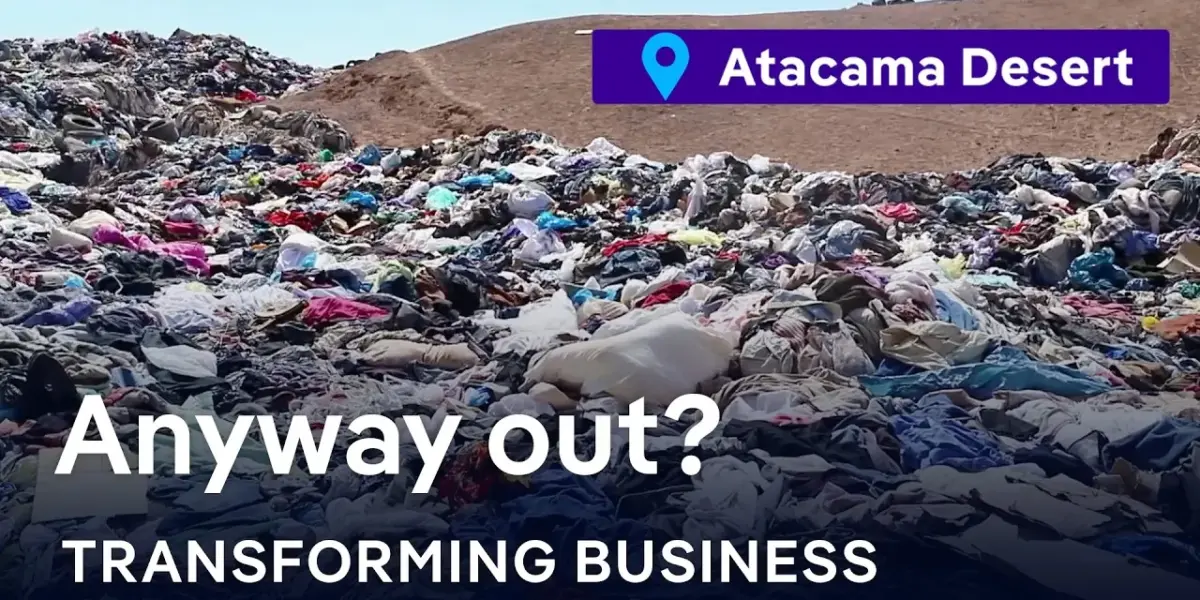
Millions of tons of clothing are discarded annually, creating a massive waste problem. In Europe, most used clothing doesn’t even make it to recycling centers. Instead, it ends up in landfills or is burned. A new approach using Artificial Intelligence (AI) offers a potential solution to this growing global issue.
The Scale of the Problem
The fashion industry produces an enormous amount of waste. It’s estimated that 90 million tons of textile waste pile up each year. To put this in perspective, that’s like throwing away a fully loaded jumbo jet’s weight in clothing every hour. In the U.S., the price of shoes has stayed nearly the same for a decade, while the overall cost of goods has risen significantly. This low price makes it easy for people to buy new clothes frequently, contributing to the waste problem. This trend is closely linked to fast fashion, where clothes are made cheaply and in large quantities.
Current Recycling Limitations
While new recycling methods exist, they face major hurdles. The core challenge is sorting the materials. Whether recycling is done chemically, mechanically, or enzymatically, the first step must be sorting the different types of fibers. The better the sorting, the better the final recycled product. However, current sorting processes are often manual and inefficient. Many collected textiles are still thrown away or burned. Even when collected separately, over a quarter of these items end up as trash.
How Chemical Recycling Works
One promising recycling method is chemical recycling, specifically depolymerization. This process breaks down long chains of molecules, called polymers, into their original building blocks, known as monomers. These monomers can then be used to create new materials. This is significant because producing new polyester, a common fabric, creates about 70% of the industry’s emissions. Chemical recycling offers a way to reduce these emissions by using old materials instead of virgin ones.
The Role of AI in Sorting
The breakthrough technology being developed uses AI to identify and sort textiles. Cameras equipped with near-infrared sensors can detect the material composition of clothing. This means the AI can tell how much polyester, cotton, or other fibers are in a piece of fabric. Stefan Schlichter, who is involved in this research, explains that while they are still in the early stages, they expect the first systems to be available within two years. This AI-powered sorting could dramatically improve the efficiency and accuracy of textile recycling.
Overcoming Challenges and Moving Forward
A major challenge for scaling up recycling is the availability of suitable raw material – waste that is rich in specific types of fibers. Factories need a consistent supply of sorted waste to operate efficiently. Currently, many recycling facilities are not set up for this. Additionally, the business model needs investment. A small management consultancy estimates that investing in this new recycling industry could reach billions by 2030. However, the potential profits could be significant, with the industry generating over 2 billion dollars annually.
The new approach we are pursuing is to apply AI. We are still in parts of fundamental research, but on the step towards application. We expect that the first systems will come onto the market within the next two years.
Stefan Schlichter, Researcher
Policy and Market Demand
Government regulations are also crucial. Some are pushing for laws that require a certain percentage of recycled materials in new textiles. This would create a market demand for recycled fibers. As one expert notes, mandatory recycled content in new textiles is needed for the market to regulate itself. Buyers would then be more willing to purchase recycled fibers. This would help ensure that the massive amounts of textile waste are used in new products instead of being burned.
Reviving Local Industries
Implementing these advanced recycling technologies could also help revive local textile industries. Germany, for instance, was once a major textile producer. With technologies like automated sorting, companies can create jobs and remain competitive despite higher labor costs. This can help build a sustainable, circular economy where old clothes become valuable resources for new ones.
The Future of Fashion Recycling
The path forward involves significant investment, technological advancement, and supportive policies. The application of AI in sorting textiles is a key step towards making large-scale recycling a reality. If successful, this could transform the fashion industry, reduce environmental impact, and create new economic opportunities. The focus now is on developing and scaling these AI-driven solutions to meet the urgent need for textile recycling.
Source: Can AI kick-start textile recycling? | Transforming Business (YouTube)

Related Articles


Finland Tops Happiness Chart, UK Falls to 29th
Finland has once again been named the world's happiest country, while the UK dropped to 29th in the latest World Happiness Survey. The report explores the complex ways happiness is measured and highlights unique Finnish concepts of well-being, alongside concerning trends in youth happiness.


ChatGPT Adds Library Tab, Google Overhauls AI Studio
This week's AI news highlights significant updates from major players. ChatGPT now features a Library tab for easier document management, while Google has overhauled its AI Studio, merging it with an app builder to simplify the creation of multiplayer experiences. We also look at Midjourney V8's performance, user hopes and fears about AI from an Anthropic study, and quick updates from Gamma, OpenAI, and Claude.


Ukraine Gains AI Drone Edge: Russia’s Jamming Weakened
Ukraine is integrating advanced AI drone software from Shield AI, significantly boosting its capabilities against Russian jamming. The Hivemind system enables autonomous flight and swarm tactics, challenging traditional military doctrine and potentially weakening Russia's electronic warfare advantage.