AI Photo Editing: A Moral Quandary for Memory Makers
The ease of AI-powered photo editing tools like those in Adobe Lightroom raises profound questions about the authenticity of our digital memories. As we can now effortlessly remove elements or alter reality in images, where do we draw the line between enhancement and fabrication?

The Unsettling Ease of AI Photo Manipulation
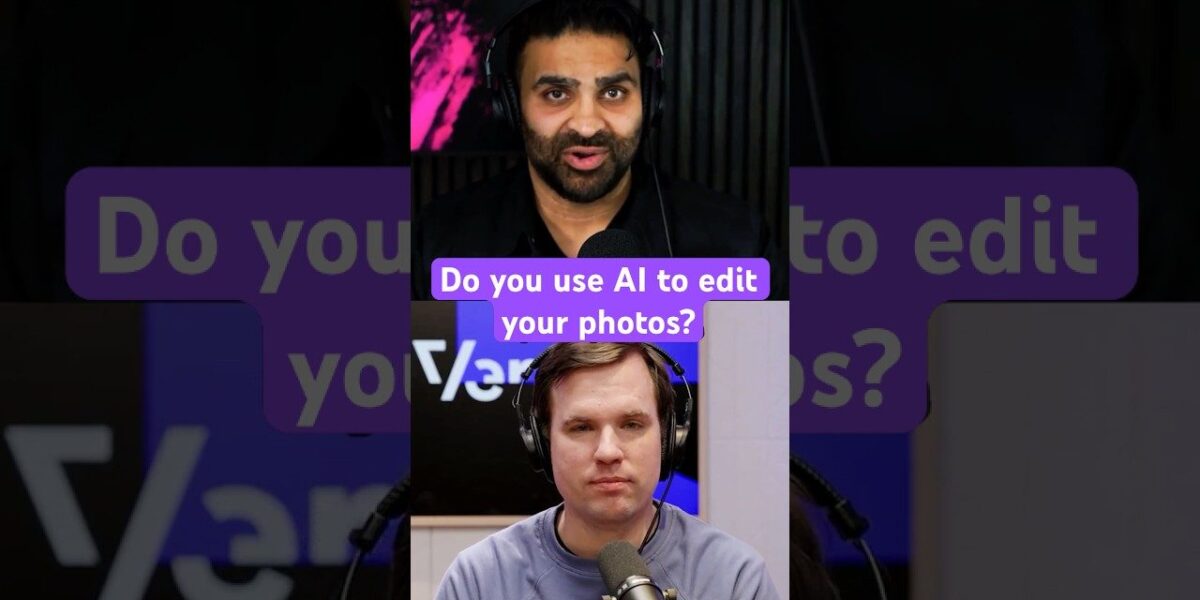
In an era where artificial intelligence is rapidly integrating into our daily tools, the line between authentic documentation and digital fabrication is becoming increasingly blurred. This phenomenon was brought into sharp focus recently when a user shared an anecdote about using Adobe Lightroom’s AI-powered tools to remove a person from the background of a family photo. The result? A seemingly perfect image that elicited praise from friends and family, while leaving the photographer wrestling with a profound sense of digital dissonance.
The ‘Memory Maker’ Dilemma
The incident highlights a core tension in how we perceive and use photographic technology. For years, companies like Google have championed the idea that their services are designed to ‘make memories.’ This philosophy often allows for a degree of digital enhancement or correction in the service of preserving a moment. However, the user’s experience with Lightroom’s generative fill capabilities pushes this concept into uncharted territory. While the core subjects – the children and the museum setting – were real, the removal of an extraneous element fundamentally alters the captured reality. The photographer’s internal monologue reveals a struggle with this new paradigm: ‘My kids really were in the museum. I was actually here. I actually took this photo. I don’t remember this person’s face in the background. The moment I’m capturing looked like this to me.’ This sentiment encapsulates the dawning realization that AI can not only enhance a memory but also, in a sense, rewrite it.
Lightroom’s AI: Powerful, Yet Provocative
Adobe Lightroom has long been a staple for photographers, offering robust tools for organizing and editing images. The recent integration of AI-driven features, such as content-aware fill and object removal, represents a significant leap forward in its capabilities. Tools like ‘Remove Tool’ and ‘Generative Fill’ (powered by Adobe Firefly) allow users to seamlessly erase unwanted objects or even add new elements to an image with remarkable ease. While these tools are undeniably powerful for creative expression and correcting minor photographic flaws, their application in scenarios like the one described raises ethical questions. The ability to erase a person from a background with a few clicks means that what was once a careful, manual process is now almost instantaneous, demanding less deliberation and potentially less accountability.
The Philosophical Fallout
The user’s reflection on living ‘in the ambiguity’ is particularly poignant. It speaks to a growing unease about the authenticity of digital content. If AI can so effortlessly alter reality within a photograph, how can we trust the images we see? This isn’t just about personal photos; the implications extend to journalism, historical records, and even legal evidence. The ease with which AI can generate or manipulate images necessitates a new level of critical thinking from both creators and consumers of visual media. The philosophical crisis isn’t about whether the AI *can* do it, but rather whether it *should* be done, and where we draw the line between acceptable enhancement and outright fabrication. The user’s conclusion, ‘at least it’s still mostly true,’ suggests a personal compromise, but it underscores the difficulty of maintaining that standard in an AI-assisted world.
Who Should Care About This Shift?
This evolving landscape of AI-powered photo editing is relevant to a broad audience:
- Casual Photographers: Anyone who uses smartphone apps or desktop software to touch up family photos, vacation snapshots, or social media posts will encounter these tools. The question becomes how much alteration feels ‘right’ for preserving a memory.
- Professional Photographers: For those whose livelihood depends on capturing and presenting reality, AI tools offer immense efficiency but also pose challenges to their artistic integrity and the perceived authenticity of their work.
- Content Creators & Social Media Influencers: The pressure to present a polished online persona is immense. AI editing can help achieve this, but users must consider the ethical implications of presenting a digitally perfected version of themselves or their experiences.
- Journalists & Documentarians: The integrity of visual reporting is paramount. The widespread availability of powerful AI editing tools makes it more crucial than ever to maintain strict ethical guidelines and transparency regarding image manipulation.
- Anyone Concerned with Digital Authenticity: As AI-generated and manipulated content becomes more prevalent, understanding these technologies is key to navigating the digital world critically and discerning truth from fabrication.
Looking Ahead: The Future of Photography
The anecdote from the Boston Children’s Museum serves as a microcosm of a larger technological and societal shift. AI is not just a tool for editing; it’s becoming a partner in creation, capable of fundamentally changing our perception of reality. While the immediate convenience and creative possibilities offered by tools like Lightroom’s AI are undeniable, they compel us to engage in ongoing conversations about ethics, authenticity, and the very nature of memory in the digital age. The challenge ahead lies in harnessing the power of AI responsibly, ensuring that our pursuit of perfect memories doesn’t lead us to forget what it means for them to be true.
Source: Do you use AI to edit your photos? #Vergecast (YouTube)

Related Articles


AI ‘Vibe Coding’ Promises Speed, But Delivers Chaos
The rise of 'vibe coding' promises to revolutionize software development by allowing users to create apps through natural language prompts. While platforms like Lovable showcase incredible speed and accessibility, this new paradigm introduces significant challenges in reliability, security, and developer satisfaction.

Samsung’s AI Photo Editor: Brilliant or Dangerous?
Samsung's new Galaxy S26 Ultra features 'Generative Edit,' an AI tool that can add or alter elements in photos. While offering creative possibilities, it raises serious ethical concerns about potential misuse and the spread of misinformation.

Google’s Gemini 1.1 Pro Tops AI Charts, Anthropic Rolls Out Major Updates
Google's Gemini 1.1 Pro emerges as a top-tier AI model, excelling in visual tasks and complex problem-solving. Simultaneously, Anthropic significantly expands its Claude ecosystem with enhanced remote control, new integrations like Figma, and improved security features, signaling a rapid evolution in user-friendly AI agents.