AI News Anchors: A Threat to Truth in Reporting?
The increasing use of AI-generated news anchors raises concerns about media authenticity and public trust. While AI offers convenience, it risks sacrificing accuracy and can be exploited for propaganda, blurring the lines between real and fake reporting.

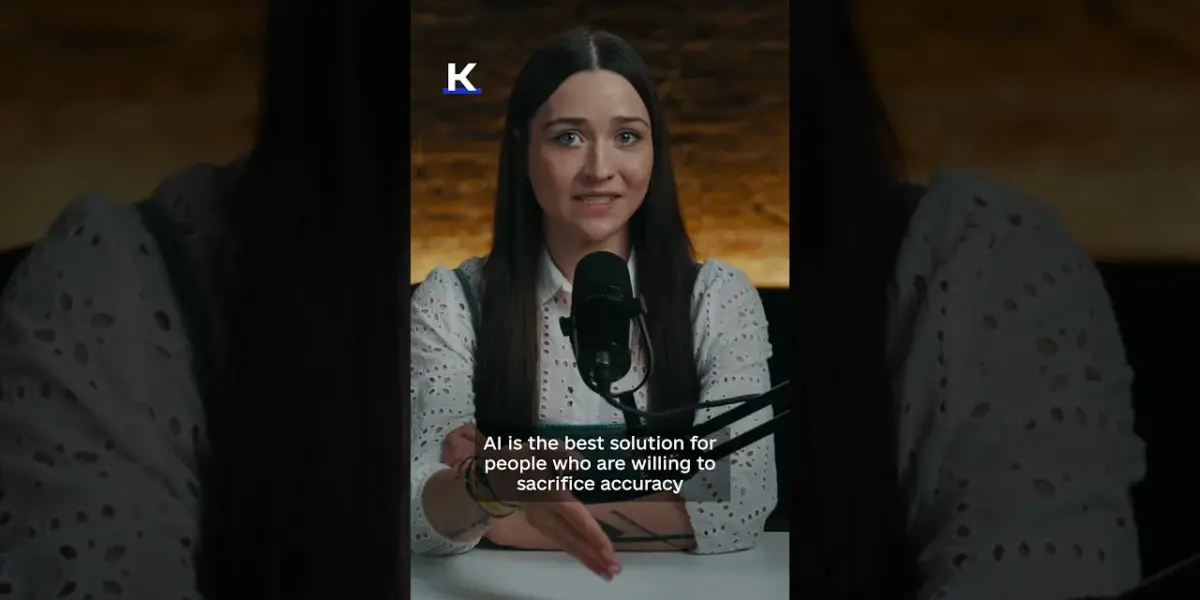
AI Anchors Blur Lines Between Real and Fake News
The rise of artificial intelligence is raising serious questions about the authenticity of news reporting. As AI technology advances, distinguishing between human journalists and AI-generated presenters is becoming increasingly difficult. This development poses a significant challenge to media credibility and public trust.
The Illusion of Authenticity
AI-generated news anchors can mimic human presenters with remarkable accuracy. Factors like studio lighting that smooths skin texture and consistent delivery can create a polished on-screen presence. Even an American accent from a reporter covering Ukraine can be explained by a reporter’s background, such as being part of the Ukrainian diaspora. However, the absence of natural human behaviors like sighs, fidgeting, or moments of relaxation can make AI presentations seem unnaturally perfect.
Despite these advancements, subtle clues can reveal AI involvement. For instance, a real presenter would likely display a variety of clothing, hairstyles, and textures that don’t glitch when they move. Physical interactions with the environment, such as touching a tabletop or objects, are also indicators of a real person. Furthermore, real journalists are often visible outside the studio setting, appearing in publicly available team photos.
Why Use AI in News? The Calculus of Convenience vs. Credibility
The primary motivation for using AI presenters often boils down to time and convenience. AI offers a solution for those willing to trade accuracy and believability for speed and ease. This technology can be effective for conveying emotional messages or creating short, viral clips for social media. However, it is a less suitable choice for long-form content that viewers can scrutinize over time.
The decision to use AI raises questions about a news organization’s priorities. For established newsrooms, the potential damage to their reputation from using fabricated employees would be immense. Most smaller, independent news outlets are unlikely to go to such lengths simply to save a small amount of time or money. The core issue is understanding the motivation behind such a choice.
Propaganda and the Erosion of Trust
The proliferation of AI-generated content, while not everything is artificial, benefits entities that seek to sow chaos and distrust. Propaganda machines, such as those associated with Russia, thrive in an environment where the public questions the authenticity of all information. The ability to create convincing but fake news anchors contributes to a sense of a chaotic and meaningless information landscape.
Strategic Implications
The increasing sophistication of AI in news delivery presents a dual-edged sword. On one hand, it can democratize content creation, allowing smaller outlets to produce professional-looking broadcasts. On the other hand, it provides powerful tools for disinformation campaigns. The ability to generate seemingly authentic reports from any location, with any narrative, makes it harder to verify information. This can undermine democratic processes and international relations by eroding the shared understanding of reality.
What This Means on the Ground
For the average news consumer, this means a greater need for critical evaluation of all media. Viewers must be more vigilant, looking for inconsistencies and questioning the source of information. The effort required to verify news may increase, potentially leading to fatigue and disengagement. This could inadvertently benefit those who wish to spread misinformation, as a less engaged public is easier to influence.
Historical Parallels
While AI is a modern phenomenon, the manipulation of information for propaganda purposes is not new. Throughout history, states have used various methods, from state-controlled media to forged documents, to shape public opinion and influence events. The current challenge with AI is the scale, speed, and convincing nature of the fakes it can produce, making it a more potent tool than ever before.
Source: How to tell real reporting from AI-generated content (YouTube)

Related Articles


Advisors Shield Trump From War Truths, Fueling Danger
President Trump is reportedly being fed a diet of manipulated information regarding the war with Iran. Advisors allegedly curate video updates to show only U.S. successes, while downplaying or hiding setbacks. This deliberate 'cocoon of ignorance' prevents Trump from seeing the full picture, leading to potentially dangerous decisions and a distorted view of reality.

Russian State Media’s ‘Unhinged’ Propaganda Exposed
Veteran journalist Mark Bennetts details the alarming descent of Russian state media into "unhinged" propaganda since 2014. His memoir, 'The Descent,' chronicles 25 years in Russia, revealing a stark contrast between the freedoms of the 1990s and the pervasive falsehoods of the Putin era. Bennetts discusses the psychological impact of propaganda and the difficult decision to leave Russia.


AI Fuels Russian Disinformation Warfare
Russia is leveraging advanced AI, including deep fakes and voice cloning, to create sophisticated propaganda. New text-to-video tools allow for rapid, large-scale disinformation campaigns, posing a significant challenge to information integrity.