AI Market Jitters: Experts See ‘Ghost Trade’ Amidst Tech Sell-offs
Recent AI advancements, particularly Anthropic's Claude model, have triggered significant tech market sell-offs, with investors fearing disruption. However, analyst Dan Ives argues this is an overreaction, calling it an "AI ghost trade" and predicting long-term growth for established software players.

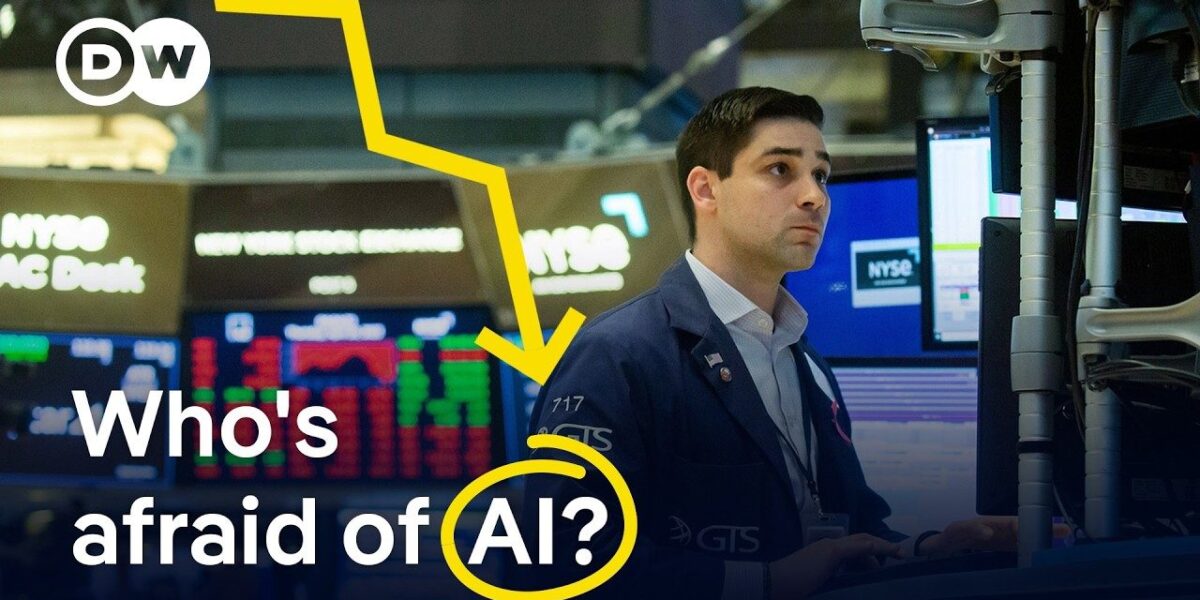
AI’s Market Turbulence: Disruption Fears Spark Tech Sell-offs
February saw significant turbulence in the tech markets, driven not by fears of an AI bubble, but by a belief that new artificial intelligence models and their updates will fundamentally disrupt specific sectors. This conviction has led investors to punish companies perceived as vulnerable, creating a wave of sell-offs that has rattled the industry. Senior analyst at Wedbush Securities, Dan Ives, characterizes the current market sentiment as a “ghost trade,” where investors are reacting to perceived threats that he believes are largely overblown.
The Claude Effect: How AI Models Are Shaking Up Software Sectors
A primary catalyst for these market movements has been the advancements in AI models, particularly Anthropic’s Claude. Recent plugin releases and updates have directly impacted specific industries, causing significant investor reactions. At the end of January, a legal plugin for Claude designed to assist with document management and scheduling led to sell-offs in software providers like LexisNexis and Thomson Reuters. In late February, an update enabling Claude to scan software for security vulnerabilities triggered a decline in the market values of cybersecurity companies. Shortly thereafter, Claude’s enhanced coding features also put pressure on related tech firms.
“The view is that AI tools like Claude are going to massively disrupt software. It’s basically going to take entrenched vendors, Salesforce, ServiceNow, Oracle out of the game.” – Dan Ives, Senior Analyst, Wedbush Securities
However, Ives argues that this narrative is largely a “fictional narrative.” He posits that the reality lies in where data resides and that AI models like Claude will ultimately serve as catalysts for software companies, rather than their undoing. “The reality is that it’s where the data resides,” Ives stated. “Claude is going to ultimately be a catalyst for software companies, not the opposite.” He believes that while some “one trick ponies” or companies with less entrenched positions might face disruption, the core, established software players are not in imminent danger.
The Catrini Research Impact: A Nightmare Scenario for Investors
Adding to the market jitters was a blog post by investment research channel Catrini Research, which reportedly wiped out hundreds of billions of dollars in market value. This report, described as a “nightmare scenario,” painted a dystopian future for AI, predicting rising unemployment and fundamental challenges to established tech giants. The report’s impact was starkly illustrated by IBM’s stock, which experienced its worst one-day loss in 26 years, with a portion of the decline attributed to the report and a separate Claude update concerning mainframe systems.
Ives dismisses such predictions with strong skepticism. “I’m going to be a gold medalist in 2020 at summer Olympics. Like in other words, like the point is that that’s sort of my view of it. Like you predicting the future with some sort of look back, yelling a fire into a crowd theater narrative,” he quipped, comparing the report’s predictive power to a nonsensical Olympic achievement. He contends that fear, particularly regarding AI’s impact on jobs, is driving these reactions. “Is AI going to replace jobs? Is this going to be sort of an apocalypse situation? But in my opinion, there’s never been a technology last 100 year that’s been a negative job detractor. Every every technology innovation we’ve seen has actually created jobs.”
Navigating the AI ‘Ghost Trade’: Where Investors Can Find Shelter
Despite the prevailing fears and market volatility, Ives remains bullish on the long-term prospects of AI. He views the current situation as a “white knuckle moment” and a “gut check period” that ultimately creates opportunities. For investors seeking to navigate this uncertain landscape, Ives recommends a diversified approach to tech investments. “You have to own semis obviously Nvidia, AMD and others got to own software the hyperscalers names like Palantir others cyber security then infrastructure and energy You got to own the second third fourth derivatives of this trade,” he advised.
The analyst stressed that the market is currently engaged in an “AI ghost trade,” where investors are reacting to speculative fears rather than concrete realities. “This is a ghost trade where investors are sort of fighting a ghost. This will be proven wrong in my opinion,” Ives asserted. He believes that as the AI revolution, which he likens to being in its “second inning of a nine-inning game,” continues to unfold, these fears will subside, and tech stocks will ultimately “rip higher.”
The Future Outlook: Opportunity Amidst Uncertainty
While acknowledging the potential for scares and volatility to continue, Ives anticipates that the market will eventually recognize the limited impact of these perceived threats. He draws a parallel to the “boy who cried wolf” fable, suggesting that repeated alarms will eventually lose their potency. As AI continues to prove its value and integrate into various sectors, Ives predicts a strong rebound for tech stocks. The current market jitters, though unsettling, present opportunities for astute investors who can discern the underlying value amidst the noise. The significant capital expenditure, as evidenced by Nvidia’s earnings and capacity expansion, alongside substantial fundraising by companies like OpenAI, suggests a robust underlying growth trajectory for AI that transcends temporary market anxieties.
Source: What's behind the recent AI market jitters? | DW News (YouTube)

Related Articles


Nvidia Earnings Signal AI Revolution’s Next Phase
Nvidia's latest earnings report reveals accelerating revenue growth and profitability, signaling a new phase in the AI revolution driven by sophisticated AI agents. The company's strong performance underscores the growing demand for computational power as AI transitions into a core digital infrastructure component.


Germany’s Fake Laws: AI Disinformation Campaign Exposed
Viral AI-generated videos falsely claim Germany has enacted absurd laws, including fines for flushing toilet paper. Experts reveal a disinformation campaign aiming to portray Germany as chaotic, with potential commercial or political motives behind the fabricated content.

Google’s Reddit Deal Fuels Marketer Shift
Google's exclusive data access deal with Reddit, reportedly worth hundreds of millions, is transforming search results by prioritizing authentic user discussions. This strategic move positions Reddit content at the forefront of Google searches and AI answers, creating new opportunities and challenges for marketers.