AI Infrastructure Stock Faces 30% Plunge: Is Recovery Imminent?
A prominent AI infrastructure firm, Iron, experienced a nearly 30% stock decline, raising questions about its future. Despite a challenging earnings report marred by accounting adjustments and Bitcoin volatility, the company's AI cloud revenue surged 540% year-over-year, underpinned by a major $9.7 billion contract with Microsoft. Investors are weighing the risks of customer concentration and execution against the significant growth potential in the AI sector.


AI Infrastructure Stock Faces 30% Plunge: Is Recovery Imminent?
In a dramatic turn of events that has sent shockwaves through the tech and investment communities, a prominent AI infrastructure company, referred to herein as ‘Iron’ for illustrative purposes, has experienced a significant stock price decline. The company’s shares have plunged nearly 30% within the last month alone, prompting intense scrutiny over its future prospects. This sharp sell-off raises a critical question: is this the beginning of the end for Iron, or are its most substantial growth phases still ahead?
Understanding Iron’s Business Model: From Bitcoin Mining to AI Powerhouse
Iron’s journey into the AI infrastructure space is rooted in its origins as a Bitcoin mining operation. This background has provided the company with a unique advantage. Bitcoin miners are accustomed to operating large-scale data centers, requiring substantial power, dense hardware configurations, advanced cooling systems, and robust networking capabilities to ensure continuous operation. These are precisely the same demands faced by emerging AI infrastructure providers, often termed ‘NeoClouds’.
The core infrastructure – megawatts of power, high-density racks of hardware, industrial-grade cooling, and low-latency networks – remains largely consistent. The primary distinction lies in the type of chips housed within these racks. While Bitcoin mining historically relied on custom chips, the AI revolution necessitates high-performance Graphics Processing Units (GPUs), particularly those manufactured by NVIDIA. Companies like Iron are leveraging their existing infrastructure and expertise to pivot from crypto mining to AI hosting services. Corero, another player in this space, follows a similar trajectory, having transitioned its Ethereum mining operations into a specialized AI cloud offering.
Iron’s Bitcoin mining operations continue to contribute significantly to its revenue. This provides a flexible revenue stream, allowing the company to monetize its power and infrastructure. However, it also exposes Iron to the inherent volatility of Bitcoin’s price, which can lead to fluctuating quarterly earnings. Concurrently, Iron has been strategically redirecting its power and data center capacity towards AI workloads. This involves building high-density, liquid-cooled data centers designed to host massive clusters of NVIDIA GPUs for AI training and inference.
The Microsoft Deal: A Game-Changer for AI Expansion
A pivotal moment in Iron’s business transformation was a monumental $9.7 billion multi-year AI cloud contract secured with Microsoft. Under this agreement, Iron is tasked with constructing and operating data centers populated with NVIDIA GPUs, which Microsoft will utilize to power its Azure AI services. The ambitious plan involves deploying approximately 140,000 GPUs and securing over 4.5 gigawatts (GW) of power over the coming years. This scale of power infrastructure could potentially support upwards of a million high-end GPUs, depending on the specific chip generation (e.g., Hopper, Blackwell, Rubin) and the overhead required for networking and cooling.
Microsoft has already committed substantial capital to this partnership, including roughly $1.9 billion in prepayments and an additional $3.6 billion in GPU financing lined up to facilitate this extensive build-out. This strategic alliance effectively underpins Iron’s AI growth engine.
Iron’s revenue streams are now diversified into two main categories: Bitcoin mining, offering flexibility but subject to price volatility, and AI compute leasing, which is expected to grow as new infrastructure comes online under long-term contracts. A third critical component is Iron’s robust pipeline of power and data center capacity, strategically positioned across North America. This allows the company to dynamically allocate resources to Bitcoin mining, Microsoft’s AI needs, or other potential AI customers based on prevailing economic conditions.
Analyzing the Recent Earnings and Stock Plunge
Iron’s latest earnings report painted a concerning picture on the surface. The company reported $185 million in revenue, missing Wall Street estimates by approximately 20% and marking a 23% decline quarter-over-quarter. This resulted in a net loss of $155 million, or a loss of 52 cents per share. The stock’s subsequent crash was largely attributed to these headline figures, which failed to fully explain the underlying causes.
Several factors contributed to this performance. Firstly, the price of Bitcoin experienced a significant drop of about 28% during the quarter. Secondly, Iron intentionally reduced its Bitcoin mining operations to reallocate power towards its burgeoning AI initiatives. This dual impact – lower mining volume and a depressed Bitcoin price – significantly affected its mining revenue.
However, a deeper dive into Iron’s financial statements reveals that a substantial portion of the reported loss stemmed from one-time, non-cash accounting adjustments related to its financial restructuring and business pivot:
- Debt Conversion Costs: Iron incurred an $111.8 million expense related to incentivizing lenders to convert convertible debt into shares. This is a one-time balance sheet cleanup cost, not an operational loss.
- Hedge Contract Adjustments: The company recorded a $107 million non-cash loss on hedge contracts associated with its convertible debt. These contracts fluctuate with the stock price and do not represent actual cash lost by the business.
- Asset Impairments: Iron recorded a $31.8 million impairment charge on older Bitcoin mining equipment. As power and space are repurposed for AI data centers, some mining hardware is devalued or retired, necessitating accounting markdowns.
Cumulatively, these one-time charges exceeded $250 million. When these and other standard expenses like interest, taxes, and depreciation are excluded, Iron’s adjusted EBITDA (Earnings Before Interest, Taxes, Depreciation, and Amortization) for the quarter was approximately $75.3 million, with a healthy 41% adjusted EBITDA margin. This indicates that Iron’s core operations remained robust, even amidst a challenging quarter marked by Bitcoin’s price decline and strategic restructuring.
The AI Cloud Business: Steady Growth Amidst Volatility
Despite the headline earnings miss, Iron’s AI cloud segment demonstrated significant progress. AI cloud revenue reached $17.3 million, a staggering 540% increase year-over-year from $2.7 million and more than doubling quarter-over-quarter. While this growth originates from a small base, it signals the successful monetization of its deployed GPU capacity and a promising recurring revenue stream.
The Microsoft contract continues to be the linchpin of Iron’s AI strategy. The company has secured $3.6 billion in GPU financing directly tied to this deal, with Microsoft’s $1.9 billion in prepayments covering approximately 95% of the required capital expenditure for the planned 140,000 GPU expansion. This financial backing provides management with the confidence to project a $3.4 billion annual revenue run rate by the end of 2026.
Essentially, the same quarter that highlighted Iron’s financial complexities also served to de-risk the funding for its primary AI growth engine, underscoring the strategic importance of its partnership with Microsoft. Microsoft, engaged in an intense AI arms race with competitors, relies on specialized providers like Iron to rapidly expand its Azure AI footprint without bearing the full burden of data center construction and power acquisition.
Market Impact and Investor Considerations
What Investors Should Know:
- Underlying Strength: Despite the volatile earnings report, Iron’s core AI cloud business is experiencing exponential growth (540% YoY), and its adjusted EBITDA margins remain strong in the 40% range. This indicates a company successfully navigating a major business pivot.
- De-risked Growth Engine: The substantial Microsoft contract and associated financing have significantly reduced the capital risk associated with Iron’s AI expansion plans.
- Customer Concentration Risk: A primary concern is Iron’s heavy reliance on Microsoft as a single, albeit massive, customer. Any delays in construction, power delivery, or GPU deployment could trigger renegotiations or affect future phases of the contract.
- Bitcoin Volatility: The ongoing contribution of Bitcoin mining revenue introduces an element of financial unpredictability.
- Execution Risk: The successful deployment of 140,000 GPUs and 4.5 GW of power on time and within budget is crucial for realizing the projected revenue targets.
Long-Term Outlook:
Iron’s strategic position appears stronger than a year ago, with secured power, a clearer funding path for its GPU expansion, and a critical relationship with a hyperscale cloud provider. Given Microsoft’s ambitious AI capital expenditure plans, estimated at over $100 billion this year alone, there is significant potential for further collaboration and expansion of services beyond the current contract.
For investors comfortable with volatility and the outlined risks, Iron presents a compelling opportunity for substantial upside if execution is successful. The company’s ability to navigate its pivot, manage its infrastructure build-out, and capitalize on the AI boom could position it as a key player in the AI infrastructure landscape.
Diversification Strategy: Investing in Microsoft
To mitigate the volatility associated with Iron and to gain exposure to the broader AI ecosystem, the author also highlights an investment in Microsoft itself. While a tech giant with over $3 trillion in market capitalization and robust revenue streams, Microsoft stock has seen a pullback of over 20% from its recent peak. Despite its Azure and AI cloud business growing at 39% year-over-year, Microsoft currently trades at a lower Price-to-Earnings (P/E) ratio compared to other major tech stocks in the ‘Magnificent 7’ cohort.
Microsoft’s P/E ratio of 26 is notably lower than the sector average and even trades at a discount to established companies like IBM. Analysts suggest a fair P/E closer to 45, based on its growth prospects. Investing in Microsoft offers a more stable, diversified approach to capitalizing on the AI trend, providing exposure to both sides of the critical partnership with Iron.
For risk-averse investors, Microsoft presents a stable, high-quality business at a comparatively attractive valuation following its recent market correction. For those willing to embrace higher risk for potentially greater rewards, Iron remains a strong contender, provided its execution aligns with its ambitious growth plans. The current market environment offers distinct opportunities for different investor profiles within the rapidly evolving AI sector.
Source: Why I'm Buying This AI Data Center Stock (Even Over NVIDIA) (YouTube)

Related Articles

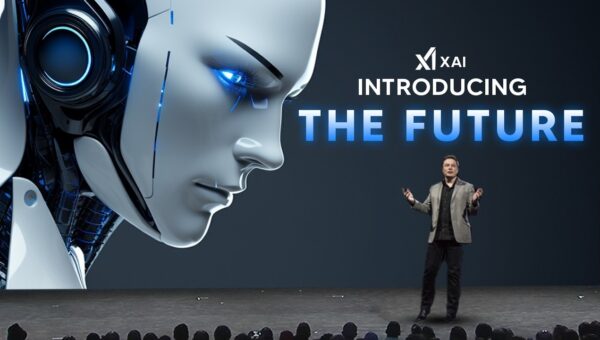
XAI Unveils Ambitious AI Future: From Moon Factories to Sun Power
Elon Musk's XAI has unveiled a bold, long-term vision for AI, detailing plans for orbital data centers, lunar factories, and advanced energy solutions. The company highlighted rapid progress in voice, image, and video generation, alongside ambitious projects like Graipedia and the MacroHart digital emulation system.


OpenAI’s ‘Stargate’ Project: A $1 Trillion Mirage?
OpenAI's 'Project Stargate,' a $500 billion plan for AI data centers, faces scrutiny over its funding, execution, and the credibility of its partners. Revelations suggest the ambitious initiative may be more of a public relations strategy than a concrete development plan.


Alphabet’s AI Pivot: A Deep Dive Into Google’s Undervalued Potential
Alphabet (Google) is demonstrating significant growth and AI integration across its core businesses, including Search, YouTube, and Google Cloud. Despite market concerns, the company's strategic AI investments position it as a potentially undervalued leader in the AI revolution, attracting significant institutional interest.