AI Giants Unite Against Military AI Demands
Employees from Google and OpenAI have published an open letter urging their companies to resist U.S. military demands for AI use in autonomous weapons and surveillance. This collective stance highlights growing ethical concerns within the AI industry and echoes past calls for caution regarding lethal autonomous weapons.

AI Giants Unite Against Military AI Demands
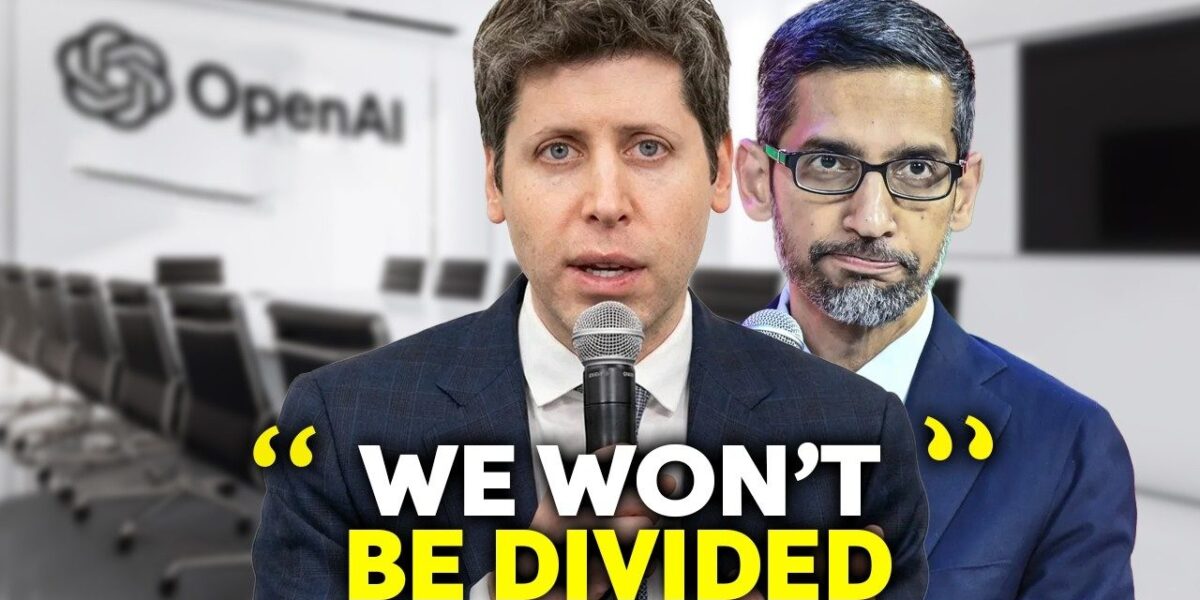
In a significant development that underscores growing ethical concerns within the artificial intelligence industry, employees from Google and OpenAI have jointly penned an open letter urging their leadership to resist demands from the United States government for military applications of AI. This unprecedented collaboration signals a unified stance against the potential misuse of advanced AI for autonomous weapons and mass domestic surveillance.
The Open Letter: A Call for Caution
The letter, which has gained considerable traction on social media, comes from a coalition of employees across two of the world’s leading AI development firms. It specifically addresses the Department of War’s requests, highlighting concerns about using AI models for purposes that could lead to autonomous killing without human oversight and for widespread domestic surveillance. The signatories emphasize that the technology, as it stands, is not yet ready for such critical and potentially dangerous applications.
The signatories include 209 current employees from Google and 64 from OpenAI at the time of the letter’s publication. This number is expected to grow as more individuals within these organizations voice their support for the initiative. The letter states: “We hope our leaders will put aside their differences and stand together to continue to refuse the Department of War’s current demands for permissions to use our models for mass domestic surveillance and autonomously killing people without human oversight.”
Context: The Anthropic Standoff
This joint effort by Google and OpenAI employees follows a period of tension between the AI company Anthropic and the U.S. government. Anthropic, known for its AI assistant Claude, has reportedly been at odds with the Department of War over similar requests. While Anthropic has expressed willingness to engage with military applications, it has drawn firm lines against using its models for mass domestic surveillance and autonomous killing. The government, in response, has reportedly considered invoking the Defense Production Act (DPA) to compel Anthropic’s compliance, threatening to label the company a supply chain risk.
Navigating the “Lawful Uses” Clause
A key point of contention in these negotiations appears to be the definition of “all lawful uses.” This broad clause, which the government reportedly wants AI companies to agree to, allows the government to define what constitutes a lawful application of AI. Critics, including many AI researchers, worry that this could lead to a slippery slope where ethically questionable uses are eventually deemed “lawful.” Anthropic has so far refused to sign this clause, setting a benchmark that other companies are now considering.
While OpenAI and Google have been in discussions with the Pentagon, the open letter suggests an internal pushback against compromising on ethical boundaries. Reports indicate that the Pentagon has intensified outreach to OpenAI, seeking to reignite talks, but significant issues remain. Some sources suggest Google might be closer to an agreement than OpenAI, though a defense official disputed this, stating talks were ongoing with both and that the department expects both to sign agreements.
The letter from Google and OpenAI employees aims to counter the government’s potential “divide and conquer” strategy, where each company might feel pressured to concede if they believe the other is close to signing a deal. By creating a unified front and shared understanding, the employees hope to bolster their companies’ resolve.
A Legacy of Concern: Autonomous Weapons
The current debate echoes a long-standing concern within the AI community regarding lethal autonomous weapons (LAWs). In 2018, a similar pledge, signed by thousands of AI researchers including prominent figures like Jeff Dean, Chief Scientist at Google DeepMind, called for a ban on delegating the decision to take a human life to machines. This earlier pledge highlighted the risks of an arms race and the potential for AI-powered weapons to be used for oppression, especially when combined with surveillance technologies.
The 2018 pledge stated: “The decision to take a human life should never be delegated to a machine.” The signatories warned that removing risk attribution could make lethal autonomous weapons powerful instruments of violence and oppression, potentially sparking an arms race that global governance systems are ill-equipped to manage.
XAI’s Different Path?
In contrast to the unified stance from Google and OpenAI employees, Elon Musk’s AI venture, XAI, reportedly has reached a deal with the Pentagon to use its Grok AI in classified systems. This move suggests that XAI may be willing to agree to broader terms, potentially including “all lawful uses,” which contrasts with the ethical red lines drawn by Anthropic and seemingly supported by many at Google and OpenAI.
Why This Matters
This situation is critical for several reasons:
- Ethical Boundaries: It highlights a growing internal awareness and resistance among AI developers to the potential weaponization of their creations. The “all lawful uses” clause is a significant ethical battleground, with employees pushing back against a broad definition that could lead to morally compromising applications.
- Industry Solidarity: The joint letter from Google and OpenAI employees is a powerful statement of solidarity. It indicates that ethical considerations are becoming a primary concern, even at the cost of potentially lucrative government contracts.
- Pace of Development vs. Safety: The U.S. government’s push for advanced AI capabilities, particularly for military use, is contrasted by the AI community’s calls for caution. The argument from adversaries potentially moving ahead faster is countered by the inherent risks of deploying immature or unvetted AI in high-stakes scenarios.
- Government Oversight and Regulation: This standoff could influence future government approaches to regulating AI development and deployment, particularly concerning national security and defense. The pressure from industry employees may force policymakers to engage more deeply with the ethical implications of AI.
- Future of AI in Defense: The outcome of these negotiations will shape how AI is integrated into defense systems. A refusal to compromise could lead to slower, more deliberate integration, while capitulation could accelerate the deployment of potentially dangerous AI technologies.
Looking Ahead
The coming weeks and months will be crucial. The government may attempt to compel compliance through legislation like the DPA, or it may reconsider its demands in light of the unified opposition. The employees’ letter serves as a powerful reminder that the ultimate impact of AI lies not just in its technical capabilities but also in the ethical frameworks guiding its development and deployment. The AI industry is at a crossroads, and the decisions made now will have long-lasting consequences for global security and human safety.
Source: OpenAI & Google Just JOINED FORCES – Staff Demand “No Killer AI” (YouTube)

Related Articles

Google’s Reddit Deal Fuels Marketer Shift
Google's exclusive data access deal with Reddit, reportedly worth hundreds of millions, is transforming search results by prioritizing authentic user discussions. This strategic move positions Reddit content at the forefront of Google searches and AI answers, creating new opportunities and challenges for marketers.


OpenAI Faces Existential Threats: Ads, Competition, and Financial Woes
OpenAI faces mounting challenges, including the introduction of ads into ChatGPT, diminishing returns from scaling AI models, intense competition from rivals like Google, and significant financial pressures. These factors raise questions about the company's long-term sustainability and its future in the rapidly evolving AI landscape.


OpenAI’s Pentagon Deal Sparks Controversy and Trust Crisis
OpenAI's new agreement with the Department of War to deploy its models on classified networks has ignited controversy. Critics accuse the company of compromising on safety principles accepted by rival Anthropic, potentially eroding trust and setting a dangerous precedent for AI ethics in government contracts.