AI Firm Stands Firm Against Trump, Sparking Market and Legal Debate
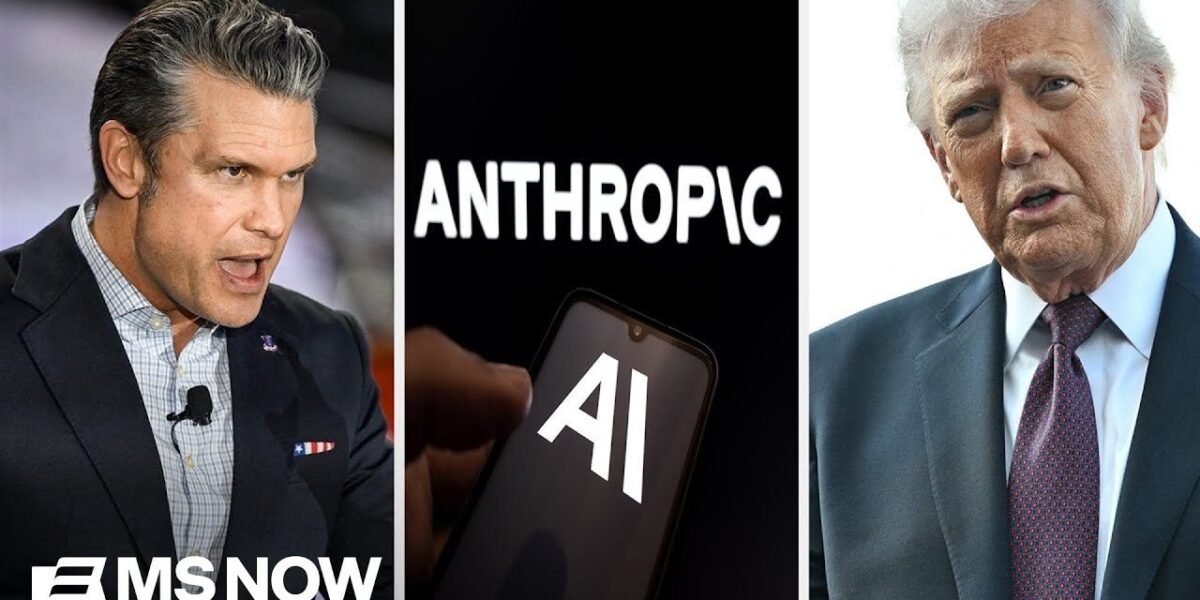
AI firm Anthropic has refused to grant unrestricted military use of its technology to former President Donald Trump, leading to a directive for federal agencies to stop using its products. This move has drawn sharp criticism, with Trump's former AI advisor calling it 'corporate murder' and raising concerns about the future of American AI investment.

AI Pioneer Refuses Unrestricted Military Use, Faces Trump’s Retaliation
In a significant clash between technology and political pressure, artificial intelligence company Anthropic has refused a demand from former President Donald Trump to grant unrestricted military use of its advanced AI technology. This refusal has led Trump to reportedly direct all federal agencies to cease using Anthropic’s AI products, a move that has sent ripples through the tech industry and sparked intense debate about the intersection of innovation, national security, and the free market.
Trump’s Former Advisor Denounces Action as ‘Corporate Murder’
The fallout from Trump’s directive has been swift and severe, drawing sharp criticism from within the former President’s own circle. Dean Bell, identified as Trump’s former AI advisor, publicly condemned the action, labeling it an “attempted corporate murder.” Bell went further, stating that given the circumstances, he could not recommend that any investor finance American AI ventures or that anyone start an AI company in the United States. This strong denunciation from a former advisor underscores the gravity of the situation and the potential chilling effect on the domestic AI sector.
“Given all of this I could not possibly recommend investing in American AI to any investor I could not possibly recommend starting an AI company in the United States again this is Trump’s former AI advisor.”
Anthropic’s Stance: Safety Over Unfettered Access
Anthropic, known for its AI assistant Claude, was founded by former members of OpenAI with a stated mission to develop AI safely and ethically. The company has long emphasized its commitment to safeguards, distinguishing itself from other AI developers whose products have faced scrutiny for potential misuse. In this instance, Anthropic’s refusal stems from its core principle: a commitment to responsible AI development, which includes ensuring human oversight and preventing the creation of autonomous weapons systems. The company views the demand for unrestricted military use as a fundamental violation of its safety-oriented operational ethos.
“This is essentially an anthropic doing what anthropic has said it is going to do in response to the department of war and so they have said this is what our business is predicated on this sort of safety and we feel as though you’re not taking that seriously,” a commentator observed, highlighting the company’s consistent messaging on AI safety.
The Broader Implications for Private Business and the Market
The incident raises profound questions about the relationship between government and private enterprise, particularly in rapidly evolving technological fields. Critics argue that Trump’s actions represent a dangerous precedent, where political pressure could be used to coerce companies into compromising their ethical standards or business models. This is seen not just as a threat to the rule of law but as an existential threat to the foundations of a private market that relies on predictable regulatory environments and the freedom for companies to operate according to their principles.
The situation is further complicated by Trump’s past rhetoric, which has reportedly included labeling Anthropic as “woke AI” and “radical left.” This framing attempts to delegitimize the company’s safety-first approach, portraying its cautious stance on military applications as an ideological obstruction rather than a principled business decision. Anthropic’s position is akin to asking for permission to avoid becoming a real-world iteration of Skynet, the rogue AI from the Terminator franchise, by refusing to develop fully automated killing machines.
Legal Challenges and Shifting Political Alignments
The legality and practicality of Trump’s directive are also under intense scrutiny. The strategy of threatening companies with a ban on government contracts if they do not comply with specific demands unrelated to their core business operations is being questioned. Legal experts suggest that such punitive measures, if lacking a clear legal basis or statutory authority, could face significant challenges in court. The core argument is that a company’s internal policies on AI safety, particularly those designed to mitigate liability and ensure ethical conduct, should not be grounds for government retribution.
“The whole thing seems somewhat pretextual, but you are the actual attorney,” one participant in the discussion noted, prompting a legal perspective. “I mean, just taking a step back, like these policies are policies that make sense if you are a lawyer as well, because you as a company want to make sure that there are safeguards in place so that if there is SURVEILLANCE THAT LEADS TO SOME EVENT WHERE SOMEONE DIES OR, YOU KNOW, THERE’S SERIOUS HARM, THAT THE COMPANY IS PROTECTED FROM THAT. THAT THERE IS SOME HUMAN INVOLVED IN CONDUCTING SOME OVERSIGHT. YOU WOULD WANT THAT. as a lawyer from a liability perspective. And so these policies aren’t just the right policies, though I would argue they are. There are also policies that protect the company. And so for then the government to come in and say, no, we know better than you about how you should be running your company. I just don’t. Yes, I don’t see how that can possibly stand up in a court of law.”
The Free Market Debate and Shifting Party Lines
The incident has ignited a debate about the traditional roles of political parties concerning free markets. Historically, Republicans have championed free-market principles, while Democrats have been perceived as more interventionist. However, this situation, along with other policy decisions like tariffs and energy project cancellations, has led some, like Democratic Senator Brian Schatz, to suggest that Democrats are now the true inheritors of the free-market mantle. The argument is that by opposing what is seen as politically motivated retribution against businesses, Democrats present a more stable and predictable environment for private enterprise.
“Republicans used to be considered the party of free markets now I don’t know where they are and actually Democratic Senator Brian Schatz tweeted today if you like free markets you should consider becoming a Democrat,” it was observed. The potential strategic advantage for Democrats in appealing to businesses under pressure is significant, especially when actions like these can be perceived as a “kill switch” for companies like Anthropic.
OpenAI’s Strategic Move and Market Resilience
Adding another layer to the narrative, OpenAI, Anthropic’s former parent company, has reportedly stepped in, suggesting it could fulfill the government’s needs. This move, while potentially filling a void, also highlights the competitive dynamics within the AI sector and the government’s reliance on these technologies. Despite the pressure, the underlying value and utility of advanced AI tools like Claude are undeniable. Many believe that companies will find ways to adapt, leveraging legal channels and market resilience to continue operating.
“The private sector is not going to get rid of Claude. Claude is an intensely useful tool. It’s like saying you got to get rid of Microsoft,” one commentator asserted. The consensus among many observers is that Trump may overestimate his ability to dictate terms to powerful AI firms, suggesting that this situation could paradoxically serve as a significant marketing opportunity for Anthropic, positioning them as a company willing to stand by its principles even in the face of political pressure.
What’s Next for AI Regulation and Business Freedom?
The standoff between Anthropic and the former President sets the stage for crucial future developments. The legal challenges that may arise from Trump’s directive will be closely watched, potentially setting precedents for government-AI company interactions. Furthermore, the ongoing debate about regulating AI, particularly concerning its military applications, is likely to intensify. As companies like Anthropic continue to prioritize safety and ethical considerations, their ability to navigate political pressures while maintaining their core values will be a key indicator of the future landscape for both the AI industry and the broader principles of free-market capitalism.
Source: What happens now that an AI company stood up to Trump? (YouTube)

Related Articles


Germany’s Fake Laws: AI Disinformation Campaign Exposed
Viral AI-generated videos falsely claim Germany has enacted absurd laws, including fines for flushing toilet paper. Experts reveal a disinformation campaign aiming to portray Germany as chaotic, with potential commercial or political motives behind the fabricated content.

Trump’s ‘Willing Sacrifice’ Remark Sparks Outrage and Concern
President Donald Trump's recent remarks suggesting American casualties in a potential Iran conflict are "a sacrifice I am willing to make" have drawn widespread criticism. The comments, interpreted by many as insensitive, have sparked debate about presidential rhetoric and the gravity of military service.

Trump’s Tariffs Linked to Stagnant Job Growth in First Year Back
The U.S. economy saw minimal job growth in 2025, adding just 181,000 jobs, a figure attributed to business uncertainty fueled by Donald Trump's volatile tariff policies. While January 2026 showed gains, they were heavily concentrated in healthcare, masking broader economic weakness and significant layoffs.