AI Creates Custom Cancer Vaccine for Beloved Dog
Tech entrepreneur Paul Cunningham used AI to create a personalized mRNA cancer vaccine for his dog, Rosie. After a dire prognosis, Cunningham collaborated with scientists to develop the unique treatment, marking a groundbreaking step in veterinary medicine. Rosie is now showing signs of recovery.

AI Creates Custom Cancer Vaccine for Beloved Dog
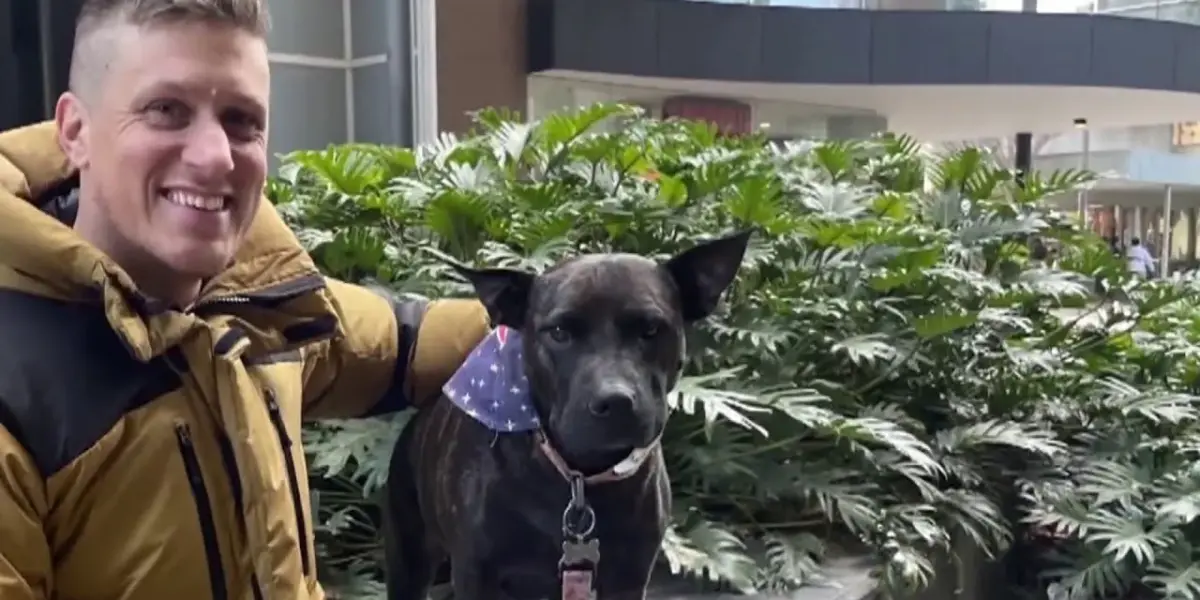
In a remarkable display of technological innovation and canine devotion, Australian tech entrepreneur Paul Cunningham has utilized artificial intelligence to develop a personalized cancer treatment for his dog, Rosie. Facing a grim prognosis, Cunningham turned to AI and scientific collaboration to create a one-of-a-kind mRNA vaccine, marking a significant moment in personalized veterinary medicine.
A Desperate Search for a Cure
The journey began when Rosie, Cunningham’s cherished companion, was misdiagnosed with cancer for nearly a year. Once the severity of the illness was confirmed, and traditional treatments were no longer an option, Cunningham felt compelled to explore alternative solutions. His background in AI led him to believe that technology could offer a path forward.
“My skill sets AI. So I decided to apply that to the problem,” Cunningham explained, highlighting his motivation to use his expertise to help his dog.
The Power of AI and Collaboration
Cunningham partnered with scientists at the University of New South Wales to analyze Rosie’s healthy DNA and compare it with her tumor DNA. The AI played a crucial role in cross-referencing vast amounts of data to pinpoint the genetic anomalies responsible for the cancer. This intensive analysis paved the way for the development of a unique mRNA vaccine tailored specifically to Rosie’s condition.
Navigating Hurdles for Approval
The path to creating and administering the vaccine was not without its challenges. Cunningham had to gain the trust and collaboration of esteemed scientists, proving his commitment and the viability of his approach through thorough research and preparation. A significant hurdle was obtaining ethical approval for the treatment, a complex process in Australia.
“Part of the hard part of doing this entire process was actually reaching out to professors and the people that I collaborated with,” Cunningham recalled. “The way I sort of collaborated with them was by doing my homework. It was kind of like you’re given an assignment, I would turn up with all this evidence of stuff that I’ve done and they’d be like, ‘Wow, he’s actually done the work.'”
The team worked on vaccine development and ethics approval simultaneously to save precious time, given the urgency of Rosie’s condition. Ethical approval was secured, providing the green light to proceed. The vaccine was administered in December 2025.
A Glimmer of Hope and Recovery
The moment of administering the vaccine was fraught with nervousness, as this approach had never been attempted before. However, positive results began to emerge about three weeks after the treatment. Cunningham also emphasized the vital role of Rosie’s veterinarian, Dr. Meaney, calling him an unsung hero in the success of the project.
“I was extremely nervous going into this because obviously it was like it had never been tried before,” Cunningham stated. “But I started to see a result about 3 weeks after the administration of the vaccine.”
Broader Implications and Future Prospects
Cunningham’s story has sparked widespread interest and debate about the potential of mRNA cancer vaccines for both veterinary and human applications. The success has led to an influx of requests, prompting Cunningham and his collaborators to consider launching a company to help manage the demand and assist others facing similar challenges.
“This whole sort of story is fired up many different debates and one of the things that’s been brought to the forefront here is the fact that these mRNA cancer vaccines even exist,” Cunningham noted. He added that they are “working on something to help with this very problem” and may be launching a company soon to alleviate the load from incoming requests.
Rosie’s Recovery
The segment concluded with a heartwarming glimpse of Rosie, resting peacefully, a testament to the groundbreaking treatment. Cunningham’s innovative use of AI and his dedication to his beloved pet offer a powerful example of how technology can be harnessed to improve lives, even in the face of dire circumstances.
Paul Cunningham’s pioneering work with Rosie highlights a hopeful future for AI-driven medical treatments. As the technology advances, stories like this may become more common, offering new possibilities for combating diseases in pets and potentially humans alike. The world will be watching to see how this innovation continues to develop and what impact it has on the future of medicine.
Source: Australian tech entrepreneur uses AI to create cancer treatment for his dog (YouTube)

Related Articles


Finland Tops Happiness Chart, UK Falls to 29th
Finland has once again been named the world's happiest country, while the UK dropped to 29th in the latest World Happiness Survey. The report explores the complex ways happiness is measured and highlights unique Finnish concepts of well-being, alongside concerning trends in youth happiness.


ChatGPT Adds Library Tab, Google Overhauls AI Studio
This week's AI news highlights significant updates from major players. ChatGPT now features a Library tab for easier document management, while Google has overhauled its AI Studio, merging it with an app builder to simplify the creation of multiplayer experiences. We also look at Midjourney V8's performance, user hopes and fears about AI from an Anthropic study, and quick updates from Gamma, OpenAI, and Claude.


Ukraine Gains AI Drone Edge: Russia’s Jamming Weakened
Ukraine is integrating advanced AI drone software from Shield AI, significantly boosting its capabilities against Russian jamming. The Hivemind system enables autonomous flight and swarm tactics, challenging traditional military doctrine and potentially weakening Russia's electronic warfare advantage.