AI Claims Swirl Around Netanyahu: Fact or Fiction?
Online speculation about Benjamin Netanyahu being an AI clone has surfaced due to perceived video anomalies. While experts point to technical glitches, the lack of verifiable digital markers fuels distrust. This incident highlights the growing challenge of discerning real content from AI-generated fakes in today's digital age.


AI Claims Swirl Around Netanyahu: Fact or Fiction?
In a bizarre turn of events, Israeli Prime Minister Benjamin Netanyahu has found himself at the center of a storm of online speculation, with some claiming he might be an AI clone. This unusual narrative began after video clips from a press broadcast circulated online, showing what some viewers believed to be six fingers on his right hand. This supposed anomaly quickly fueled theories that the footage was fake, with some even suggesting it was used to hide the truth about Netanyahu’s supposed death during an Iranian missile strike.
However, experts and fact-checkers suggest simpler explanations. The visual glitch, like an extra finger, could easily be the result of video quality issues, such as digital degradation or tricky lighting. Currently, there’s no solid evidence to suggest the video was generated by AI. Netanyahu himself attempted to put these rumors to rest by posting a video on his X (formerly Twitter) account. In the clip, he jokingly held up his hands to the camera, showing all ten fingers. He aimed to dispel the AI clone conspiracy theories with this straightforward gesture.
But the story didn’t end there. Social media users, still skeptical, scrutinized this follow-up video. They pointed out apparent visual oddities, claiming the coffee in his cup moved unnaturally or didn’t decrease as he sipped. Some even noticed his ring seemed to disappear into his skin. These details, too, could likely be explained by standard video imperfections, not necessarily AI fakery. The reasons people are finding to suspect manipulation are becoming increasingly strange. Scrolling through social media comments, you’ll find people questioning the naturalness of how he holds a coffee cup or even the ‘aura’ he projects.
Despite the wild theories, there is very little credible evidence to suggest that Benjamin Netanyahu is not alive. The real challenge lies in definitively proving whether either of these videos is genuine or a fabrication. Neither of the clips examined contained C2PA or SynthID metadata. These digital markers could have helped identify if AI tools were used in their creation or if they were verified by an authentic source. Furthermore, the social media platforms hosting these videos did not label them as real or synthetic, leaving viewers in the dark.
In a world grappling with complex geopolitical conflicts, like the ongoing tensions between the US, Iran, and Israel, people naturally crave assurance that the information they consume is real. Unfortunately, our current online environment isn’t well-equipped to provide these guarantees. This uncertainty is already being exploited to sow distrust. Former President Donald Trump, for instance, accused Iran of using AI for disinformation, specifically mentioning false depictions of successful attacks against the US. He even suggested that media outlets sharing such images should face charges of treason for spreading false information.
It’s true that AI-generated disinformation is a significant problem today. Yet, it’s worth noting that Trump himself has been accused of using deepfakes and AI-generated images for his own political purposes. He has also commented on the potential dangers of AI, urging caution. Meanwhile, some people are so wary of digital manipulation that they’ve become overly suspicious, questioning even the most mundane actions like holding a coffee cup. This level of paranoia highlights a growing disconnect between the reality of AI capabilities and public perception, fueled by a lack of clear verification tools online.
Key Takeaways:
- Online speculation arose claiming Benjamin Netanyahu might be an AI clone due to perceived visual anomalies in video clips.
- The alleged ‘six fingers’ and other oddities are likely explainable by video degradation or lighting, not necessarily AI.
- Netanyahu posted a video to counter the claims, but even that faced skepticism regarding its authenticity.
- Lack of digital watermarks (C2PA, SynthID) makes it difficult to verify video origins.
- The incident highlights broader concerns about AI disinformation and trust in online content, especially during geopolitical conflicts.
This situation underscores a critical need for better tools and platform policies to help users distinguish between authentic and AI-generated content. Without them, the spread of misinformation and the erosion of public trust will likely continue, especially in sensitive global contexts.
Source: Is Benjamin Netanyahu an AI clone? (YouTube)

Related Articles

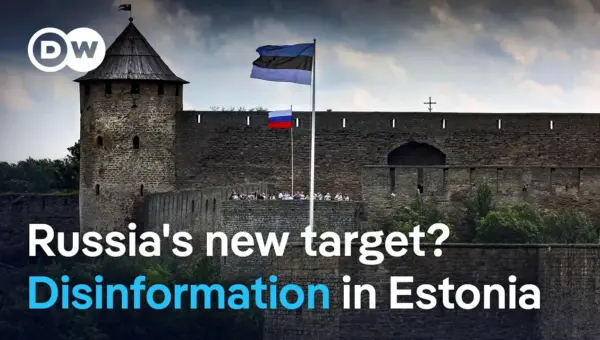
Russia Targets Estonia With Disinformation in Border City
Russia is reportedly conducting a disinformation campaign targeting Estonia's border city of Narva, aiming to sow discord among its Russian-speaking population. The online operation promotes separatist ideas, though residents largely dismiss the claims as fake. Estonian authorities view the campaign as a low-cost effort to undermine trust, with no concrete evidence of direct Russian government involvement.


US & Iran at ‘Inflection Point’ as Global Energy Markets Threatened
Global tensions have reached a critical 'inflection point' as Iran's actions threaten energy markets and vital shipping lanes. While the US military reports progress on its objectives, diplomatic uncertainty and global economic impacts loom large. Experts discuss the challenges of reopening key waterways and the broader threat of disinformation campaigns.


Finland Tops Happiness Chart, UK Falls to 29th
Finland has once again been named the world's happiest country, while the UK dropped to 29th in the latest World Happiness Survey. The report explores the complex ways happiness is measured and highlights unique Finnish concepts of well-being, alongside concerning trends in youth happiness.