AI Call Clarity: A Game Changer for Your Conversations?
A new AI-powered feature, tentatively named 'Super Clear Call,' promises to eliminate background noise during phone conversations. Early demonstrations show a dramatic improvement in call clarity, suggesting a significant leap forward in mobile communication technology.

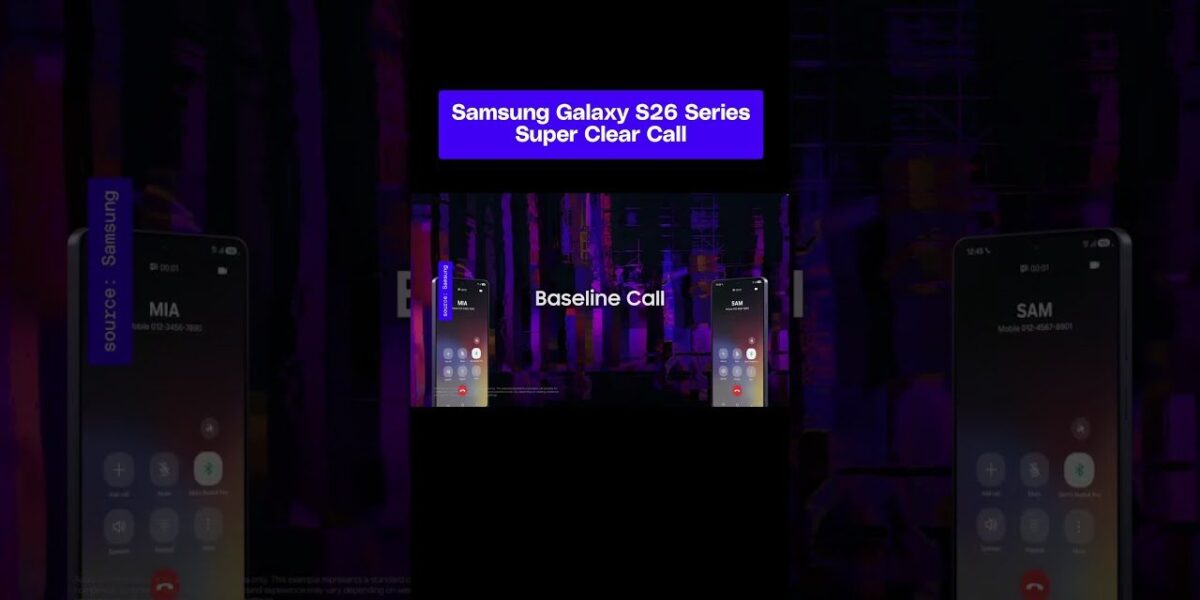
Is Your Next Call Crystal Clear? New AI Tech Promises Silence the Noise
In the hustle and bustle of modern life, clear communication can often feel like a luxury. Whether you’re navigating a noisy street, working from a busy cafe, or simply dealing with a less-than-ideal connection, background distractions can turn a simple phone call into a frustrating ordeal. But what if technology could magically filter out all that unwanted noise, leaving only your voice? Enter the realm of AI-powered call enhancement, and a compelling demonstration of a new feature, tentatively dubbed ‘Super Clear Call,’ that aims to do just that.
The Promise: Silence Through Sophistication
The concept is simple, yet its implications are profound. Imagine a world where the screech of a passing train, the chatter of a crowded room, or the whirring of machinery simply fades away, allowing you to focus solely on the conversation at hand. This is the promise of advanced AI noise cancellation, and a recent demonstration has given us a tantalizing glimpse of its potential. While specific details about the underlying technology, the company behind it, or its integration into existing products remain scarce, the initial results are undeniably impressive.
Putting it to the Test: A Striking Difference
The demonstration, though brief, was effective. The presenter initiated a baseline call, placing themselves in a simulated noisy environment – specifically, near a construction site. The initial audio was exactly what you’d expect: the primary speaker’s voice was audible, but heavily obfuscated by the intrusive sounds of heavy machinery and general urban clamor. The clarity was poor, and the conversational experience would undoubtedly be challenging.
Then came the transformation. The same call was replayed, this time with the ‘Super Clear Call’ feature activated. The change was immediate and dramatic. The overwhelming background noise vanished, replaced by a remarkably clear rendition of the speaker’s voice. The difference was so pronounced that the presenter immediately asked the listener, “You hear the difference, right?” The affirmative response, “He heard it,” confirmed that the AI had delivered on its promise in this initial, albeit controlled, test.
What This Means for You
For the average smartphone user, this technology could represent a significant upgrade to daily communication. Consider the scenarios:
- Remote Workers: Take calls from anywhere without worrying about background noise disrupting important meetings or client interactions.
- Commuters: Turn your noisy train or bus ride into a productive space for calls.
- Students: Participate in online classes or study groups from a bustling dorm or busy public space.
- Anyone on the Go: Enjoy clearer conversations in crowded cafes, busy streets, or even during outdoor activities.
The potential to improve accessibility for individuals with hearing impairments or those who struggle in noisy environments is also a significant benefit. By isolating speech and reducing auditory clutter, AI noise cancellation can make communication more inclusive and less taxing.
The Competitive Landscape and Future Outlook
This is not the first foray into AI-powered audio enhancement. Several major players in the tech industry have been developing and integrating similar features into their products. Google’s Pixel phones, for instance, have long boasted impressive noise cancellation capabilities, particularly with features like ‘Noise Cancellation’ in Google Meet and ‘Clear Calling’ which aims to reduce background noise on calls. Apple has also introduced features like ‘Voice Isolation’ for FaceTime calls, which prioritizes your voice during calls. Microsoft Teams and Zoom also offer robust noise suppression tools for their respective platforms.
However, the effectiveness of ‘Super Clear Call,’ as demonstrated, suggests it could be a strong contender or a significant leap forward. The key differentiator will be its ability to handle a wider range of noise types, its processing efficiency (without draining battery life), and its seamless integration into everyday calling experiences. The true test will be in real-world, unscripted scenarios, and how it performs against established competitors like those from Google, Apple, and various software providers.
What We Need to See Next
While the initial demonstration is highly promising, several questions remain. We need to see a live demo that allows for direct comparison with other leading noise-cancellation technologies. How does it perform with different types of noise – sudden loud bangs, continuous wind, multiple overlapping conversations? What is the latency, if any? Does it introduce any artifacts or robotic-sounding qualities to the voice?
Furthermore, the practicalities of its availability are crucial. Is this a feature for a specific upcoming device, a software update for existing hardware, or a standalone application? Understanding the pricing model – whether it’s a premium feature, bundled with a subscription, or free – will also be key to its adoption. Without a release date, specific product integration, or pricing information, it’s difficult to definitively assess its market impact.
The Verdict (So Far)
The potential of ‘Super Clear Call’ is immense. The brief glimpse we’ve had suggests a powerful tool that could significantly enhance the quality of our daily communications. If this technology can be widely implemented and perform as effectively in diverse, real-world conditions as it did in the controlled demonstration, it could fundamentally change how we interact via voice calls. We eagerly await further details and, most importantly, a chance to put it through its paces ourselves. The future of clear calls might be closer than we think.
Specs & Key Features
- Core Functionality: AI-powered background noise cancellation for voice calls.
- Demonstrated Performance: Significant reduction of construction site noise, resulting in a clearer speaker voice.
- Potential Benefits: Improved communication clarity in noisy environments, enhanced user experience, increased accessibility.
- Target Use Cases: Remote work, commuting, public spaces, general mobile communication.
Source: We'll need to try a live demo of Super Clear Call to see how well it compares. (YouTube)

Related Articles


AI’s Economic Shift: Ownership is the New Wage
Artificial intelligence is projected to significantly reduce the economic value of human labor within a decade. Experts suggest that capital ownership, rather than wages, will become the primary means of wealth accumulation. Investors are urged to consider this shift in their long-term strategies.

Germany’s Fake Laws: AI Disinformation Campaign Exposed
Viral AI-generated videos falsely claim Germany has enacted absurd laws, including fines for flushing toilet paper. Experts reveal a disinformation campaign aiming to portray Germany as chaotic, with potential commercial or political motives behind the fabricated content.


Walmart’s $360 SuperBox: A Piracy Pandora’s Box?
The $360 SuperBox, sold on Walmart.com, promises unlimited streaming content but raises serious questions about legality, security, and ethics. This device offers a tempting bypass to subscription fees but comes with significant risks, including potential botnet involvement and network compromise.