AI Bubble Fears: Market Concentration & Valuations
The U.S. stock market's unprecedented concentration and high valuations, fueled by the AI boom, echo historical speculative bubbles. While market concentration has historically shown a weaker correlation with future returns, elevated valuations suggest a need to moderate expectations. Diversification and discipline remain key strategies for investors navigating this environment.

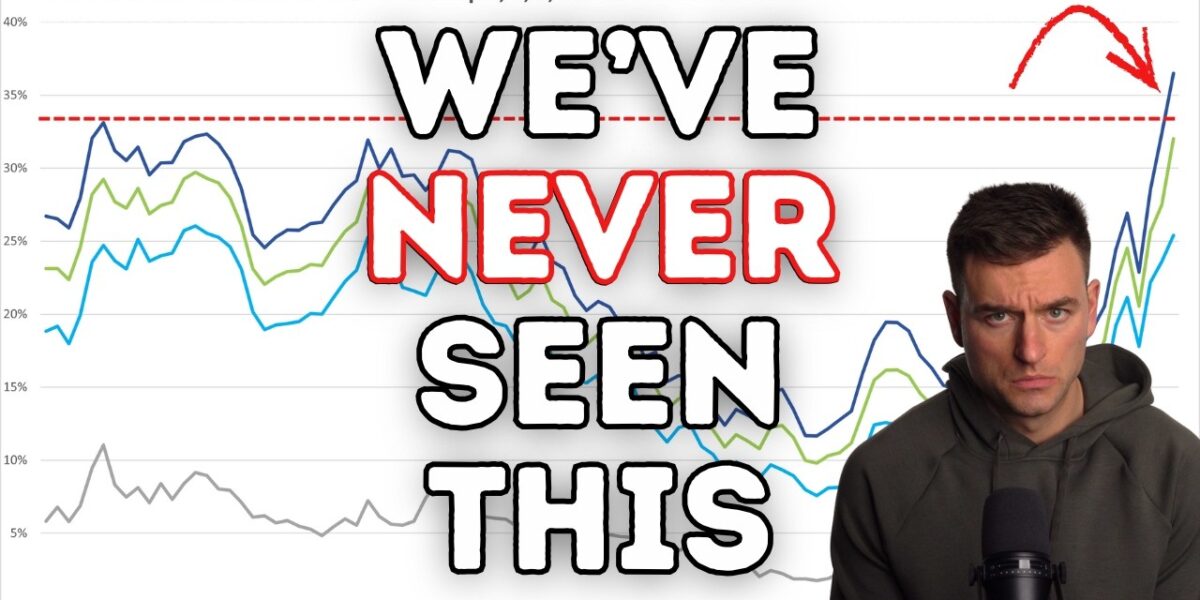
US Stock Market Faces Unprecedented Concentration Amidst AI Boom
The U.S. stock market is exhibiting a level of concentration not seen in nearly a century, with just seven stocks comprising 36% of the S&P 500 index. This phenomenon extends to the broader U.S. market, where these top stocks account for 32% of the total market capitalization. This extreme concentration, the highest since 1927, coupled with market valuations nearing their 1999 peaks, is raising concerns among investors about potential future market downturns, reminiscent of the dot-com era.
Historical Parallels: Bubbles and Their Aftermath
The current market environment, characterized by frenzied investment in Artificial Intelligence (AI) infrastructure, echoes historical technological revolutions. Periods of intense capital expenditure and soaring asset prices, often fueled by revolutionary technologies, have historically led to speculative bubbles. Examples include the railroad boom of the 1840s and the internet proliferation of the late 1990s. While these “productive bubbles” can accelerate technological development and deployment, they often result in painful price corrections and significant losses for investors who bought at the peak.
The Canadian Experience: Nortell Networks
A stark historical parallel can be drawn from the Canadian market’s experience during the dot-com bubble. In July 2000, Nortell Networks alone represented approximately 36% of the entire Canadian market index. The company’s subsequent collapse, after reaching a Cyclically Adjusted Price-to-Earnings (CAPE) ratio of 60.62 for the Canadian market, led to a significant market downturn. The TSE 300 index dropped by 43% between September 2000 and September 2002. Despite this, the Canadian market recovered by July 2005 and delivered strong long-term returns, with Canadian value stocks performing particularly well.
The U.S. Dot-Com Bust and the Lost Decade
The U.S. market experienced its own technology-induced downturn following the dot-com bubble. While some companies like Microsoft and Amazon ultimately proved the transformative potential of the internet, many others failed. The market crash beginning around March 2000 resulted in a “lost decade” for U.S. stocks, with the market remaining flat or declining in real terms until July 2013. Investors in U.S. value stocks and small-cap value stocks, however, fared significantly better, delivering positive returns during this period.
Market Concentration vs. Valuations: An Investor’s Dilemma
The current U.S. market presents two key areas of concern for investors: high valuations and extreme market concentration. Market valuations, measured by metrics like the CAPE ratio, indicate how expensive stocks are relative to their historical earnings. High valuations are generally associated with lower future returns. Market concentration, on the other hand, refers to the disproportionate influence of a few large companies on the overall market index. While historically, market concentration has shown a weaker, often statistically insignificant, correlation with future returns, high valuations present a more concerning trend.
The Impact of AI on Market Dynamics
The surge in AI-related stocks has been a significant driver of recent market performance. A September 2025 report from JP Morgan indicated that AI-related stocks accounted for 75% of S&P 500 returns, 80% of earnings growth, and 90% of capital expenditure growth since the launch of ChatGPT in November 2022. This substantial contribution highlights the economic substance behind some of the market’s recent gains, differentiating it from pure speculation.
Global Perspective on Market Concentration
While U.S. market concentration is at historic highs, many other major global markets have exhibited similar or even higher levels of concentration without necessarily leading to poor future returns. For instance, looking at the top seven stocks in the ten largest stock markets (excluding the U.S.) in November 2015, the average weight was 40.94%. Switzerland, at 60.11%, was more concentrated than the U.S. at that time. Over the subsequent decade (November 2015 to November 2025), these markets delivered an average USD return of 8.44%, demonstrating that high concentration does not automatically predict negative outcomes.
What Investors Should Know
- Valuations Matter: The relationship between high market valuations and lower future returns is more consistently observed than that of market concentration. While not a predictor of immediate crashes, elevated valuations suggest a need to moderate return expectations.
- Diversification is Key: Historical data consistently shows that diversification across markets and asset classes, including value and small-cap stocks, can mitigate the impact of sector-specific downturns or market concentration.
- Discipline and Long-Term Perspective: Behavioral discipline is crucial. Understanding that diversification inherently means owning both winners and underperformers, and maintaining a long-term perspective, can help investors navigate market volatility.
- AI’s Economic Substance: While speculative bubbles are a risk, the significant capital expenditure and earnings growth driven by AI indicate underlying economic value, distinguishing it from purely hype-driven market movements.
Long-Term Implications
The current market environment, with its high valuations and concentration, warrants a recalibration of return expectations for U.S. equities. While a repeat of the dot-com “lost decade” is not guaranteed, history suggests that periods following such high valuations may lead to more subdued returns. Investors who maintain a diversified portfolio and a disciplined approach are best positioned to weather potential market corrections and benefit from long-term growth.
Conclusion: Navigating Uncertainty
The debate over whether the U.S. stock market is experiencing an “AI bubble” remains uncertain and can only be definitively answered in hindsight. However, the confluence of record market concentration and elevated valuations presents a compelling case for investor caution. By understanding historical precedents, focusing on diversification, and maintaining disciplined investment strategies, investors can better prepare for various market outcomes, regardless of whether a bubble ultimately forms and bursts.
Source: The "AI Bubble" (YouTube)

Related Articles


Australia’s Hidden Monopolies Distort Economy
Australia's economy is increasingly dominated by a few large corporations, leading to higher prices, reduced competition, and a decline in public trust. From supermarkets to banks, this concentration of power distorts markets and influences political outcomes.


Dual Shocks: Tariffs and AI Fears Roil Markets
The stock market recently experienced significant volatility, driven by escalating tariff concerns and fears of an AI bubble. Gold prices surged as investors sought safe havens amid the uncertainty. Elevated market valuations and persistent inflation add to the complex investment landscape.


SpaceX Acquires AI Firm XAI in Bold, Controversial Merger
SpaceX has acquired AI firm XAI in an all-stock merger, a move framed by Elon Musk as a step towards space-based data centers. However, analysts point to financial distress at XAI and its sister company X as the primary drivers, suggesting the merger is a bid to leverage SpaceX's upcoming IPO to subsidize significant losses.