AI Breakthrough: Real-Time Realistic Glints Achieved
Researchers from Adobe, NVIDIA, and Aalto University have developed a groundbreaking AI technique that simulates realistic surface glints in real-time. This open-source method bypasses traditional computational hurdles, offering stunning visual fidelity for games and films with unprecedented efficiency.

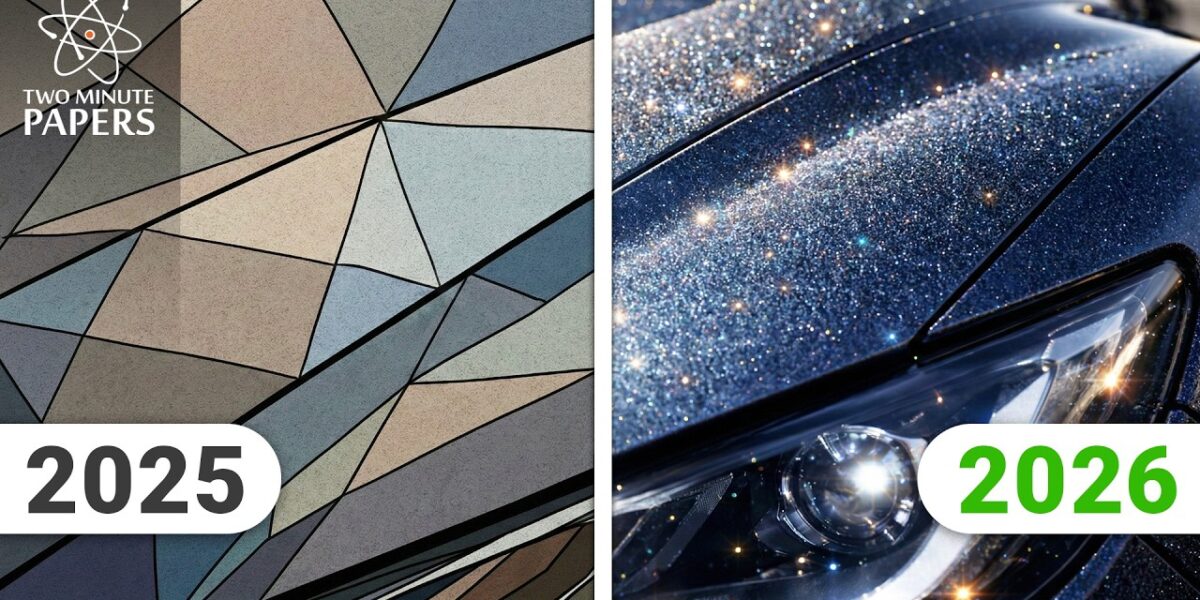
AI Breakthrough: Real-Time Realistic Glints Achieved
In a significant leap for computer graphics and real-time rendering, researchers from Adobe Research, NVIDIA, and Aalto University have unveiled a groundbreaking technique that simulates realistic surface glints with unprecedented speed and efficiency. This new method, available as an open research project, promises to bring visually stunning, dynamic reflections to video games, movies, and other visual media without the hefty computational cost that has plagued previous approaches.
The Challenge of Realistic Glints
Anyone who has admired the sparkle of fresh snow under a streetlight or the metallic sheen of car paint in sunlight has witnessed the complex phenomenon of surface glints. These visual effects are caused by millions of microscopic reflective flakes on a surface. Simulating each of these individual flakes in computer graphics has historically been computationally prohibitive, often requiring vast amounts of memory and processing power that can cripple frame rates. This has led to compromises, resulting in less dynamic and visually bland surfaces in digital environments.
A Novel Approach: The “Bouncer” Analogy
The core innovation of this new technique lies in its radical departure from traditional simulation methods. Instead of meticulously tracking every single reflective particle – akin to managing an enormous guest list for a party – the researchers employ a more efficient, rule-based system. They liken this to a “bouncer” at the party. This “bouncer” doesn’t need a list of every guest (particle); instead, it uses mathematical rules to instantly determine where a guest (glint) should appear based on the viewer’s perspective. This allows for the dynamic generation of glints on the fly, eliminating the need to store or process massive amounts of data.
This dynamic generation means that for every single frame rendered, the system can recalculate the glint positions. This recalculation is so fast and accurate that it ensures temporal stability – the glints appear consistent and don’t flicker or jump erratically as the camera moves. This is a crucial improvement over older methods where the visual quality often degraded over time or required extensive processing to achieve stability.
Performance and Comparisons
The performance claims are staggering. The technique can reportedly achieve over 280 frames per second on a consumer NVIDIA graphics card, and even runs in real-time on less powerful laptops. This is a stark contrast to conventional methods like the industry-standard GGX sampling technique, which often struggles with noise and slow convergence. In direct comparisons presented by the research, the new technique consistently produced cleaner, more visually appealing results in the same amount of time as GGX, demonstrating its superior efficiency in rendering these complex reflections.
The “bouncer” analogy extends to how the system handles detail. It divides the surface into a grid, managing detail dynamically. From a distance, it groups glints into larger blocks, providing a general impression. As the viewer gets closer, these blocks are refined into smaller sections, revealing finer details. This adaptive approach ensures that computational resources are used only where necessary, optimizing performance without sacrificing visual fidelity.
UV-Free Rendering: A Game Changer
Perhaps one of the most revolutionary aspects of this technology is its ability to render without UV mapping. UV mapping is the process of flattening a 3D object’s surface into a 2D image to apply textures. For complex or organic shapes, this process can be a nightmare, leading to distortions, tears, and visible seams. The new technique, by operating directly in 3D space and using its rule-based “bouncer” system, bypasses UV mapping entirely. This means that complex geometries like car chassis or fantastical creatures can have realistic glints applied seamlessly, without the usual texturing headaches.
Why This Matters
The implications of this research are far-reaching:
- Enhanced Realism in Gaming and Film: Gamers and moviegoers can expect more visually immersive experiences with lifelike reflections on surfaces, adding a new layer of fidelity.
- Increased Efficiency for Creators: 3D artists and developers can achieve stunning visual effects faster and with less computational overhead, potentially reducing production times and costs.
- Accessibility of Advanced Graphics: The ability to run in real-time on less powerful hardware makes advanced graphical features more accessible to a wider range of devices and users.
- New Creative Possibilities: The UV-free capability opens up new avenues for designing and rendering complex 3D models that were previously difficult to texture realistically.
Limitations and Availability
While the technique is highly impressive, it’s not without its limitations. It is not strictly energy conserving, which might lead to minor energy gain or loss near domain boundaries, though this is unlikely to be noticeable in most applications like games and movies. Certain parameter combinations can also lead to unexpected visual results. Furthermore, the UV-free feature, while powerful, does come with a slight performance cost compared to standard rendering.
The good news is that the researchers have made their work freely available. The research paper, a demo, and even the full source code (reportedly implementable in around 337 lines of code) are accessible. This allows anyone to experiment with the technology directly in their browser or integrate it into their own projects.
Conclusion
This collaboration between Adobe, NVIDIA, and Aalto University represents a significant advancement in real-time computer graphics. By rethinking how surface reflections are simulated, they have unlocked a level of visual realism and performance that was previously unattainable. The open availability of this technology ensures that its impact will be felt across the digital content creation landscape, pushing the boundaries of what is visually possible.
Source: Adobe & NVIDIA’s New Tech Shouldn’t Be Real Time. But It Is. (YouTube)

Related Articles


OpenClaw Emerges: AI Agent Automates Life 24/7
OpenClaw, a new open-source AI agent, is gaining rapid traction for its ability to automate tasks 24/7 and integrate with messaging apps. Initially named Claudebot, the project faced a naming dispute before settling on OpenClaw, highlighting the fast-paced and sometimes contentious nature of AI development.

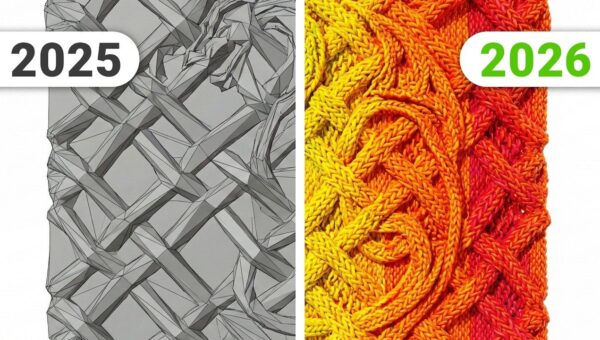
Physics Simulation Leaps Forward: 45x Faster, Real-Time Rendering
A new physics simulation technique drastically accelerates complex animations, achieving up to 45x speed improvements and enabling real-time rendering for hair, cloth, and structural dynamics. The open-source method bypasses traditional bottlenecks, offering unprecedented realism and efficiency for games, film, and scientific applications.

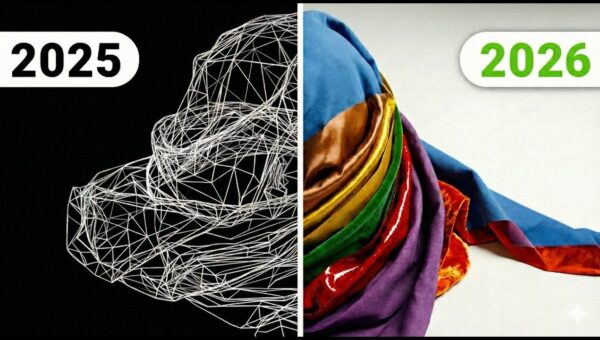
AI Breakthrough: Hyper-Realistic Clothing Simulation Achieved
A new physics-inspired technique revolutionizes digital clothing simulation, delivering hyper-realistic results with unprecedented speed and efficiency. By intelligently allocating detail and predicting material behavior, it overcomes the long-standing compromise between visual fidelity and computational cost.