AI Aids US Military in Iran Strikes, Raising Ethical Questions
The U.S. military reportedly used Anthropic's AI model, Claude, for planning recent strikes on Iran, including target identification and battle simulations. This deployment occurs despite Anthropic's refusal to grant unrestricted access, highlighting the growing reliance on AI in defense and raising significant questions for investors in the technology and defense sectors.


AI Deployed in US Military Operations, Including Strikes on Iran
The U.S. military has reportedly utilized artificial intelligence, specifically the Claude model developed by Anthropic, to assist in planning recent military operations, including strikes targeting Iran over the weekend. This deployment marks a significant step in the integration of advanced AI technologies into defense strategies, raising both strategic and ethical considerations.
Pentagon’s Use of AI Amidst Company Restrictions
Sources have indicated to CBS News that Claude, an AI developed by the AI safety and research company Anthropic, played a role in target identification, battle simulations, and intelligence analysis for the U.S. military’s recent actions. This comes even as Anthropic has reportedly imposed restrictions on the military’s access to its technology, refusing to grant unrestricted usage. The Pentagon’s continued reliance on Claude, despite these limitations, highlights the growing importance and perceived necessity of AI in modern warfare planning.
“We are now living in a time when AI helps plan a military strike.”
The Technological Industrial Complex and Digital Control
The underlying driver for such advancements, according to some analyses, is the influence of the “technological industrial complex” and its development of a “digital control grid.” This perspective suggests that the rapid integration of technology, including AI, into critical infrastructure and defense systems is reshaping geopolitical dynamics and military capabilities.
What Investors Should Know
The involvement of AI in military operations presents a dual-edged sword for investors. On one hand, it signals immense growth potential for companies at the forefront of AI development, particularly those with applications in defense and national security. The demand for sophisticated AI solutions in these sectors is likely to escalate, driving innovation and investment in areas such as:
- Advanced algorithms for data analysis and pattern recognition.
- AI-powered simulation and modeling tools for strategic planning.
- Cybersecurity solutions leveraging AI to protect critical infrastructure.
- Robotics and autonomous systems for defense applications.
Companies like Anthropic, even with its current restrictions, are central to this technological evolution. Investors should monitor the evolving landscape of AI regulation, ethical guidelines, and the specific capabilities that companies can offer to government and defense entities. The ability to navigate these complexities will be crucial for long-term success in the defense AI market.
Sector and Market Context
The defense sector is increasingly looking to AI to enhance efficiency, accuracy, and decision-making capabilities. This trend is not isolated to the U.S. military; global powers are investing heavily in AI for defense purposes. This creates a competitive environment where technological superiority, driven by AI, could become a significant factor in national security. The broader technology sector, particularly those segments focused on machine learning, natural language processing, and data analytics, will likely see spillover benefits as AI capabilities mature and find wider applications.
Short-Term and Long-Term Implications
In the short term, the confirmed use of AI in planning military actions underscores the accelerating pace of technological adoption in defense. This could lead to increased demand for AI services and hardware from defense contractors and technology providers. For investors, this might translate into short-term gains for companies directly involved or poised to benefit from these contracts.
In the long term, the integration of AI into warfare raises profound questions about the future of conflict, the role of human oversight, and the potential for unintended consequences. From an investment perspective, the long-term implications are tied to the sustainability of AI in defense, the development of ethical frameworks, and the global regulatory environment. Companies that can demonstrate robust AI safety measures, ethical AI development practices, and compliance with evolving regulations may be better positioned for sustained growth and investor confidence. The ongoing debate surrounding AI’s role in warfare will undoubtedly shape the future of this market, influencing both technological development and investment strategies.
Source: How AI Is Being Used In War (YouTube)

Related Articles

Pentagon Taps AI for War; OpenAI Steps In After Firm Refuses
The Pentagon's use of AI in military operations, including leveraging Anthropic's Claude and Palantir's Maven system, has sparked controversy. OpenAI's subsequent deal with the military after Anthropic's refusal has led to significant public backlash and a 'Quit GPT' movement.


Iran Navy Ship Obliterated as Mideast Conflict Escalates
An Iranian naval ship has been obliterated in a significant escalation of regional conflict. The US and its allies are conducting extensive strikes across Iran, targeting naval assets, infrastructure, and military aircraft, while Iran continues to retaliate with missile and drone attacks.

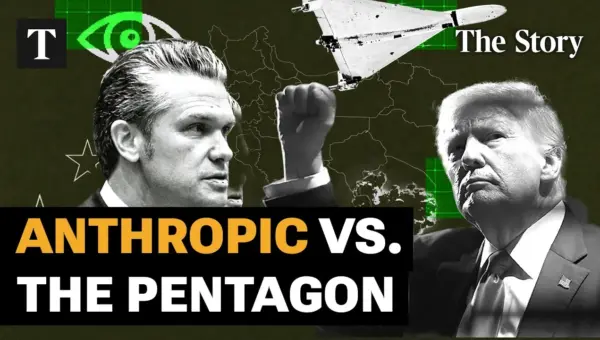
AI Revolutionizes Warfare: US & Israel Strike Iran with Unprecedented Speed
Artificial intelligence is revolutionizing warfare, as demonstrated by recent US and Israeli strikes on Iran. AI has drastically accelerated target identification and decision-making, compressing the traditional "kill chain" from months to minutes. However, this rapid integration raises significant ethical concerns regarding autonomous weapons and human oversight.