AfD Faces Nepotism Scandal Amidst Internal Criticism
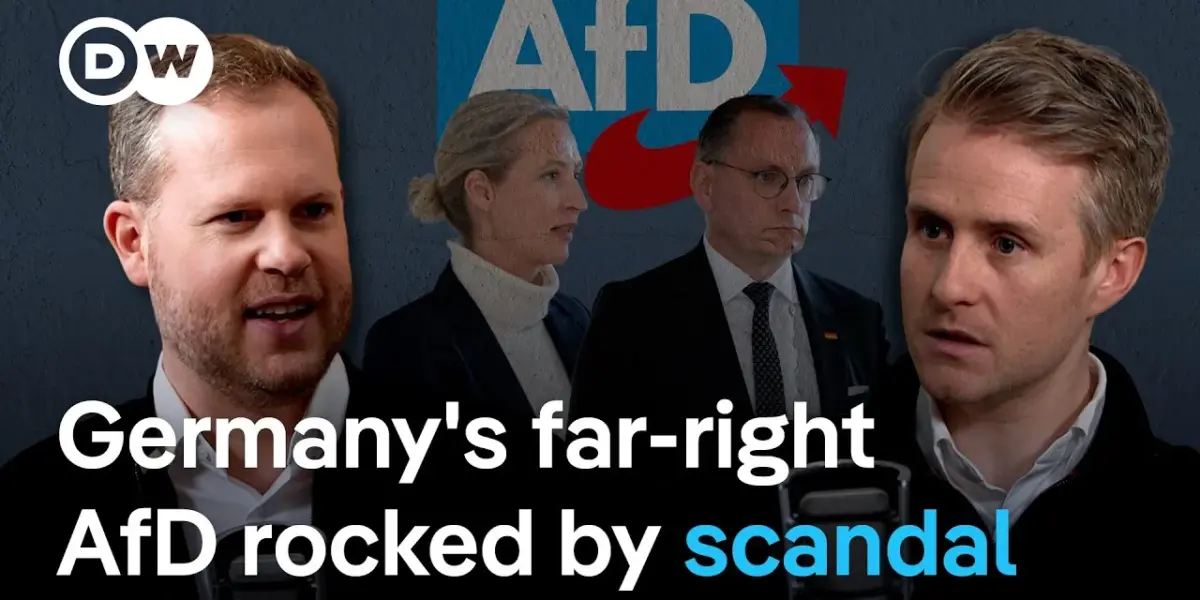
Germany's far-right AfD party is facing a growing nepotism scandal, with lawmakers accused of awarding taxpayer-funded jobs to relatives of colleagues. The controversy, particularly prominent in Saxony-Anhalt ahead of crucial state elections, has sparked internal criticism and raised questions about the party's core values and electoral integrity.

AfD Grapples with Nepotism Allegations and Internal Backlash
Germany’s far-right Alternative for Germany (AfD) party is currently embroiled in a widening scandal involving allegations of nepotism, with lawmakers accused of awarding taxpayer-funded positions to relatives of their colleagues. The controversy has intensified in Saxony-Anhalt, a key state where the AfD is aiming to secure its first-ever state government leadership in the upcoming September elections. Investigations by various media outlets have revealed a network of patronage within the AfD’s state parliamentary group, funded by public money.
Saxony-Anhalt at the Epicenter of the Scandal
The scandal initially erupted in Saxony-Anhalt, a state of significant strategic importance for the AfD’s electoral ambitions. The situation was brought to light amidst an internal party dispute involving Jan Wöllecke, a Bundestag member. Wöllecke faced allegations of using parliamentary funds to pay an individual working for a private company he allegedly founded to sell artificial diamonds. Initially, the party’s response, as is often the case, was to dismiss the claims as media fabrication aimed at discrediting them. However, as more reports emerged, the party began to distance itself from Wöllecke, eventually attempting to expel him.
The internal struggle became complicated by Wöllecke’s central role within the state’s AfD structure. As a key figure who helped build the party’s network in the region, his potential expulsion created significant internal friction. Other AfD members expressed concern that opposing Wöllecke could lead to severe repercussions, given his deep knowledge and influence within the party.
Broader Allegations Emerge in Lower Saxony
The scope of the scandal expanded significantly with investigative reporting from Lower Saxony. European lawmaker Anna Doná alleged that the AfD’s state branch in Lower Saxony is being run by a corruption network. Her claims suggest a system where individuals seeking to be placed on the party list for elections are allegedly coerced by the state’s AfD leader. The alleged arrangement involves promising a spot on the list in exchange for a commitment to allocate at least 35% of their employee budget to individuals chosen by the party leader, ostensibly for party members and party-related tasks.
The response from the AfD members in Lower Saxony has been a firm denial of these allegations, labeling them as completely false. Party leaders in the state have echoed these denials, stating that such practices have never occurred.
The Mechanics of Alleged Nepotism
The situation presents two distinct dynamics: the hiring of relatives, which is not inherently illegal, and the alleged systemic allocation of jobs for party loyalty and personal gain. While hiring a colleague’s relative might be permissible, the core of the allegations points towards a coordinated effort to place party loyalists and family members in positions, often funded by the taxpayer.
Journalists have described a culture within the AfD where this practice has become normalized. The narrative suggests an informal agreement: “If you take my wife, I’ll take yours.” This has reportedly led to a situation where, according to high-ranking AfD members, up to 50% of the party’s lawmakers in the German Bundestag might be employing individuals related to other colleagues or close associates. This practice, while not illegal in itself if arranged through different parliamentary offices, raises significant ethical questions about the use of public funds and the prioritization of political connections over merit.
Internal Criticism Challenges Party Narrative
A significant aspect of this scandal is the criticism emanating not just from external political opponents but from within the AfD itself. This internal backlash has lent considerable weight to the allegations. Björn Höcke, a prominent and influential party leader in Thuringia, known for his right-wing extremist views, publicly stated that the party is its own worst enemy. He shared a blog post from a conservative intellectual calling for internal cleanup, a statement that carries significant weight given the influence of the party’s right-wing faction.
The intervention of figures like Höcke signals a shift, as it becomes difficult for the party leadership to dismiss the issues as mere external attacks. Even party leader Tino Chrupalla has acknowledged that while hiring relatives might not be illegal, it is undesirable and warrants discussion. The emergence of potentially illegal activities further complicates the party’s position.
Opportunism and Financial Motivation within the AfD
The phenomenon of nepotism and patronage within the AfD is being linked to the party’s relative youth and the rapid ascent of its members to positions of power and financial security. Unlike established parties where political ambition might be driven more by ideological direction, insiders suggest that in the AfD, the fight for positions is often fueled by financial self-interest. Many members, it is argued, may not have achieved such lucrative positions in their previous careers.
“The fighting is not that much about political influence because there are so many opportunists inside the AFD that just don’t care if it’s going more in the right-wing extremist way or if it’s going more moderate way… They care about their own money and they care about their jobs that they get into like to being in parliament.”
This perspective suggests that a significant portion of AfD members are opportunists who prioritize personal financial gain and job security over strict adherence to a particular ideological wing. This environment fosters a culture where networking and reciprocal arrangements, even if ethically questionable, become a means to maintain power and financial stability.
Potential Impact on Electoral Prospects
The timing of these revelations is particularly sensitive, with state elections in Saxony-Anhalt approaching. The AfD currently leads in the polls in the state, holding a commanding position that could potentially lead to an outright majority. The question remains whether these scandals will dampen the party’s momentum and affect its electoral performance.
Current national polls show the AfD neck-and-neck with the CDU, indicating that the scandals have not yet significantly impacted their overall standing. However, reports suggest an increase in angry communications from party members and the public, indicating internal and external unease. The AfD’s core narrative—positioning itself as an alternative to allegedly corrupt established parties and championing grassroots democracy—is directly challenged by these nepotism allegations.
If the public perceives these practices as widespread within the AfD, it undermines the party’s claims of being a morally superior alternative. Furthermore, the allegations of centralized decision-making and the suppression of genuine grassroots movements contradict the AfD’s self-image as a democratic force. The party faces the challenge of convincing voters that these issues are isolated incidents rather than systemic problems.
Looking Ahead: Will Voters Care?
Historically, scandals involving extremist rhetoric or internal corruption have been career-ending for politicians in Germany. However, the AfD has demonstrated resilience, often benefiting from such controversies by rallying its base. The party seems to operate under the assumption that these issues may not deter their core supporters, who might dismiss them as politically motivated attacks or as common practices in other parties.
The crucial question moving forward is whether the AfD’s voter base will ultimately be swayed by the internal contradictions exposed by the nepotism scandal. Will voters continue to see the AfD as the necessary alternative, or will the allegations of self-serving behavior and compromised integrity erode their support? The party’s ability to navigate this internal crisis and its impact on public perception will be a key factor to watch in the upcoming elections and beyond.
Source: Is the AfD's nepotism scandal the tip of the iceberg? | DW News (YouTube)

Related Articles
Iran’s Opposition: United or Divided Ahead of Potential Uprising?
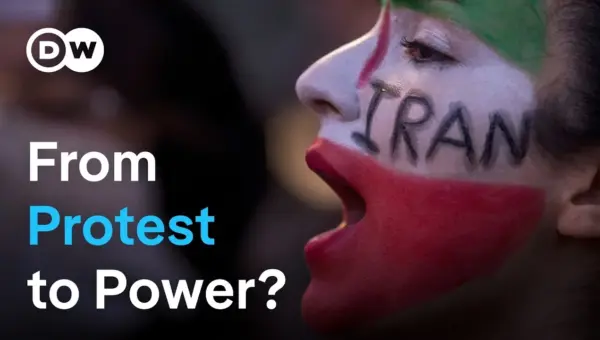
DW News examines the complex landscape of Iran's opposition movements, exploring whether dissent is a unified force or a collection of divided factions. Insights reveal challenges in leadership and the impact of external influence on internal struggles.

Russian TV Host Clashes Over Ukraine War, Accuses Germany of Nazism
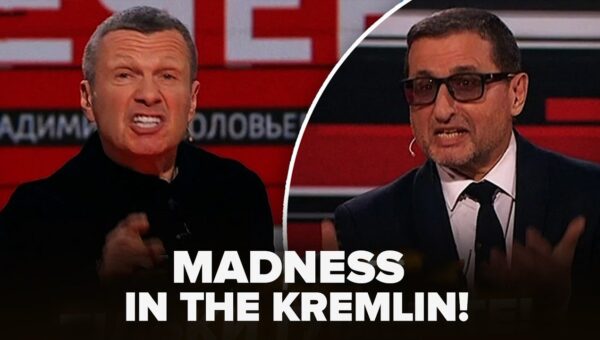
Russian TV host Vladimir Solovyov engaged in a fiery on-air clash, with a guest challenging his threats against Europe and his accusations of Nazism against German Chancellor Friedrich Merz. The segment exposed the distorted narratives and internal contradictions within Kremlin propaganda regarding the Ukraine war.

Melania Documentary Producer Blames Politics for Flop
A producer for a Melania Trump documentary has voiced frustration over the film's struggles, blaming political objections for denied music rights from artists like Prince and Guns N' Roses. Mark Beckman cited that musicians' estates refused to associate their work with Donald Trump, despite claims the film was not political.