Adam Mockler Clashes with Heraldo Rivera on Live TV
Political commentator Adam Mockler and veteran journalist Heraldo Rivera engaged in a fiery on-air debate concerning political discourse and respect for institutions. Mockler challenged Rivera's calls for deference to presidential addresses, citing Donald Trump's past actions and what Mockler described as 'false equivalencies' in media.


Adam Mockler Engages in Fiery Debate with Heraldo Rivera
In a recent appearance on NewsNation’s program hosted by Chris Cuomo, political commentator Adam Mockler found himself in a heated exchange with veteran journalist Heraldo Rivera. The discussion, which initially focused on former President Donald Trump’s State of the Union address, quickly escalated into a sharp debate over political discourse, respect for institutions, and the nature of political commentary.
Mockler’s Criticisms Spark Confrontation
The tension arose when Mockler challenged Rivera’s perspective on how to engage with a presidential address, particularly one delivered by Donald Trump. Mockler argued that Trump’s speeches often consist of airing grievances and spreading misinformation, rather than genuinely addressing the nation’s concerns. This viewpoint directly contrasted with Rivera’s assertion that the State of the Union address, regardless of the president, should be treated with a degree of respect, citing constitutional requirements for the president to report on the state of the republic.
“It’s very charitable to say that Donald Trump would be listing his concerns to the American people and not just airing out his grievances and lying for two to three hours,” Mockler stated, directly countering Rivera’s framing of the event.
Debate Over ‘Respect’ and ‘Unprecedented Moments’
Rivera contended that boycotting or disengaging from the State of the Union, even when a president is perceived to be lying, is disrespectful and undermines national unity. He invoked the concept of the ‘peaceful transfer of power’ and the importance of celebrating institutions, suggesting that such actions violate the principle of ‘e pluribus unum’ (out of many, one).
Mockler, however, swiftly countered by pointing to historical instances of disrespect and challenges to democratic norms, particularly those associated with Donald Trump and his allies. He referenced Trump’s actions following the 2020 election, the chants of ‘Hang Mike Pence,’ and Marjorie Taylor Greene’s heckling of Joe Biden during a previous State of the Union address. Mockler also drew parallels to President Clinton’s impeachment, questioning why his addresses were still broadcast, to highlight what he saw as a selective application of the ‘respect’ standard.
“Give me a break. You’re going to cite the Constitution and the peaceful transfer of power, the inauguration, as something that we should respect when we’re about to listen to the president who was the first person to break that peaceful transfer of power after people were chanting, ‘Hang Mike Pence’ because of his election fraud lies,” Mockler retorted.
‘False Equivalency’ in Political Reporting
A significant portion of the discussion revolved around what Mockler and others perceive as ‘false equivalency’ in modern political reporting. Mockler criticized what he termed ‘both sidesism,’ where perceived flaws or controversies on both sides of the political spectrum are presented as equal, even when the scale or nature of the actions differ dramatically.
He argued that this approach, often seen on platforms like NewsNation and exemplified by commentators who strive for perfect balance, misrepresents the political landscape. Mockler highlighted instances where actions by Donald Trump, such as attempting to overturn an election or the scale of alleged Trump family corruption, are downplayed when compared to controversies surrounding Democrats.
“The people who watch a lot of these, you know, News Nation or all they’re caught up in making sure that everything is perfectly balanced when it’s not,” Mockler explained. He emphasized that the goal should be to illustrate the unique nature of Trump’s challenges to democratic norms, rather than creating an illusion of equal wrongdoing.
Concerns Over Election Integrity and Future of Democracy
The conversation also touched upon broader concerns regarding the integrity of upcoming elections and the potential for undermining democratic processes. Mockler pointed to statements made by Republican lawmakers, including House Speaker Mike Johnson and Senator JD Vance, suggesting that any Democratic electoral victory would be due to cheating.
Mockler expressed apprehension about potential efforts to invalidate election results, citing past actions by Republican figures to challenge the 2020 election outcome. He also discussed legislative efforts, such as the proposed ‘Save Act,’ which he argued could create barriers to voting for certain demographics without demonstrable evidence of widespread fraud.
Despite these concerns, Mockler conveyed a degree of optimism regarding the robustness of the U.S. election system, attributing its decentralized nature to making large-scale rigging difficult. He stressed the importance of high voter turnout to ensure that the democratic process is ‘too big to rig.’
Rivera’s Reaction and Mockler’s Age
Reflecting on Rivera’s unusually aggressive reaction, Mockler speculated that his youthful appearance and demeanor might have contributed to the veteran journalist’s heightened response. He noted that Rivera invoked Mockler’s age and perceived lack of experience as a reason why he shouldn’t dictate who people should listen to.
“You know, I have now just been learning about all the lore. I’m such a young Jenzir that I knew who he was… but I didn’t realize that he was the Al Capone guy, right? I didn’t realize that he had been punched on TV,” Mockler mused, suggesting that Rivera’s reaction might have been triggered by a generational clash or a perceived challenge to his long-standing media presence.
Mockler concluded by emphasizing that despite the heated nature of the exchange, he holds no personal animosity towards Rivera, acknowledging his long career in journalism. The interaction highlighted the ongoing debates within political commentary about how to accurately represent political realities without resorting to misleading equivalencies.
Source: Here’s what really happened (YouTube)

Related Articles

Progressive Voices Demand More Aggressive Democratic Strategy
Progressive influencer Adam Mockler criticizes the Democratic Party's cautious approach, urging for more aggressive tactics and a stronger stance against Republican norm violations. He highlights concerns over special interests, corporate influence, and the need for greater transparency within the party.

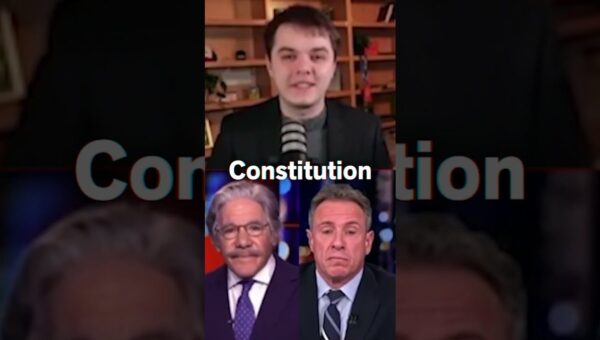
Mockler Challenges Rivera on Constitutional Integrity
Political commentator Adam Mockler sharply criticized Fox News host Geraldo Rivera's use of constitutional arguments during a live TV debate. Mockler accused Rivera and Republicans of hypocrisy, citing past actions including the January 6th Capitol attack and heckling during a State of the Union address.

Gaines Accused of Xenophobia in Immigration Debate
Brian Tyler Cohen challenged conservative commentator Riley Gaines' definition of 'American' during a debate, arguing that qualifying Americanness based on assimilation or political views is un-American. Cohen suggested the focus on immigration is a political distraction from economic failures.