A-10 Warthog Unleashed: Iran’s Proxy Wars Intensify
An analysis of Iran's proxy wars in Iraq and Afghanistan reveals escalating regional tensions and the strategic deployment of assets like the A-10 Warthog. The piece examines shifting alliances, historical context, and the potential for a more stable future.

A-10 Warthog Unleashed: Iran’s Proxy Wars Intensify
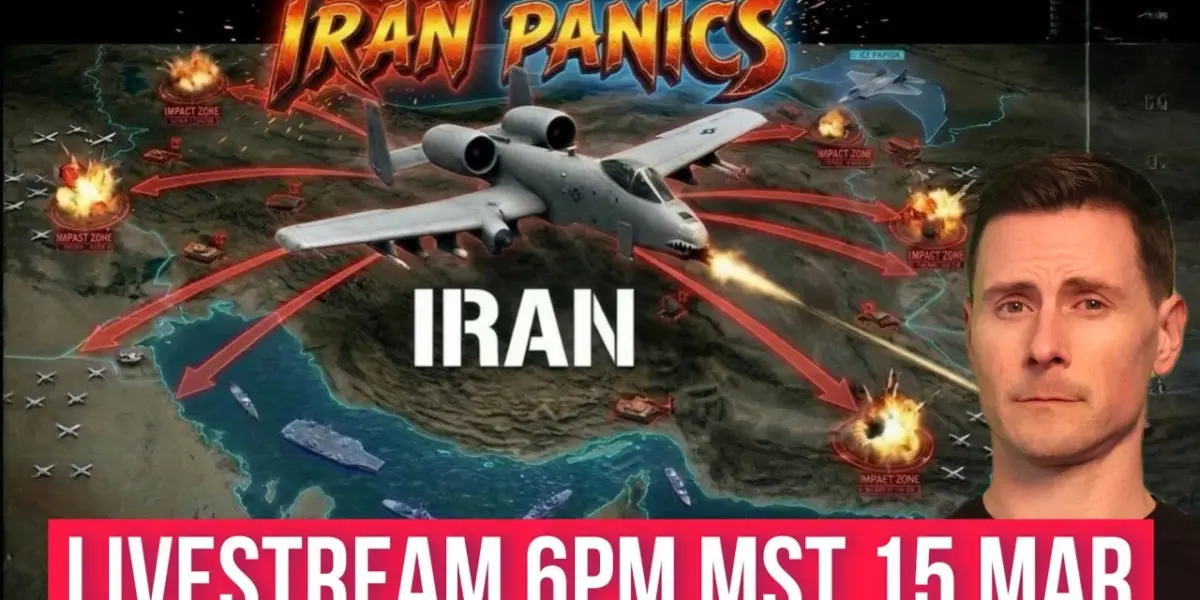
In a recent livestream on March 15, 2026, an analysis of escalating geopolitical tensions centered on Iran’s regional influence and the strategic deployment of military assets, notably the A-10 Warthog, was presented. The discussion highlighted Iran’s persistent reliance on proxy forces in Iraq and Afghanistan, and the broader implications for regional stability and international relations. The speaker, drawing on personal experience and current intelligence, provided a nuanced view of the complex web of alliances and rivalries shaping the Middle East.
Iran’s Proxy Network: A Strategic Imperative
The core of the analysis focused on Iran’s strategy of leveraging proxy militias in Iraq. These groups, often aligned with Tehran, pose a significant challenge to regional security. The porous border between Iran and Iraq is identified as a critical vulnerability, facilitating Iranian influence and the movement of resources to these proxies. The speaker emphasized that these Iraqi militias, while potentially possessing smuggled man-portable air-defense systems (MANPADS), are generally outmatched by more sophisticated Iranian air defenses.
The discussion then broadened to include Afghanistan, where Iran has cultivated a close relationship with the Taliban. The transcript notes that the Taliban have publicly pledged to support Iran, a sentiment that comes amidst significant financial aid from the U.S. to Afghanistan. This strategic alignment between Iran and the Taliban is viewed as a potential source of instability, with concerns that Afghanistan could engage in proxy actions against Pakistan, a nuclear-armed nation that has itself taken action against militant groups within Afghanistan.
Historical Context: The Shadow of Soleimani and IEDs
A historical parallel was drawn to the actions of General Qasem Soleimani, a key figure in Iran’s Quds Force, who was instrumental in directing support to proxies and was responsible for the flow of Improvised Explosive Devices (IEDs) into Afghanistan during the U.S. occupation. His elimination during the Trump administration was seen as a significant blow to Iran’s proxy operations.
The speaker recounted a personal experience from their time serving in Afghanistan, involving an intercept of unidentified aircraft near the Iranian border. The incident, which involved F-15E fighter jets being scrambled to intercept potential Iranian incursions, underscored the tense aerial environment and the constant vigilance required in the region. The aircraft, suspected to be Iranian F-5s or F-14s, tested the boundaries by probing Afghan airspace before returning to Iran, highlighting Iran’s probing tactics and their understanding of established safe zones.
Regional Alliances and Strategic Shifts
The analysis delved into the complex geopolitical landscape, highlighting the strategic alignment between Pakistan and Saudi Arabia. This defense pact is seen as a significant development, providing Saudi Arabia with a crucial ally as it focuses on defending against ballistic missile threats from Iran. Pakistan’s role in potentially keeping Afghanistan in check is also noted, with the speaker suggesting that Pakistan’s presence deters the Taliban from engaging in more aggressive proxy actions in support of Iran.
The role of China in the region was also discussed. While China has secured mining rights in Afghanistan, particularly for rare earth minerals, its strategic focus is primarily on ensuring the flow of oil through the Strait of Hormuz. China’s relationship with Iran is characterized by a pragmatic approach; Beijing seeks stability to maintain oil supplies, regardless of who is in power in Tehran. The transcript suggests that China is likely aware of Iran’s diminishing military capabilities and is not inclined to offer substantial backing to Tehran.
The A-10 Warthog and Air Defense Capabilities
The discussion returned to the deployment of the A-10 Warthog, a close air support aircraft renowned for its durability and powerful armament, including its iconic GAU-8 Avenger Gatling gun. Its effectiveness against ground threats, such as armored vehicles and fortified positions, makes it a valuable asset in counter-insurgency and direct combat operations against proxy forces. The transcript also touched upon an incident involving Russian SU-24 attack aircraft that reportedly flew low over Qatar, a U.S. military base. The prompt response by Qatari air defenses, including advanced F-15s, prevented a potential escalation, underscoring the robust air defense systems in place in key regional locations.
The United Kingdom’s Evolving Role
The United Kingdom’s posture towards Iran was also examined. Initially perceived as hesitant to confront Iran directly, the UK is now seen as stepping up its involvement, particularly in the Strait of Hormuz. The speaker acknowledged the UK’s capable military, including its navy and air force, and shared an anecdote about a highly skilled British weapons systems operator, illustrating the caliber of personnel within the UK’s armed forces. The sentiment is that the UK, despite past reservations, is now recognizing the necessity of confronting Iran’s destabilizing actions.
Future Outlook: A Safer World?
The analysis concluded with a reflection on the potential for a safer world should Iran transition to a new regime. The speaker expressed optimism that a change in leadership could de-escalate tensions in the Gulf and reduce the threat posed by Iran’s ballistic missile program and support for terrorist proxies. The ongoing military actions, including the potential for further strikes on Iran’s military capabilities, are viewed as efforts to degrade Iran’s ability to project power and retaliate. The overarching narrative suggests a region in flux, with shifting alliances and a continued reliance on military power to manage complex geopolitical challenges.
Why This Matters
The deployment of the A-10 Warthog and the broader geopolitical dynamics discussed have significant implications. Iran’s continued reliance on proxy warfare destabilizes the region, threatening civilian populations and international interests. The strategic alignments, such as the Pakistan-Saudi Arabia pact, signal a rebalancing of power and a potential bulwark against Iranian aggression. For the U.S. and its allies, understanding these intricate relationships is crucial for formulating effective foreign policy, ensuring regional security, and maintaining the flow of global commerce, particularly energy resources.
Source: A-10 Warthog Just UNLEASHED On Iran LIVESTREAM | 6pm MT 15 Mar 2026 (YouTube)

Related Articles
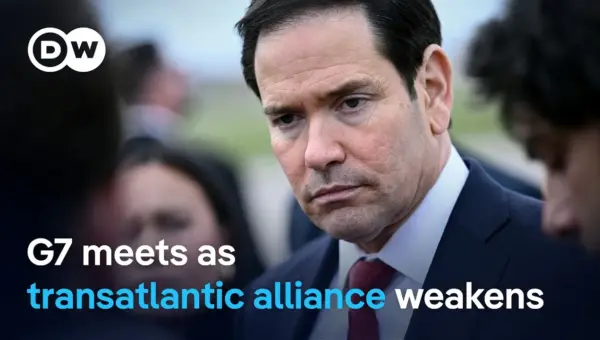
G7 Allies Clash Over Iran War Strategy, Urge Focus on Russia
G7 foreign ministers met in Paris, revealing deep divisions over the U.S. war with Iran. European allies urged the U.S. to pressure Russia, linking its actions to the conflict and fearing support for Ukraine will wane.

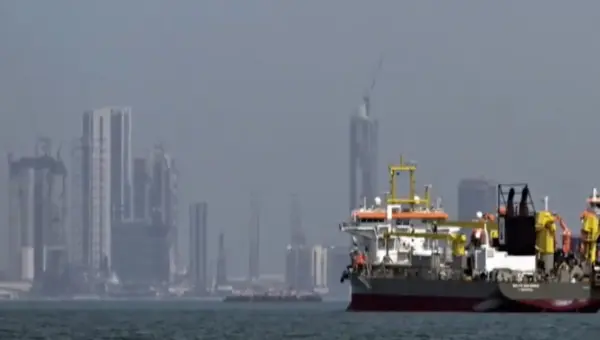
Iran Blocks China Ships, Exposing Beijing’s Weak Grip
Iran's recent decision to block Chinese ships at the Strait of Hormuz is exposing the limits of Beijing's influence in the Middle East. This action is causing delays and cancellations for Chinese manufacturers, turning a perceived geopolitical win into an economic strain.
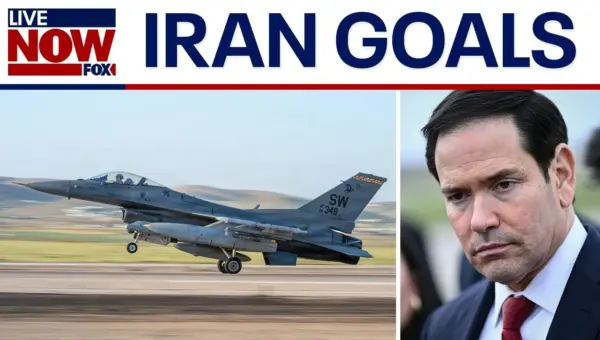
Rubio: US Can Achieve Iran War Goals Without Troops
Senator Marco Rubio outlined a strategy to counter Iran without deploying U.S. ground troops, focusing on weakening the regime and enhancing maritime security. He also criticized Cuba's economic system and expressed concerns about West Bank violence.