A-10 Warthog Dominates Iran: The Flying Tank’s New Mission
The A-10 Warthog has been "unleashed" in Operation Epic Fury against Iran, showcasing its renewed relevance in modern warfare. Its unique capabilities for loitering, precision strikes against drones and fast boats, and cost-effectiveness make it a critical asset in securing the Straits of Hormuz and countering Iranian threats.

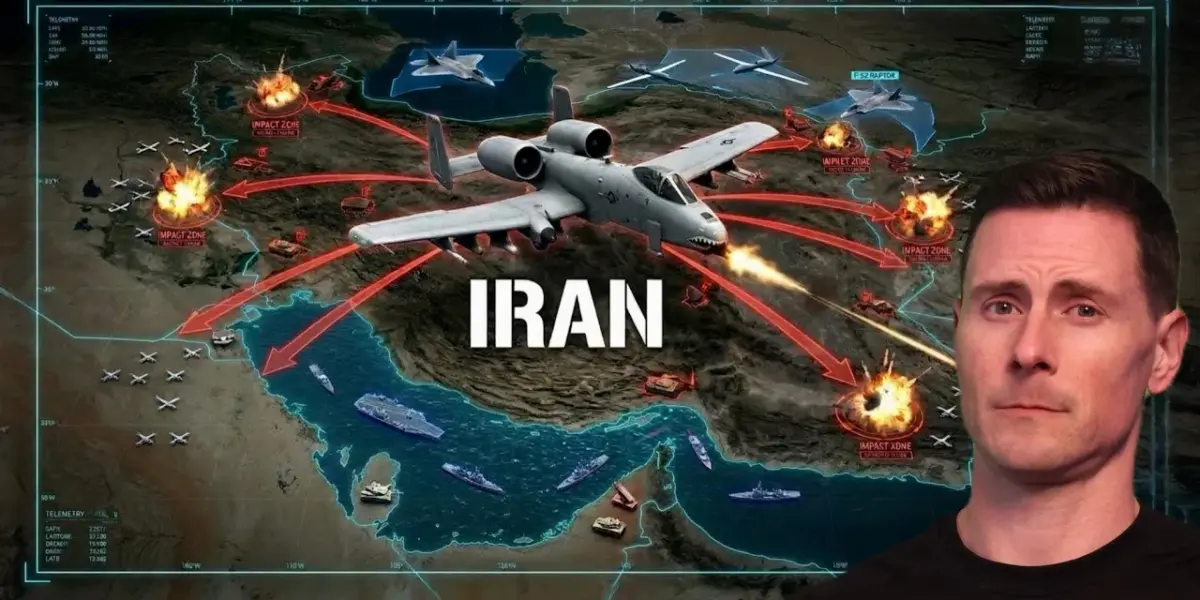
A-10 Warthog Dominates Iran: The Flying Tank’s New Mission
In a significant escalation of regional tensions, the United States has reportedly “unleashed” the A-10 Thunderbolt II, affectionately known as the “Warthog,” in Operation Epic Fury against Iran. As of March 15th, 2026, day 16 of the operation, imagery emerged of the iconic “flying tank” refueling mid-air, armed and ready for sustained combat. This deployment signifies a strategic re-emphasis on a platform often considered a relic, proving its enduring value in contemporary conflicts, particularly against asymmetric threats and in controlling vital maritime chokepoints.
A Resurgent Legend in Modern Warfare
The A-10’s re-emergence in the face of Iranian-backed militias in Iraq and potential naval threats in the Straits of Hormuz underscores a pragmatic approach to air power. While advanced stealth fighters like the F-22 and F-35 dominate headlines, the A-10’s unique capabilities are proving indispensable. Its ability to loiter at low altitudes and slow speeds (around 200 knots) makes it exceptionally suited for identifying and engaging elusive targets, such as Iranian-made Shahed drones and fast-attack craft.
The transcript highlights the A-10’s recent armament upgrades, notably the integration of Advanced Precision Kill Weapon System (APKWS) rockets. These laser-guided rockets, costing approximately $20,000 each, offer a cost-effective solution for neutralizing $30,000 Shahed drones, potentially yielding a financial advantage. This tactical efficiency, combined with the A-10’s legendary 30mm GAU-8 Avenger cannon and its capacity to carry Maverick missiles and depleted uranium rounds, presents a formidable deterrent. The prospect of depleted uranium rounds tearing through the hull of an Iranian fast boat is a stark illustration of the Warthog’s destructive potential.
Strategic Objectives and Broader Conflict
Operation Epic Fury, as described, aims to dismantle Iran’s nuclear ambitions, degrade its missile and drone stockpiles, and neutralize its naval capabilities, particularly its ability to threaten the Straits of Hormuz. The deployment of the A-10 is central to achieving these objectives. Its role extends beyond direct combat; it is crucial for maintaining open sea lanes and ensuring the safety of allies in a volatile region where Iran is reportedly “on the ropes” and “scrambling.”
The conflict is not confined to traditional military engagements. Iran’s reliance on proxy warfare and asymmetric tactics, such as drone swarms and naval mines, necessitates a platform like the A-10 that can effectively counter these threats. The transcript draws a parallel between these tactics and terrorism, citing an incident where Iran allegedly used fighter jets (SU-24s) to hide behind a drone swarm, attempting to strike targets in Qatar. The successful interception of these threats by Qatari F-15s, likely with AIM-120 AMRAAM missiles, demonstrates the escalating nature of the conflict and the sophisticated, albeit aggressive, strategies employed by Iran.
A Tribute to Fallen Heroes
Amidst the operational tempo, the video acknowledges the tragic loss of six Air Force personnel in a KC-135 crash during Operation Epic Fury. These heroes, from McDill Air Force Base and Rickenbacher Air National Guard Base, were instrumental in enabling US air power by providing aerial refueling to a range of aircraft, including the F-22, F-35, B-2, and the A-10. Their sacrifice underscores the immense risks involved in maintaining air superiority and supporting ongoing operations.
The A-10’s Enduring Design and Future Outlook
The A-10’s design philosophy, centered around pilot survivability and ruggedness, remains a key asset. Its titanium “bathtub” cockpit and self-healing wings are testament to its resilience. With a substantial payload capacity of up to 16,000 pounds, the A-10 can be configured for a multitude of roles, making it a versatile “multi-roll beast.” Its ability to loiter for extended periods, coupled with aerial refueling, allows for persistent overwatch and rapid response capabilities along the coastlines and within the Straits of Hormuz.
While the A-10 is ideally suited for neutralizing fast boats and drones, the transcript notes its limitations against underwater threats like Unmanned Underwater Vehicles (UUVs). This suggests a coordinated approach, where the A-10 would work in tandem with naval assets and potentially emerging technologies like the Lamprey UUV for comprehensive maritime security.
Historical Context and Strategic Implications
The A-10 was developed during the Cold War, specifically designed to counter Soviet armored threats. Its enduring relevance in the 21st century, particularly in counter-insurgency and anti-access/area denial (A2/AD) environments, speaks volumes about its adaptability. The current operation appears to be a deliberate effort to systematically degrade Iran’s military infrastructure and its ability to project power, a strategy that has historically been employed against adversaries seeking to disrupt global trade routes, such as the blockade of the Straits of Hormuz.
The strategic implications of unleashing the A-10 are significant. It signals a robust American commitment to regional stability and freedom of navigation. The operation aims to strip Iran of its primary bargaining chip – the ability to threaten maritime traffic – and dismantle its proxy networks, effectively neutralizing its “soft blockade.” The A-10, with its combination of heavy firepower, persistent presence, and cost-effective engagement of drone threats, is poised to play a pivotal role in this strategy.
Why This Matters
The deployment of the A-10 Warthog in Operation Epic Fury is more than just a tactical maneuver; it represents a confluence of historical resilience and modern warfare. It highlights the continued relevance of specialized, robust platforms in an era increasingly dominated by high-tech, stealth-capable aircraft. The A-10’s ability to engage a wide spectrum of threats, from ground convoys and fast boats to drones, while remaining cost-effective, makes it an invaluable asset in current geopolitical hotspots. Its presence signals a clear message of American resolve, aiming to secure vital waterways and degrade adversaries’ capabilities through sustained, targeted pressure. The success of this operation could set a precedent for the utilization of older, yet highly effective, military hardware in future conflicts, challenging the notion that only the latest technology can prevail.
Future Outlook
The future of the A-10 in this operation appears to be one of sustained engagement. With multiple squadrons reportedly in the region and the capability for extended combat endurance through aerial refueling, the Warthog is positioned to be a persistent force. Its role in countering Iranian threats along coastlines, in the Straits of Hormuz, and against its proxies is critical. As Iran’s conventional military capabilities are reportedly diminished, its reliance on asymmetric tactics will likely increase, making the A-10’s role as a drone and fast-boat killer even more pronounced. The synergy between the A-10’s air power and other military branches, including naval assets and potentially advanced UUVs, suggests a multi-domain strategy to comprehensively neutralize threats and ensure regional security.
Source: A-10 Warthog Just Got UNLEASHED On Iran (YouTube)

Related Articles

US Strikes Cripple Iran’s Military Might, CENTCOM Reports
U.S. Central Command reports ongoing strikes inside Iran are significantly weakening its military power. This direct action aims to reshape regional security dynamics, but carries risks of escalation. The long-term impact depends on Iran's response and ability to adapt.


Iran Targets US With Cyberattacks, Escalating Digital Warfare
Iran is increasingly using cyberattacks to challenge the U.S., as seen in a recent hack of the FBI director's account. Experts say this is a strategic shift due to Iran's limitations in conventional warfare. The U.S. needs to strengthen its digital defenses, focusing on encryption and cloud computing, rather than solely relying on traditional security measures.


Iran Hacks FBI Chief, Exposing U.S. Cyber Vulnerabilities
A recent hack of FBI Director Kash Patel's personal email by an Iran-linked group highlights Iran's growing cyber threat to the U.S. Experts explain how simple security oversights are exploited, emphasizing the need for basic defenses like two-factor authentication to protect against propaganda and potential infrastructure attacks.