The Unforeseen Consequence: A Trump Voter’s Heartbreak as ICE Detains His Wife Over Decades-Old Minor Offense
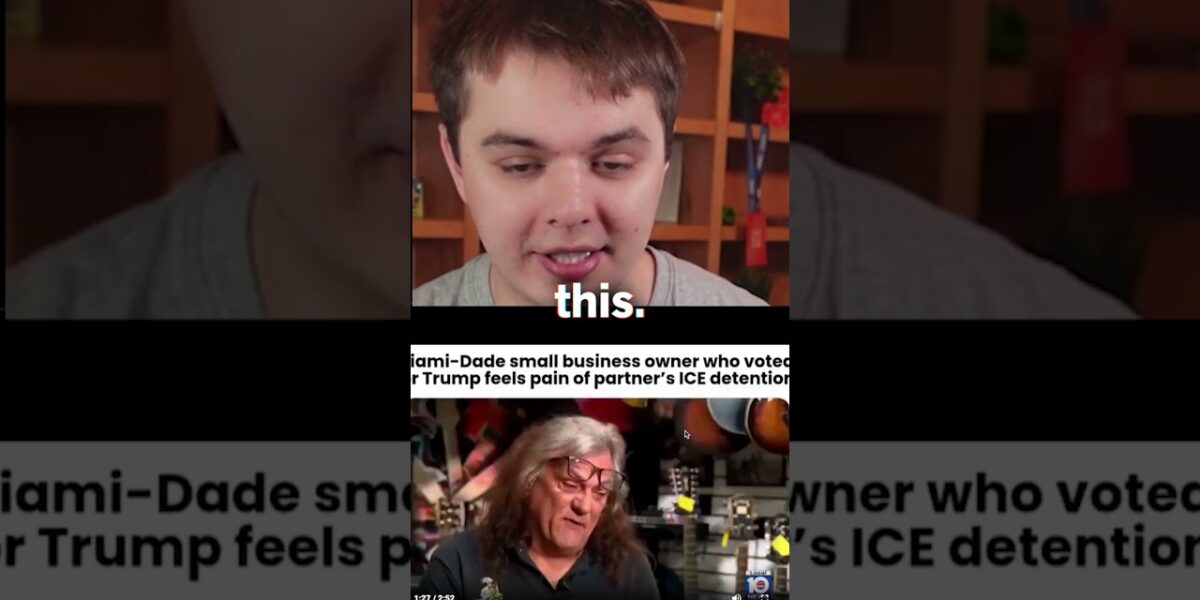
A Florida man, a vocal supporter of Donald Trump, is now reeling as ICE detains his wife for deportation, stemming from a minor drug offense from 2008. His story highlights the profound irony of the 'leopards eating faces' phenomenon, where political choices unexpectedly devastate one's own life, sparking a national debate on immigration enforcement and its human cost.

The Unforeseen Consequence: A Trump Voter’s Heartbreak as ICE Detains His Wife Over Decades-Old Minor Offense
In a poignant and deeply ironic turn of events, a Florida man, a self-proclaimed supporter of former President Donald Trump, found himself confronting the devastating personal consequences of the very immigration policies he championed. His wife, a woman he describes as the ‘sweetest person,’ was detained by U.S. Immigration and Customs Enforcement (ICE), facing deportation for a minor infraction from over a decade ago. This incident has ignited a fierce debate about the long arm of immigration law, the rhetoric surrounding ‘dangerous criminals,’ and the harsh realities faced by families caught in the crosshairs of enforcement.
The man’s anguish, captured in a viral video, is palpable. “Please, she does not deserve this.
She’s the sweetest person and she prayed for you,” he pleaded, a direct appeal that highlights his sense of betrayal and the profound shock of his family’s ordeal. His story resonates as a stark illustration of the ‘leopards eating faces’ meme – a political allegory where individuals enthusiastically support policies, only to find themselves, or their loved ones, becoming the unexpected victims of those very policies.
A Voter’s Reckoning: The Irony of Support and Suffering
The core of this heartbreaking narrative lies in the man’s political allegiance. He voted for Donald Trump, a president whose administration made immigration enforcement a cornerstone of its agenda, vowing to crack down on undocumented immigrants and those with past legal infractions. The man, like many Trump supporters, likely believed these policies were necessary for national security and the rule of law, perhaps even believing they would only target ‘the worst of the worst’ – a category he clearly never imagined would include his own wife.
His distress, however, transcends simple political irony. It digs into the deeply personal realm of human suffering, as he grapples with the potential loss of his spouse and the shattering of his family life.
His lament, “I did not think that this would happen,” speaks volumes about the disconnect between political rhetoric and the lived experiences of those affected by its implementation. It’s proof of the often-unforeseen ripple effects of broad policy changes, particularly in areas as sensitive and complex as immigration.
A Decade-Old Stain: The 2008 Traffic Stop and Its Lingering Shadow
The catalyst for this family’s crisis dates back to 2008, when the man’s wife, then a legal resident, was involved in a traffic stop. During the stop, officers reportedly searched her purse, leading to the discovery of three Xanax pills.
While Xanax is a prescription medication, possession without a valid prescription can be considered a controlled substance offense. This seemingly minor incident, nearly fifteen years ago, triggered a chain of events that would ultimately lead to her losing her legal residency status and receiving a deportation order.
For years, the couple seemingly lived with this unresolved legal cloud, perhaps underestimating its long-term implications or hoping it would simply fade into the past. The man recounts, “in those years, he says they didn’t think much of it.” This common misconception highlights a critical misunderstanding of immigration law: a deportation order, once issued, often remains active indefinitely, a ticking time bomb that can be activated at any moment, regardless of how much time has passed or how minor the original offense.
The ‘Worst of the Worst’ Label: A Discrepancy Between Rhetoric and Reality
Adding insult to injury, the Department of Homeland Security (DHS) has now reportedly listed the man’s wife among “the worst of the worst,” categorizing her as a “criminal arrested for dangerous drugs in possession.” This official designation stands in stark contrast to the man’s portrayal of his wife as a “sweetest person” whose past transgression involved a few Xanax pills. He described this labeling as a “slap in the face,” questioning the proportionality and fairness of the system.
The discrepancy between the official classification and the reality of the situation raises significant questions about the terminology used by government agencies and its impact on public perception and individual lives. Labeling someone as the “worst of the worst” for a decades-old, non-violent drug possession offense – particularly one involving a commonly prescribed medication – can be seen as overly punitive and misleading, especially when compared to actual violent criminals or major drug traffickers. This rhetorical framing often serves to justify aggressive enforcement actions, even in cases where the underlying offense is relatively minor or remote in time.
Understanding ICE and the Complexities of Immigration Enforcement
To fully grasp the gravity of this situation, it’s essential to understand the mandate and mechanisms of U.S. Immigration and Customs Enforcement (ICE). Established in 2003, ICE is the principal investigative arm of the DHS, responsible for enforcing federal laws governing border control, customs, trade, and immigration to promote homeland security and public safety. Its broad powers include identifying, apprehending, and deporting non-citizens who have violated immigration laws.
The Mandate of ICE: Balancing Security and Humanity
ICE’s mission is complex, encompassing everything from combating human trafficking and drug smuggling to enforcing immigration laws within the country’s interior. While its primary focus is often portrayed as targeting dangerous criminals, the reality of immigration law means that a wide range of offenses, both criminal and civil, can trigger deportation proceedings. For non-citizens, including legal permanent residents, even minor criminal infractions can have severe immigration consequences that would not apply to U.S. Citizens.
From Traffic Stop to Deportation Order: The Legal Pathway
The process that led to the man’s wife’s current predicament began with a seemingly routine traffic stop. For non-citizens, encounters with law enforcement, even for minor violations, can quickly escalate into immigration issues.
If an individual is found to have committed a crime that makes them ‘deportable’ under immigration law, ICE can initiate removal proceedings. In this case, the possession of controlled substances, even a small quantity of prescription medication without a prescription, is generally considered a deportable offense under the Immigration and Nationality Act (INA).
Once a deportation order is issued, it becomes a final order of removal. Even if an individual has legal residency, a final order of removal can strip them of that status and make them subject to immediate deportation.
While there can be avenues for appeal or relief from removal, these are often complex, time-sensitive, and difficult to navigate without expert legal assistance. If no relief is granted, the order remains on record, making the individual vulnerable to detention and removal at any point in the future.
The Weight of a Final Order: A Lingering Threat
The fact that the deportation order was issued in 2008 and is only now being enforced highlights the ‘long memory’ of immigration law. Unlike criminal sentences that often have a clear end date, a final order of removal can linger for years, even decades.
This means that individuals who have moved on with their lives, established families, and contributed to their communities can suddenly find their past catching up to them, often with devastating consequences. The lack of a statute of limitations on enforcing such orders means that the perceived ‘minority’ or ‘remoteness’ of an offense holds little legal weight when an enforcement action is initiated.
The Trump Administration’s Immigration Stance: Broadening the Net of Enforcement
The man’s story is inextricably linked to the shifts in immigration policy and enforcement priorities during the Trump administration. While previous administrations, including that of Barack Obama, also conducted deportations, the Trump era saw a significant expansion of who was considered a priority for removal.
Broadening the Net: From ‘Serious Criminals’ to All Undocumented Individuals
Prior to Trump, there was often a degree of prosecutorial discretion exercised by ICE, with a focus on deporting individuals deemed serious threats to public safety – those with violent criminal records or national security concerns. The Obama administration, for example, often stated a focus on “felons, not families.” However, under President Trump, this discretion was significantly curtailed.
Executive orders issued early in his presidency effectively broadened the categories of non-citizens considered priorities for deportation to include virtually anyone who had violated immigration laws, regardless of the severity of their offense or how long ago it occurred. This included individuals with minor criminal records, even those from many years past, and those who had only committed civil immigration violations.
‘America First’ and Aggressive Enforcement
The Trump administration’s “America First” rhetoric often translated into an aggressive stance on immigration, emphasizing strict border control and interior enforcement. This approach led to increased arrests and deportations, a significant rise in family separations at the border, and a general climate of fear within immigrant communities. The administration’s policies were designed to send a clear message: that all immigration laws would be enforced, and that past infractions would not be overlooked.
It is within this context that the man’s wife, with her 2008 deportation order for a minor drug offense, became a target. Under a more discretionary enforcement regime, her case might have been deemed a low priority, allowing her to remain with her family. However, under the Trump administration’s expanded enforcement priorities, her old order became actionable, leading to her detention and the current threat of deportation.
Impact on Communities and Families: The Human Cost
The human cost of such policies is immense. Family separations, whether at the border or through interior enforcement, inflict profound trauma on parents and children alike.
Stable families are uprooted, communities are fractured, and individuals are forced to confront an uncertain future, often in countries they barely remember or have never known. The emotional toll on the Florida man, his wife, and their family is a clear reminder that behind every policy decision are real lives and real consequences.
The ‘Leopards Eating Faces’ Metaphor in Practice
The phrase “I didn’t think the leopards would eat *my* face” has become a popular internet meme, often used to describe individuals who enthusiastically support a political or social policy, only to discover that they themselves become the victim of that very policy. This Florida man’s situation is a textbook example of this phenomenon.
Political Irony and Betrayal: The Illusion of Exemption
The man voted for Trump, aligning himself with a political platform that promised stricter immigration enforcement. It is reasonable to assume that he believed these measures would apply to ‘others’ – to criminals, to those who posed a threat, or to individuals he did not personally know or identify with. He likely did not envision that the broad brushstrokes of these policies would sweep up his own family, turning his wife into one of the “worst of the worst” based on a minor, distant transgression.
This illusion of exemption is a common psychological phenomenon in politics. People often support policies that promise to crack down on perceived societal ills, believing they are immune to the negative repercussions because they see themselves as ‘good’ or ‘law-abiding’ citizens. The man’s heartbreak and disbelief highlight the painful realization that abstract political policies can have very concrete, devastating personal impacts, even on their most ardent supporters.
The Long Arm of the Law: Past Actions, Present Consequences
The speaker in the video touches upon a broader societal concern, remarking, “Imagine what they would do to US citizens. They dug up things from their past to try to paint them as extremists.” This observation highlights a pervasive anxiety in the digital age and an era of heightened scrutiny: the past, no matter how distant or minor, can be resurrected and weaponized. For non-citizens, this reality is even more pronounced, as past legal infractions, even those that would be considered minor for citizens, can lead to the ultimate penalty of deportation.
The legal system, particularly immigration law, often has a long memory. For non-citizens, a minor mistake from years ago can permanently alter their life trajectory.
This raises questions about rehabilitation, second chances, and the proportionality of punishment, especially when individuals have otherwise lived productive, law-abiding lives for many years. The case of the Florida man’s wife is a clear reminder that for immigrants, the past is never truly past.
Beyond the Individual: Broader Implications and Ongoing Debates
This individual tragedy extends beyond the personal suffering of one family, touching upon broader societal and legal debates:
- Due Process and Fairness: Critics of aggressive immigration enforcement often raise concerns about due process in immigration courts, the speed of proceedings, and the ability of individuals to adequately defend themselves, especially when facing complex legal issues and potential language barriers.
- The Political Divide: Stories like this fuel the ongoing, deeply polarized debate over immigration in the United States. While some argue for strict enforcement of all laws, others emphasize the humanitarian aspects, the importance of family unity, and the need for comprehensive immigration reform that offers pathways to legal status and considers the unique circumstances of each case.
- The Human Element of Immigration: This incident is a powerful reminder that immigration policies are not merely abstract legal frameworks; they have profound human consequences. They impact families, communities, and the very fabric of society. The man’s plea for his wife highlights the need for empathy and a nuanced understanding of the complex lives of those affected by these laws.
Conclusion: A Heartbreaking Lesson in Unforeseen Consequences
The heartbreaking plight of this Florida man and his wife is a potent and painful lesson in the unforeseen consequences of political choices. His story is a vivid illustration of how broad, often abstract, policy decisions can unexpectedly intrude upon and dismantle the lives of ordinary people, even those who actively supported the very system that now threatens their family. It forces a critical examination of the rhetoric surrounding immigration, the harsh realities of enforcement, and the long-lasting impact of minor past transgressions within the unforgiving landscape of immigration law.
As the family grapples with the potential separation, their ordeal will undoubtedly remain a powerful symbol in the ongoing national conversation about immigration, challenging individuals to consider the full human cost of policies and the profound irony when the ‘leopards’ turn their gaze upon those who once cheered their arrival.
Source: Trump Voter Cries As ICE Detains Wife #politics #fyp #new (YouTube)

Related Articles


GOP’s Dignity Act Sparks Immigration Divide
A new Republican proposal, the Dignity Act, offers legal status to undocumented immigrants, sparking a fierce debate. Supporters see it as a humanitarian step, while opponents label it amnesty. This discussion reveals deep divisions on immigration policy, economic impact, and the very definition of the American dream.


GOP Eyes Reconciliation to Fund DHS for Years
Republicans are exploring the use of Senate reconciliation to pass a long-term funding bill for the Department of Homeland Security, aiming for stability and bypassing Democratic opposition. The strategy could provide multi-year funding for agencies like ICE and TSA, focusing on public safety.


Vance Stumbles as Empty Crowd Questions His Immigration Stance
Senator JD Vance's recent appearance at the University of Georgia was overshadowed by a sparse crowd and pointed questions about his immigration policies. A student's personal story about lengthy green card waits highlighted the gap between Vance's 'America First' rhetoric and the practical realities faced by legal immigrants.