Trump’s ‘Bombshell’ Election Threat: A Deep Dive into Voter ID, Executive Power, and the Future of American Democracy
Former President Donald Trump's recent remarks on election integrity, including threats to future outcomes if 'crooked' mail-in ballots persist and legislative measures like the 'Save Act' pass, have sparked widespread concern. Legal experts warn of a multi-faceted strategy involving restrictive voter ID laws, potential executive overreach, and a campaign of misinformation aimed at undermining public trust in democratic processes. The fight to protect elections is described as a generational challenge requiring swift legal action and robust public engagement to safeguard American democracy.

Trump’s ‘Bombshell’ Election Threat: A Deep Dive into Voter ID, Executive Power, and the Future of American Democracy
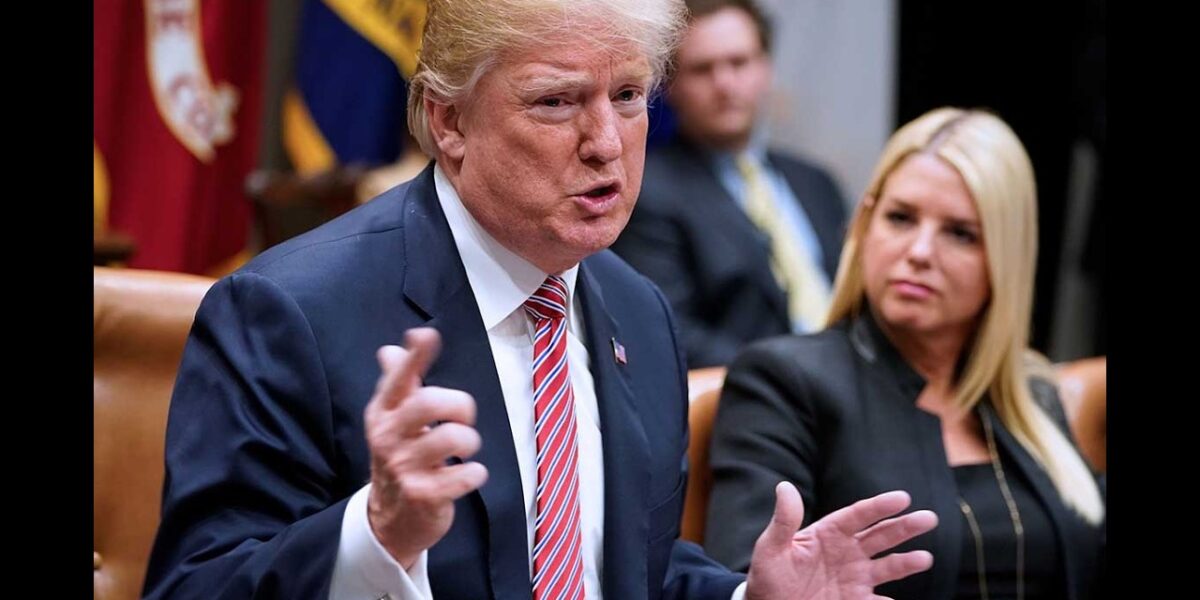
In a recent address at a steel facility in Georgia, former President Donald Trump issued what many are calling a “bombshell” threat to the integrity of future elections, declaring, “Mail and ballots are crooked as hell. WE’RE THE ONLY COUNTRY IN THE WORLD that used this type of mail and ballot. The only country in the world. I’ll tell you what, Republicans have to win this one.” His remarks, followed by an assertion that Republicans “will never lose a race for 50 years” if proposed measures like the “Save Act” are enacted, have ignited a firestorm of concern among election integrity advocates and legal experts. This declaration signals not merely a political ambition but a multifaceted strategy that intertwines legislative efforts, executive power, and the deliberate erosion of public trust in democratic processes.
Legal scholar and election law expert Mark Elias, in a subsequent discussion, minced no words in his assessment: “He’s going to try to steal the election. Okay? He’s going to try to steal the election and he is telling you that.” Elias emphasized that Trump’s confidence stems from a broader, more aggressive approach than any single piece of legislation, encompassing executive actions, potential federalization of elections, and even the controversial seizure of ballots. The “Save Act,” while a central component of this strategy, is merely one piece of a much larger, more ominous puzzle.
The ‘Save Act’: A Legislative Assault on Voter Access
At the heart of Trump’s legislative agenda, as highlighted in his remarks, is the proposed “Save Act.” While the full text of such a bill may not be publicly available or finalized, the former President and his allies have consistently advocated for provisions that would fundamentally alter the landscape of American voting. Two specific elements discussed by Elias are particularly alarming:
Mandatory Proof of Citizenship
The “Save Act,” as described, would impose a mandatory proof of citizenship law for voting. This provision demands that voters present either a passport or an original birth certificate to establish their citizenship. The implications of such a requirement are profound and far-reaching. Millions of eligible American citizens, particularly those from marginalized communities, the elderly, or those who have moved frequently, may not possess these specific documents or have ready access to them. Obtaining a certified copy of a birth certificate can be a time-consuming and costly process, especially for those born in different states or who have lost their original documents. Passports, too, are not universally held, and their acquisition involves significant financial and logistical hurdles.
Elias directly challenged the common Republican assertion that a driver’s license suffices as proof of citizenship: “Republicans who keep posting that a driver’s license proves citizenship… are either lying or they’re morons because it is not the case that driver’s license proves citizenship.” He further clarified that even Real ID driver’s licenses, designed to meet federal security standards, only prove citizenship in a handful of states. The underlying intent, critics argue, is not to secure elections from non-citizen voting—a phenomenon proven to be exceedingly rare—but to create an insurmountable barrier for legitimate voters, effectively disenfranchising a significant portion of the electorate.
The historical context of such measures is crucial. Voter ID laws, particularly strict ones, have a documented history of disproportionately affecting minority groups, low-income individuals, students, and the elderly, who are less likely to possess the specific forms of identification required. These laws often emerge from a narrative of widespread voter fraud, a claim that has been repeatedly debunked by extensive research and bipartisan commissions. The specter of the “birther” conspiracy against Barack Obama, despite the public release of his birth certificate, serves as a stark reminder that even official documents can be dismissed and weaponized in a campaign of disinformation, suggesting that even a birth certificate might not satisfy future, politically motivated challenges.
Banning College IDs
Another provision mentioned in relation to the “Save Act” is a ban on the use of college IDs for voting, even if those IDs are issued by state institutions. This targets a specific demographic: young voters, particularly students, who often rely on their college identification for various purposes, including proving residency and identity. College students, many of whom are voting for the first time or are away from their home states, often find it challenging to acquire other forms of government-issued photo ID. Disallowing college IDs would erect another barrier, making it harder for a demographic that historically leans Democratic to participate in elections. This move is widely seen as an attempt to suppress the youth vote, a critical segment of the electorate that has shown increasing engagement in recent cycles.
Beyond Legislation: Trump’s Multi-Front War on Elections
While legislative efforts like the “Save Act” are a significant concern, Elias and other experts warn that Trump’s strategy extends far beyond the legislative branch. “For Donald Trump, it’s not about any one bill,” Elias asserted. “It is about a series of actions. It’s about passing laws. It’s about executive orders. It’s about his Department of Justice raiding and grabbing ballots. It’s about him trying to federalize or take over elections.” This comprehensive approach suggests a willingness to use every lever of power, both legal and extralegal, to shape election outcomes.
The Threat of Executive Orders
Trump’s past rhetoric and actions indicate a strong inclination towards using executive orders to bypass congressional gridlock. The transcript suggests potential executive actions could include directing the U.S. Postal Service not to carry ballots or tying federal funding to states’ adoption of specific voter ID requirements. Such actions, while seemingly within the purview of presidential power, often face immediate legal challenges.
Elias confidently stated that such executive orders would likely fail in court: “He’ll get sued. My law firm and I, we sued him over the last executive order and we won. If he issues a new executive order, here’s my message to you, Donald Trump, Steve Bannon, the rest of you. We know how to sue and we usually win. And on this one, it’ll be a layup.” This reflects a critical aspect of American democracy: the checks and balances provided by the judiciary. However, the legal process, while ultimately effective, can be time-consuming, and a president might seek to exploit delays, especially close to an election.
The Shadow of 2020: Illegal Actions and Violence
The conversation inevitably turns to the aftermath of the 2020 election, where Trump’s efforts to overturn the results escalated from legal challenges to more extreme measures. “Donald Trump when he says that they’ll figure out a way to do this, he’s not talking about just legal ways,” Elias warned. “I mean after all look what he did after the 2020 election. He started by going to court and then it ended with violence.” The reference to indictments for felony counts at both federal and state levels underscores the severity of the alleged actions taken by Trump and his allies in their attempts to subvert the democratic process.
The discussion highlights the possibility of highly unconventional and potentially illegal actions, such as seizing ballots or dictating that states cannot count ballots that do not meet specific, federally imposed photo ID requirements. This could effectively “throw out the entire voting in entire states.” Such a scenario, while sounding extreme, echoes the 2020 attempt where the state of Texas, with Trump’s backing, sought to have the Supreme Court invalidate election results in four other states. Elias cautioned against underestimating Trump’s willingness to push constitutional boundaries, stating, “Donald Trump knows no limit. There is no norm. There is no law that will constrain him.”
The Erosion of Trust: Misinformation as a Weapon
Beyond specific legislative or executive actions, a crucial element of Trump’s strategy is the systematic undermining of public trust in elections. His repeated claims that “mail and ballots are crooked as hell” are not just campaign rhetoric; they are part of a deliberate campaign of misinformation and disinformation designed to distort reality for a wide audience.
Elias explained the multi-layered effect of this strategy: “He is trying to say that if the faithful tells people that there are corrupt elections, that the people who aren’t paying a lot of attention will still walk away thinking, ‘Oh, there must have been corrupt election.’” This “second and third order effect” aims to create a pervasive sense of doubt, even among those not fully immersed in political news. It fosters an environment where, even if specific allegations are disproven, a general sentiment of unease and suspicion about election integrity persists.
This erosion of trust serves several purposes. Firstly, it motivates his base, creating a perceived urgency to “restrict voting rights in order for Republicans to be dominant.” Secondly, it lays the groundwork for challenging unfavorable election outcomes. When Republicans lose, the narrative is already in place: “I told you it was all rigged. I told you Republicans that Democrats would cheat. Now they have.” This pre-emptive justification for extraordinary actions, such as setting aside elections or seizing ballots, relies heavily on a populace already conditioned to distrust the electoral system. The events of January 6th, fueled by similar rhetoric, stand as a stark warning of the potential for this strategy to incite violence and undermine democratic institutions.
The Fight for Democracy: Legal Defense and Public Engagement
In the face of such a multi-pronged threat, the response from democracy advocates is equally robust. The discussion highlighted the crucial role of legal organizations, such as Elias’s firm, in actively combating voter suppression and election interference. These teams are not merely reactive; they are proactive, engaging in “wargaming” to anticipate potential actions and preparing legal challenges in advance.
Rapid Response Litigation
The speed of litigation is paramount, especially as elections draw near. Elias proudly noted his team’s ability to respond almost instantly to restrictive voting laws: “When Georgia passed their voter suppression law in 2021, we sued them within an hour. When Ron DeSantis did it, we sued him six minutes after he signed the law.” This rapid response is critical to prevent such measures from taking root and impacting voter access. The aim is to press courts to move as quickly as possible, countering any attempt by opponents to use the calendar or venue to their advantage.
The challenge, however, is not uniform across the nation. While “blue states will resist him,” and “many of the purple states will resist him,” there is a concern that some “red states” might align with federal directives, creating a patchwork of resistance and compliance. This necessitates a preparedness to litigate “in all 50 states,” addressing a variety of issues with extreme speed and precision.
Democracy as the Foundational Issue
The conversation broadened to emphasize that the fight for democracy is not just another political issue; it is the foundational struggle of this generation. Elias articulated this profound sentiment: “If we don’t solve the problems of democracy, if we don’t combat what Donald Trump is doing right now to the rule of law, none of those other things are going to be possible.” Issues like climate change, healthcare, and economic justice, while critical, cannot be effectively addressed if the democratic mechanisms for change are compromised or destroyed. This perspective elevates the current challenges to a crisis of existential proportions for the American political system.
The Power of Public Engagement
Crucially, the responsibility for defending democracy does not rest solely with legal teams or political figures. Both speakers stressed the vital role of informed citizens in disseminating accurate information and engaging their broader networks. “You cannot just be informed yourself,” Elias urged. “You need to make sure that your neighbors, your family, your friends, your your bridge club, your book club, your fraternity brothers, all of them know what’s going on.”
Platforms like Democracy Docket and the YouTube channel where the discussion took place are highlighted as essential resources for staying informed. The call to action extends beyond passive consumption of information; it demands active participation in sharing content, subscribing to channels, and engaging in conversations within personal circles. This grassroots effort is seen as a direct counter to the spread of misinformation, empowering individuals to become advocates for truth and democratic principles. The audience is not merely an “end-user” but an active participant in an ecosystem of civic responsibility, tasked with ensuring that the gravity of the current threats is understood by a wider public.
Conclusion: Vigilance and Collective Action
The warnings issued by Donald Trump regarding future elections, particularly concerning mail-in ballots and proposed legislative changes like the “Save Act,” represent a significant and evolving threat to American democracy. His strategy is multi-faceted, encompassing legislative efforts to restrict voting, the potential deployment of executive power to interfere with election administration, and a sustained campaign of misinformation designed to erode public trust. The shadow of the 2020 election aftermath, including legal challenges, alleged illegal actions, and the violence of January 6th, serves as a grim precedent for the lengths to which some might go to influence electoral outcomes.
However, the narrative is not one of inevitable doom. Legal experts and democracy advocates are actively preparing to counter these threats through rapid-response litigation and strategic planning. More importantly, the future of American democracy hinges on the collective vigilance and active engagement of its citizens. By staying informed, sharing accurate information, and advocating for free and fair elections within their communities, individuals play a critical role in safeguarding the foundational principles of the nation. The fight ahead is undoubtedly challenging, but the commitment to upholding democratic norms and the rule of law remains a powerful force against those who seek to undermine them. As Elias concluded, “This is the fight of our generation,” and it requires the participation of everyone.
Source: Trump drops BOMBSHELL election threat (YouTube)

Related Articles
Trump’s Wild Claims Fuel GOP Chaos and Public Doubt
Donald Trump's recent erratic statements and Republican figures' defense strategies are causing political turmoil. Concerns over economic misrepresentation and the handling of the Jeffrey Epstein case are mounting, leading to a public demanding more accountability and truth.

Trump’s Allies Stumble, Exposing MAGA Movement’s Weaknesses
Recent events reveal cracks in the MAGA movement, from JD Vance's failed support for Viktor Orban in Hungary to disappointing Turn Point USA rallies. Trump's attacks on Pope Leo also alienate allies and expose strategic missteps. These challenges suggest a weakening of the movement's influence.
Trump’s “Malignant Narcissism” and Vance’s “Dark Emptiness”
Gerard Baker and Katy Balls discuss Donald Trump's "malignant narcissism" and JD Vance's perceived "dark emptiness." The conversation covers the US blockade of Iran, Vance's evolving role, and Trump's controversial "Jesus Christ" post, exploring its political implications and the nature of faith and authenticity in politics.