Global Backlash and Domestic Turmoil: Trump’s ‘Catastrophic Sunday’ Unfolds Amidst Tariff Wars, Diplomatic Crises, and Government Shutdown Threats
A 'catastrophic Sunday' for Donald Trump saw the imposition of new 15% tariffs, triggering immediate global backlash from the European Union and India. Simultaneously, diplomatic crises unfolded with France over alleged interference and with Greenland over sovereignty concerns and a mysterious nuclear submarine presence. Domestically, debates intensified over ICE's role, culminating in government shutdown threats and a briefly suspended TSA Pre-Check, revealing an administration navigating multiple, interconnected challenges.

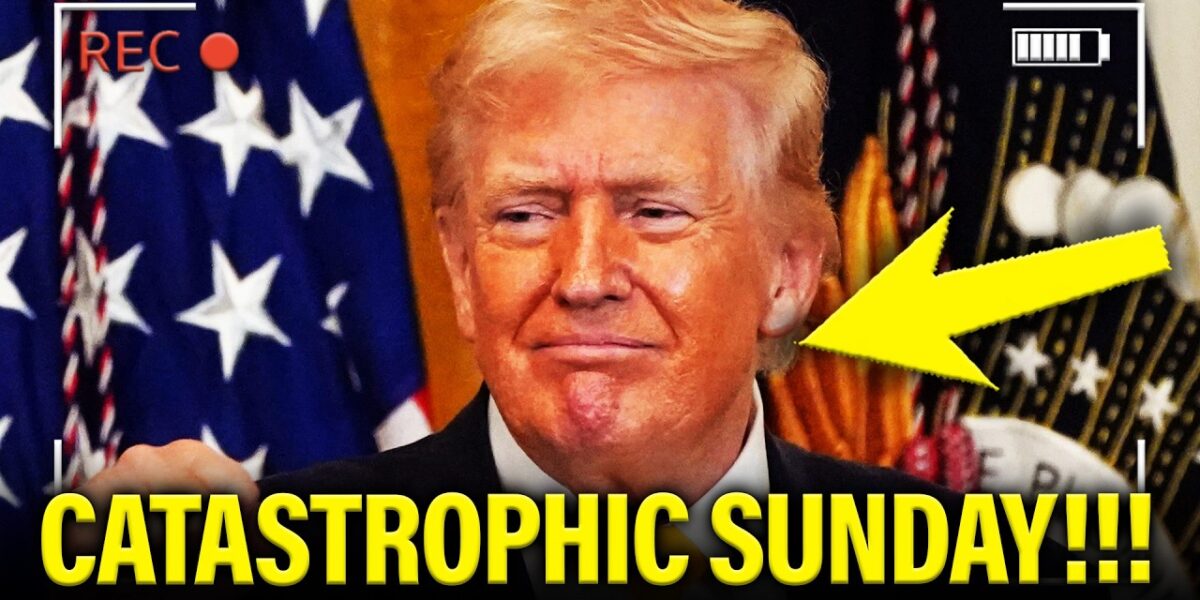
A Whirlwind of International Condemnation and Domestic Chaos: Examining Trump’s ‘Catastrophic Sunday’
A tumultuous Sunday marked by aggressive new tariff impositions, escalating diplomatic tensions, and renewed threats of government shutdown has cast a long shadow over the political landscape. The day, described by critics as “catastrophic” for Donald Trump, saw a rapid succession of events that triggered immediate international backlash and intensified domestic anxieties, painting a vivid picture of an administration embroiled in multiple, interconnected crises.
At the heart of the unfolding drama was the announcement of new 15% tariffs against a global array of trading partners. This move, allegedly invoking Section 122 of the 1974 Trade Act, comes on the heels of the Supreme Court striking down previous tariffs implemented under different legal authority. The decision swiftly ignited a firestorm of protest from key international allies and trade partners, signaling a dramatic escalation in global trade relations.
The Global Economic Fallout: Trump’s Tariff Gambit and International Retaliation
The imposition of fresh 15% tariffs, presented as a continuity of a long-standing policy to protect American industry, immediately sparked a robust international response. This aggressive trade maneuver follows a pattern of tariff-based economic strategy that has characterized previous periods of Trump’s influence, often leading to significant friction with long-standing allies and trading partners.
The decision to invoke Section 122 of the 1974 Trade Act is particularly contentious. Critics argue that this section, primarily designed to address currency manipulation and significant payment system incongruities, is being unlawfully applied to justify broad tariffs aimed at rectifying trade deficits. This legal sidestep comes after the Supreme Court previously invalidated tariffs imposed under the International Emergency Economic Powers Act (AIPA), which the administration had invoked by claiming an emergency to regulate imports and exports. The repeated attempts to find alternative legal justifications for tariffs underscore the administration’s determination to pursue its trade agenda despite legal setbacks and widespread opposition.
Immediate International Repercussions
- European Union’s Swift Response: The European Parliament wasted no time in announcing its intent to propose a freeze on the ratification of the European Union trade agreement with the United States. This significant move, scheduled for the very next Monday, directly reflects the EU’s strong disapproval of the new tariffs and signals a potential halt to crucial transatlantic trade relations. The proposed freeze indicates a deep level of concern among European lawmakers regarding the stability and predictability of U.S. trade policy.
- India Delays Washington Visit: In another prominent display of international displeasure, India announced the delay of a scheduled trade visit to Washington. This postponement, directly attributed to the new 15% tariffs, underscores the immediate and tangible impact of Trump’s trade policies on diplomatic engagements and trade negotiations with key emerging economies.
These rapid international reactions highlight the fragility of global trade agreements and the interconnectedness of economic and diplomatic relations. The prospect of a trade war escalating further raises concerns among economists and businesses about potential disruptions to global supply chains, increased costs for consumers, and a dampening effect on international economic growth.
Official Defenses and Public Discontent
In the wake of the tariff announcement and the immediate international pushback, U.S. Trade Representative Jameson Greer was dispatched to various media outlets to defend the administration’s actions. Confronted on ABC’s “This Week” with the fact that these tariffs are unpopular with the American public, Greer maintained that the “policy hasn’t changed,” only the “legal tool to implement it.” He emphasized a desire for “continuity” and assured that the administration would continue to pursue its protectionist trade agenda, citing ongoing Section 301 investigations and existing Section 232 tariffs.
Greer’s assertion that “no countries have said they will withdraw from tariff deals” was immediately challenged by the unfolding events with the European Union and India. Critics quickly pointed out the apparent disconnect between official statements and real-world diplomatic responses, suggesting a deliberate attempt to downplay the international fallout.
Meanwhile, Treasury Secretary Scott Bessant faced pointed questions on CNN regarding potential refunds for the estimated $134 billion in revenue collected from previously imposed, now-struck-down tariffs. Bessant deflected, arguing that the Supreme Court’s ruling was a “very narrow reading” of presidential authority and that the question of refunds was for a lower court to decide, potentially “weeks or months away.” This evasiveness directly contradicted earlier statements by the Justice Department, which had previously told a federal appeals court that if tariffs were ultimately held unlawful, the government would issue refunds. The ambiguity surrounding refunds leaves American corporations and consumers in limbo, having borne the cost of tariffs that were eventually deemed unlawful.
Public opinion polls further underscored the domestic unpopularity of the tariffs, with two-thirds of Americans reportedly unhappy with the policy. This widespread discontent suggests a growing disconnect between the administration’s trade agenda and the economic realities faced by ordinary citizens and businesses.
The ‘John Baron’ Call: A Bizarre Interlude
Adding a surreal layer to the day’s events, a C-SPAN caller claiming to be “John Baron” from Virginia voiced strong complaints about the Supreme Court’s ruling. The voice, strikingly similar to Donald Trump’s, immediately drew comparisons to Trump’s past practice of using the pseudonym “John Baron” to speak to the press as his own public relations person. The call, dismissed by some as a mere curiosity, was seen by others as a telling insight into Trump’s personal reaction to the legal challenges against his policies, highlighting his penchant for unconventional communication and his deep-seated frustration with unfavorable rulings.
Diplomatic Tensions and Sovereignty Concerns: France and Greenland in the Crosshairs
Beyond the economic sphere, the day also saw significant diplomatic friction with key allies, particularly France, and renewed concerns over the sovereignty of Greenland, bringing geopolitical issues to the forefront.
France’s Diplomatic Spat: Charles Kushner Summoned
In an unusual and highly public display of diplomatic displeasure, France summoned Charles Kushner, the U.S. Ambassador to France and father of Jared Kushner. The summoning was prompted by allegations that Ambassador Kushner and the U.S. State Department were interfering with French domestic affairs, specifically by advising France to focus on its “left-wing extremism.” This intervention was met with a firm rebuke from French officials, who insisted on their right to manage internal issues without foreign interference. The incident highlights the delicate balance of diplomatic relations and the potential for missteps to strain alliances.
The appointment of Charles Kushner to such a sensitive diplomatic post has long been a subject of controversy. A convicted felon, Kushner pleaded guilty in 2006 to 18 counts, including tax evasion, witness tampering, and making illegal campaign donations. His witness tampering involved a particularly scandalous incident where he hired a prostitute to seduce his brother-in-law in an attempt to blackmail him into not cooperating with federal investigators. Pardoned by Donald Trump in 2020, his subsequent appointment as ambassador raised ethical questions about the qualifications and suitability of political appointees, especially those with such a checkered past. Critics argue that such appointments undermine the credibility of U.S. diplomacy and signal a disregard for conventional standards of conduct.
Greenland’s Alarm: Hospital Ships and Nuclear Submarines
Simultaneously, the Trump administration faced renewed outrage from the people of Greenland, who expressed fury over what they perceive as continued attacks on their sovereignty. This sentiment was fueled by a series of “bizarre messages” from Donald Trump, proposing to send U.S. hospital ships and boats—specifically the USNS Mercy and USNS Comfort—to “save the people of Greenland.”
Greenlandic officials and citizens reacted with bewilderment and indignation. They pointed out that Greenland boasts a robust universal healthcare system and does not require external aid for its medical needs. Compounding the absurdity, it was revealed that the two ships Trump claimed he was dispatching were, in fact, undergoing long-term maintenance in Alabama and were not operational for deployment. This discrepancy between rhetoric and reality further fueled skepticism and distrust among Greenlanders.
More alarmingly, many in Greenland expressed deep-seated fear that Trump’s offer of humanitarian aid could be a “Trojan horse for an invasion.” These fears are not unfounded, given previous reports of Trump’s interest in purchasing Greenland and his administration’s perceived aggressive stance towards the autonomous Danish territory. The discovery of a nuclear submarine surfacing off the coast of Greenland, previously unknown to the local populace, only intensified these anxieties. The submarine’s presence, ostensibly due to a dying crew member who was subsequently saved by Greenlandic assistance, coincided with a visit from the King of Denmark, Frederick X. The revelation that a U.S. nuclear submarine was operating clandestinely in their waters, coupled with Trump’s unsolicited offers of “aid,” solidified concerns about U.S. intentions and potential threats to Greenlandic self-determination. The strategic importance of Greenland in the Arctic, a region of increasing geopolitical competition, adds another layer of complexity to these interactions, underscoring the delicate balance between national security interests and respect for sovereign territories.
Iran Policy: Contradictions, Unfulfilled Promises, and Unyielding Standoffs
The administration’s foreign policy challenges extended to Iran, where officials expressed frustration over Tehran’s apparent unwillingness to “capitulate” despite a significant U.S. naval presence in the region. Steve Witkov, an administration figure, conveyed what he described as Trump’s “curiosity” as to why Iran had not yielded to U.S. pressure, given the substantial deployment of U.S. sea power near its coast. This sentiment reflects a perceived lack of understanding within the administration regarding Iran’s geopolitical motivations and its long-standing resistance to external pressure.
This stance, however, stands in stark contrast to previous pronouncements from the Trump administration. Critics were quick to recall Trump’s assertion in June that he had “obliterated all of Iran’s nuclear facilities,” claiming the country was “totally and utterly obliterated.” The current bewilderment over Iran’s continued defiance raises questions about the veracity of earlier claims and the consistency of the administration’s Iran strategy. If Iran’s nuclear capabilities were indeed obliterated, the rationale for expressing surprise at their lack of capitulation becomes unclear, suggesting either a misrepresentation of facts or a profound misunderstanding of the situation.
Furthermore, the administration’s rhetoric regarding Iranian protesters also came under scrutiny. Trump had previously urged Iranian citizens to protest, promising them, “Get out there. We’ve got your back.” Yet, according to Trump’s own numbers, as many as 30,000 Iranian protesters were massacred by the Ayatollah’s regime. Despite these alleged massacres, the promised U.S. intervention to “save the protesters” never materialized. In a baffling twist, Trump later claimed to have saved 800 Iranians from being hanged, a claim met with skepticism by observers given the media blackout in Iran and the administration’s track record of questionable assertions. These inconsistencies and unfulfilled promises not only undermine the credibility of U.S. foreign policy but also potentially endanger those who heed American calls for action.
Domestic Upheaval: ICE, Border Security, and Government Shutdown Threats
Domestically, the day was marked by renewed debates over immigration enforcement, particularly the role and conduct of Immigration and Customs Enforcement (ICE) and Border Patrol, culminating in threats of a partial government shutdown.
The ICE Debate: Sex Offenders or Terroristic Force?
Senator JD Vance, a prominent supporter of the Trump administration, defended the actions of ICE, claiming that the agency’s primary focus was on apprehending sex offenders. Vance asserted that the “far left” was misguided in its opposition to ICE, effectively allowing “violent sex offenders to stay on the streets of America.”
However, this claim was immediately challenged by data. As detailed by Aaron Reichlin Melnik, a mere 1.4% of people arrested by ICE in the past year were sex offenders. Furthermore, previous administrations, including those of Obama and Biden, reportedly arrested significantly more sex offenders, suggesting that ICE under the current administration is not primarily focused on this demographic. Critics argue that Vance’s statements are a deliberate misrepresentation intended to justify the agency’s broader, often controversial, enforcement tactics. Many, including the speaker in the transcript, contend that ICE and Border Patrol have evolved into “terroristic,” “SS,” and “paramilitary” forces that operate beyond acceptable norms and should be abolished rather than reformed. This highly polarized debate reflects deep ideological divisions over immigration policy, human rights, and the appropriate scope of government power.
Government Shutdown and TSA Pre-Check Threats
The day also saw the specter of a partial government shutdown loom large, a direct consequence of an impasse between the Trump administration and congressional Democrats over funding and operational demands for border security. Democrats had put forth what they considered “reasonable” requests for ICE and Border Patrol, including mandates for agents to wear body cameras, remove masks, use judicial warrants, and avoid polling places during elections. These requests, aimed at increasing transparency, accountability, and preventing voter intimidation, were deemed “non-starters” by Trump and MAGA Republicans, leading to a deadlock over the budget.
In a move that drew widespread condemnation, the Department of Homeland Security (DHS) announced it would suspend TSA Pre-Check and Global Entry services as a direct result of the impending shutdown, specifically linking it to the dispute over ICE agents wearing masks. This decision, however, was swiftly reversed. Following barely 12 hours of public outrage over what was widely perceived as a “nakedly political decision,” Secretary Gnome (presumably Chad Wolf or another DHS official) backtracked, with a TSA spokesperson confirming that Pre-Check would remain operational. This rapid climbdown underscored the immense public pressure and the political risks associated with weaponizing essential public services for partisan gain, revealing a pattern of brinkmanship followed by retreat when faced with significant backlash.
A Web of Crises: Unraveling the ‘Catastrophic Sunday’
The confluence of these events — the aggressive new tariffs and their global repercussions, the diplomatic spats with France and Greenland, the contradictory and often bewildering policy towards Iran, and the domestic battles over immigration enforcement and government functionality — paints a comprehensive picture of a political landscape in constant flux and under immense strain. What critics have dubbed a “catastrophic Sunday” was not merely a series of isolated incidents but rather a complex web of interconnected challenges, each contributing to a pervasive sense of chaos and instability.
From the global trade arena to the intricacies of international diplomacy and the fundamental operations of domestic government, the day’s events highlighted an administration characterized by its willingness to challenge established norms, pursue unconventional strategies, and engage in high-stakes brinkmanship. The immediate international backlash, the deep-seated concerns among allies, and the domestic political infighting underscore the significant challenges inherent in such an approach, leaving observers to ponder the long-term implications for global stability and democratic governance.
Source: Trump has CATASTROPHIC SUNDAY as World CANCELS DEALS!! (YouTube)

Related Articles

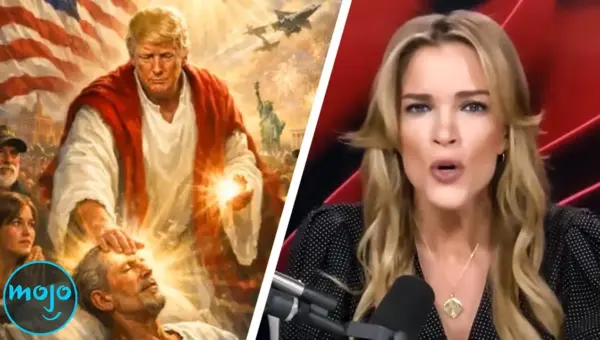
Trump’s Allies Rebel: Conservatives Slam President’s Policies
Prominent conservative figures and lawmakers are openly criticizing President Trump's policies in 2026, signaling a growing divide within the movement. From Candace Owens questioning the Iran conflict to Senator Rand Paul challenging trade policy, a wave of dissent is challenging the president's agenda.
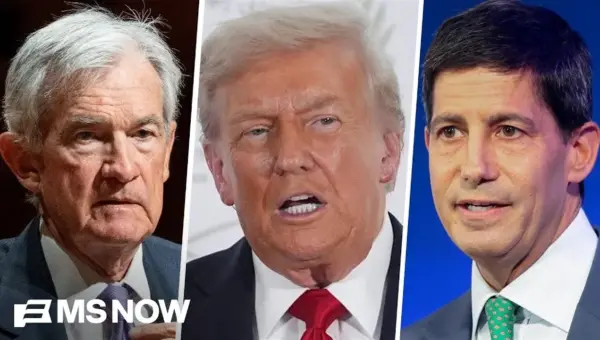
Trump Threatens Fed Chair Powell, Faces Nomination Blockade
President Trump is threatening to fire Fed Chair Jerome Powell over a renovation probe, creating a political stalemate. Senator Tom Tillis is blocking Trump's nominee, Kevin Warsh, until the investigation concludes. Warsh himself faces scrutiny over his vast personal wealth, estimated between $135-226 million, raising conflict of interest concerns.


Trump’s Grip Weakens as Allies Falter, Democracy’s Future Hinges
Donald Trump's approval ratings are plummeting, even among his core supporters, signaling a potential collapse of the MAGA movement. Global events, like Hungary's shift to democracy, and domestic economic woes are fueling discontent and opening doors for broader political coalitions.