The Enigma of ‘John Baron’: A Trump-Like Voice, a SCOTUS Tariff Grievance, and the Shifting Sands of Political Discourse on C-SPAN
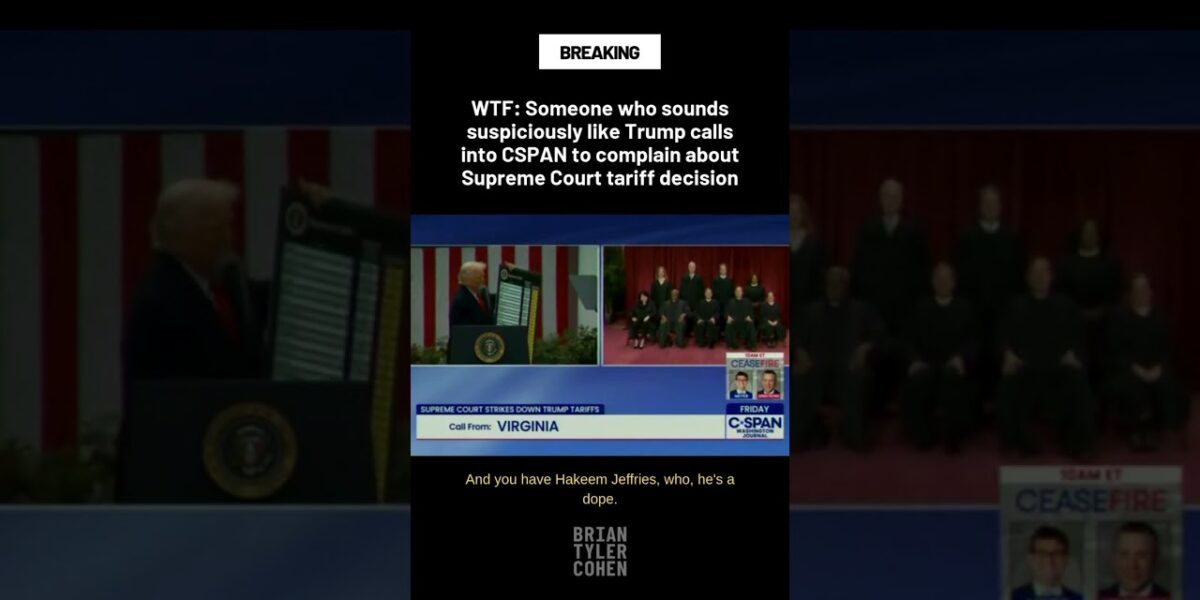
A recent C-SPAN call from a man identifying as "John Baron" with a voice eerily similar to Donald Trump's has sparked widespread discussion. The caller passionately decried an unspecified "SCOTUS tariff decision" as the "worst ever," while also launching characteristic attacks on Democratic leaders Hakeem Jeffries and Chuck Schumer, claiming "true Americans will not be happy." This peculiar incident highlights the ongoing blurring of lines between political performance and authentic public discourse.

The Enigma of ‘John Baron’: A Trump-Like Voice, a SCOTUS Tariff Grievance, and the Shifting Sands of Political Discourse on C-SPAN
In an era increasingly defined by blurred lines between authenticity and performance, a recent call into C-SPAN’s live programming has ignited both amusement and serious discussion. A caller identifying himself as “John in Virginia,” a Republican, quickly pivoted to using the name “John Baron,” all while exhibiting a vocal cadence and rhetorical style strikingly similar to that of former President Donald Trump. His impassioned, albeit vague, condemnation of an unspecified “SCOTUS tariff decision” and his characteristic attacks on Democratic leaders have cast a spotlight on the evolving nature of political communication, the persistent shadow of populist rhetoric, and the enduring power of public platforms like C-SPAN.
The incident, brief as it was, encapsulated several prevailing themes in contemporary American politics: the weaponization of economic policy, the deep partisan chasm, and the curious interplay between public personas and anonymous engagement. It forced observers to ponder whether this was a deliberate act of political theater, a genuine expression of a voter echoing familiar sentiments, or something more complex, tapping into the historical use of aliases by prominent figures.
A Familiar Cadence: The ‘John Baron’ Alias and its Historical Echoes
The call began innocuously enough. “Uh John in Virginia, Republican. Let’s hear from you,” the C-SPAN host introduced. What followed, however, was anything but ordinary. The caller, who quickly identified himself as “John Baron,” launched into a tirade against what he termed “the worst decision you’ve ever have in your life practically.” The voice, with its distinctive intonations, repetitive phrasing, and emphatic delivery, immediately struck many listeners as remarkably similar to that of Donald Trump.
The name “John Baron” itself carries significant historical weight when associated with Donald Trump. Throughout the 1970s, 1980s, and early 1990s, Trump famously used the aliases “John Baron” and “John Miller” when speaking to journalists, often posing as a spokesperson for his own company. These calls typically involved flattering comments about Trump’s business acumen, his relationships with women, and other self-aggrandizing remarks, usually in an effort to control narratives surrounding his public image and business dealings. The revelation of these aliases, particularly during the 2016 presidential campaign, became a source of both controversy and fascination, offering a glimpse into Trump’s long-standing methods of media manipulation and self-promotion.
The re-emergence of the “John Baron” alias, whether employed by Trump himself or a highly skilled impersonator, on a public forum like C-SPAN, adds a peculiar layer to this historical context. It evokes a sense of political performance, where the lines between reality and simulation are increasingly blurred. For some, it was a moment of comedic relief, a bizarre interlude in the often-serious world of political commentary. For others, it highlighted a deeper concern about authenticity in public discourse and the potential for manipulation, especially given the caller’s immediate dive into partisan attacks.
The choice of C-SPAN as the platform for such a call is also noteworthy. Known for its unvarnished, unfiltered coverage of government proceedings and public affairs, C-SPAN provides a direct conduit for citizen voices, often without the heavy editorial hand of other news outlets. This makes it a unique stage for both genuine public sentiment and, as this incident suggests, potentially calculated acts of political messaging or mimicry. The very rawness of the C-SPAN call-in format lends itself to these unpredictable moments, making them all the more impactful in a media landscape often dominated by highly produced content.
The Unspecified ‘SCOTUS Tariff Decision’: A Catalyst for Grievance
Central to the caller’s grievance was an unspecified “SCOTUS tariff decision,” which he declared “the worst decision you’ve ever have in your life practically.” This strong condemnation, however, lacked specific details about the ruling itself, leaving listeners to speculate about its nature and implications. The Supreme Court’s docket does not frequently feature high-profile rulings directly implementing or overturning specific tariff rates, as these are typically matters of executive authority or legislative action. Instead, the Court might rule on the constitutionality of trade laws, the scope of presidential power in imposing tariffs, or the legal challenges to existing trade agreements.
For instance, the Supreme Court could hear cases related to the Commerce Clause, which grants Congress the power “to regulate Commerce with foreign Nations, and among the several States.” Rulings on this clause could indirectly impact trade policy. Similarly, challenges to presidential use of statutes like Section 232 of the Trade Expansion Act of 1962 (which allows tariffs on imports deemed a national security threat) or Section 301 of the Trade Act of 1974 (addressing unfair trade practices) could theoretically reach the Supreme Court. However, a landmark “SCOTUS tariff decision” that would warrant such a visceral reaction from a broad segment of the population is not immediately evident in recent judicial history.
This ambiguity is significant. It suggests several possibilities: the caller might have been referring to a less prominent ruling whose implications he perceived as dire, or he might have been mischaracterizing a decision, or perhaps even using a hypothetical scenario to fuel a broader political narrative. In the context of populist rhetoric, the precise details of a policy or ruling often take a backseat to the emotional impact and the opportunity to mobilize a base against perceived adversaries. Tariffs themselves have a long and contentious history in American politics, often serving as a flashpoint for debates about protectionism, free trade, and national economic sovereignty. Historically, figures like Trump have championed tariffs as a tool to protect domestic industries and jobs, often framing them as a patriotic defense against foreign economic encroachment.
The caller’s broad condemnation, therefore, resonates with a segment of the electorate that views global trade agreements and international judicial decisions with skepticism, often seeing them as undermining national interests. This sentiment aligns with a protectionist economic philosophy that prioritizes domestic production and employment, even at the cost of higher consumer prices or potential retaliatory tariffs from other nations. The lack of specificity in the call allows the grievance to become universally applicable to any perceived setback for this protectionist agenda, amplifying its emotional rather than its factual weight.
Political Barbs and the Partisan Divide: Targeting Democratic Leadership
Beyond the mysterious tariff decision, the caller’s comments quickly devolved into personal attacks against prominent Democratic figures: House Minority Leader Hakeem Jeffries and Senate Majority Leader Chuck Schumer. “And you have Hakeem Jeff who he’s a dope. And you have Chuck Schumer who can’t cook a cheeseburger. Of course, these people are happy. Of course, these people are happy. But true Americans will not be happy,” the caller asserted.
These insults, while crude, are characteristic of a particular strain of populist political rhetoric that seeks to delegitimize opponents not through policy critique, but through personal denigration and ridicule. Calling Jeffries a “dope” attempts to dismiss his intelligence and leadership outright, while the bizarre accusation that Schumer “can’t cook a cheeseburger” aims to portray him as out of touch with ordinary Americans, or perhaps as inept in even the most basic domestic tasks – a classic trope used to undermine a politician’s relatability and competence.
Hakeem Jeffries, as the leader of the House Democrats, and Chuck Schumer, as the Senate Majority Leader, are central figures in the Democratic Party’s legislative and political strategy. They are often the targets of Republican criticism, especially from the populist wing of the party, which views them as symbols of a liberal establishment out of touch with the concerns of working-class Americans. Their political positions often diverge sharply from those advocated by figures like Donald Trump, particularly on issues of trade, economic regulation, and foreign policy. While Jeffries and Schumer generally support international trade agreements and a more integrated global economy, Trump and his allies have frequently advocated for protectionist measures and a more isolationist approach to trade.
The caller’s assertion that “Of course, these people are happy” regarding the alleged SCOTUS decision further underscores the deep partisan divide. It implies that anything beneficial to Democrats is inherently detrimental to “true Americans,” framing political outcomes in zero-sum terms. This rhetoric fosters an environment where compromise is seen as betrayal and political opposition is equated with national disloyalty. This approach discourages nuanced debate and instead reinforces rigid ideological boundaries, contributing to the polarization that characterizes much of contemporary American politics. The use of such language on a public platform like C-SPAN, where a wide spectrum of views is usually presented, highlights how deeply ingrained these adversarial narratives have become in political discourse.
Defining ‘True Americans’: A Weapon of Exclusion
Perhaps the most potent and concerning phrase uttered by the caller was, “But true Americans will not be happy.” This assertion is a classic example of exclusionary rhetoric, a tactic frequently employed in populist movements to define who belongs to the legitimate national community and, by extension, who does not. By claiming that only “true Americans” would share his unhappiness, the caller implicitly labels those who might support the alleged SCOTUS decision, or indeed any policy favored by his political opponents, as somehow less American or unpatriotic.
This rhetorical device has deep roots in American political history, often surfacing during periods of intense social and political upheaval. From the Know-Nothings of the 19th century to McCarthyism in the 20th, and more recently in various populist movements, the concept of a “true American” has been invoked to demonize immigrants, religious minorities, political dissidents, and indeed, anyone perceived as threatening to a particular vision of national identity. In contemporary politics, this often translates into an “us vs. them” narrative, where “us” represents the authentic, hardworking, often rural or traditional segment of society, and “them” represents an elite, urban, or liberal establishment.
The caller’s reference to a previous female caller, presumably a Democrat, who was “disgraced” and “devastated” by the decision, further illustrates this dynamic. While the caller uses her dismay as a counterpoint to the happiness of Jeffries and Schumer, it also serves to frame the emotional landscape of the issue within a partisan lens. The implication is that only those on one side of the political spectrum can genuinely feel the weight of such a decision, while the other side is either oblivious, malicious, or simply not “true” enough to care.
Such rhetoric has profound implications for democratic health. When a significant portion of the electorate is deemed “un-American” for their political views, it erodes the foundations of pluralism and mutual respect necessary for a functioning democracy. It discourages dialogue, fosters resentment, and can even incite animosity, making it harder to find common ground or address shared national challenges. The incident on C-SPAN, therefore, serves as a microcosm of a broader societal challenge: how to navigate political disagreements without resorting to exclusionary language that fragments the national identity.
C-SPAN: A Mirror to the Nation’s Political Soul
C-SPAN’s role in this incident cannot be overstated. As a non-commercial, non-profit public service, C-SPAN offers unfiltered coverage of government proceedings and provides platforms for public engagement through its call-in shows. It is designed to be a transparent window into the workings of American democracy, making it a unique stage for moments of both profound insight and profound absurdity.
The network’s commitment to providing direct access to public opinion, without significant editorial intervention, means that calls like that from “John Baron” are aired live, allowing the public to hear directly from fellow citizens. This unfiltered approach, while sometimes leading to eccentric or unsubstantiated claims, also offers an invaluable, raw snapshot of the national mood. It allows for the spontaneity that is often missing in more curated media environments.
In this particular instance, C-SPAN served as an amplifier for a voice that, whether authentic or mimicked, carried the unmistakable echo of a former president. The immediate viral spread of the clip across social media platforms underscored C-SPAN’s enduring relevance as a source of unscripted political moments. It became a talking point, not just for its content, but for the sheer unexpectedness of hearing a familiar, controversial voice (or its uncanny facsimile) weigh in on national policy in such an informal setting.
The incident also highlights the challenges faced by live programming in an era of deep fakes and sophisticated impersonations. While C-SPAN hosts typically screen calls for basic appropriateness, discerning the authenticity of a caller’s identity or intent, especially when an impersonation is involved, is an immense task. This particular call, therefore, serves as a reminder of the vulnerabilities inherent in open-forum communication, even as it celebrates the democratic ideal of giving every citizen a voice.
The Broader Landscape: Populism, Media, and the Future of Discourse
The “John Baron” call is more than just an amusing anecdote; it is a symptom of a broader political and media landscape. The rise of populism, characterized by anti-establishment sentiment, direct appeals to “the people,” and often strongman rhetoric, has fundamentally reshaped political discourse. Figures like Donald Trump have mastered the art of communicating directly with their base, often bypassing traditional media filters and relying on social media or direct public appearances.
The incident also speaks to the pervasive influence of media and the cult of personality in modern politics. Whether the caller was Trump himself, an aide, or merely an exceptionally skilled impersonator, the very act of a voice mimicking a prominent political figure and injecting familiar talking points into public discourse underscores the degree to which political identities and narratives have become intertwined with celebrity and performance. In an age where information travels instantly and can be easily manipulated, the distinction between genuine political engagement and orchestrated spectacle becomes increasingly blurred.
Furthermore, the call reflects the ongoing challenges of discerning truth and authenticity in a fragmented media environment. The rapid proliferation of misinformation and disinformation, often amplified by social media algorithms, means that even brief, ambiguous incidents can quickly take on outsized significance. The lack of concrete details regarding the “SCOTUS tariff decision” did not diminish the caller’s impact; if anything, it allowed the grievance to be more broadly interpreted and applied by those who share similar sentiments.
Ultimately, the C-SPAN “John Baron” call serves as a poignant, if peculiar, snapshot of contemporary American politics. It brings together themes of populist grievance, partisan animosity, the theatricality of political communication, and the enduring quest for authenticity in a world saturated with information. As political discourse continues to evolve, shaped by technology, polarization, and the ever-present human desire to be heard, incidents like this remind us of the complex, often unpredictable, and sometimes unsettling nature of public engagement in a democratic society. It leaves us pondering not just who called in, but what the call truly represents about the state of our nation’s political soul.
Source: WTF: Someone who sounds like Trump calls into CSPAN to complain about SCOTUS tariff decision (YouTube)

Related Articles

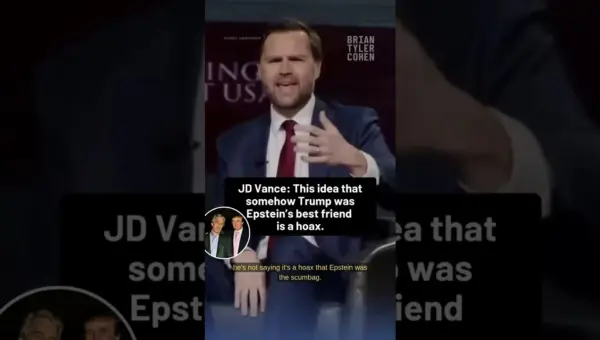
Vance Defends Trump: Epstein Friendship Claim Is A Hoax
Senator JD Vance asserts that claims of Donald Trump being close friends with Jeffrey Epstein are a "hoax." Vance cited emails suggesting a mutual dislike and even Trump reporting Epstein to authorities, arguing this refutes the "best friend" narrative pushed by Democrats.

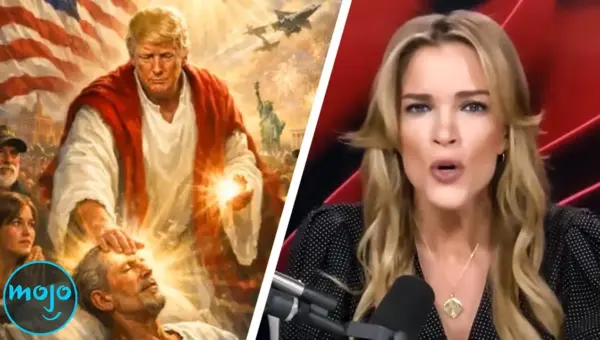
Trump’s Allies Rebel: Conservatives Slam President’s Policies
Prominent conservative figures and lawmakers are openly criticizing President Trump's policies in 2026, signaling a growing divide within the movement. From Candace Owens questioning the Iran conflict to Senator Rand Paul challenging trade policy, a wave of dissent is challenging the president's agenda.
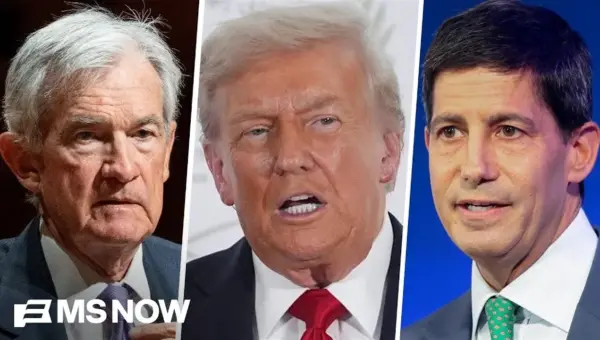
Trump Threatens Fed Chair Powell, Faces Nomination Blockade
President Trump is threatening to fire Fed Chair Jerome Powell over a renovation probe, creating a political stalemate. Senator Tom Tillis is blocking Trump's nominee, Kevin Warsh, until the investigation concludes. Warsh himself faces scrutiny over his vast personal wealth, estimated between $135-226 million, raising conflict of interest concerns.