US Troops Dead in Escalating Middle East Conflict
Three US service members have been killed and five wounded following joint U.S.-Israel military strikes, escalating tensions in the Middle East. The operation, reportedly initiated unilaterally, has raised legal and constitutional questions, with critics blaming former President Trump for an 'unnecessary' and 'illegal' war.


US Service Members Killed Amidst Regional Escalation
Three United States service members have been killed and five others seriously wounded following joint military strikes involving the U.S. and Israel, according to an update from U.S. Central Command (CENTCOM). The casualties occurred as part of what is being referred to as ‘Operation Epic Fury,’ with the Pentagon confirming the fatalities and injuries on March 1st. The exact circumstances and locations of the service members’ deaths remain under investigation, with officials stating the situation is fluid and further details will be released after next of kin notifications.
Unilateral Action and Congressional Concerns
The military action, reportedly launched without prior notification to Congress or other international allies, has drawn sharp criticism. A Democratic representative, speaking anonymously, suggested that the decision to strike Iran was made by former President Donald Trump and Prime Minister Benjamin Netanyahu, bypassing established congressional procedures for initiating armed conflict. This representative stated, “BB Netanyahu has asked multiple presidents, multiple presidents over decades to strike Iran, to go to war with Iran. None of them were dumb enough to bite except for Donald Trump. Now he is going to face the political consequences and American families are facing the on the ground consequences.”
“The lives of American heroes may be lost and we may have casualties. That often happens in war. This is not a a a war that we needed to start. This was an illegal, unconstitutional war that has resulted in US service members dying.”
Former President Trump, in a statement approximately 30 hours prior to the casualty report, acknowledged the potential for American lives to be lost, stating, “The lives of courageous American heroes may be lost and we may have casualties. That often happens in war, but we’re doing this not for now. We’re doing this for the future.” Critics, however, argue that this unilateral decision to engage in hostilities, without explicit congressional authorization, violates the U.S. Constitution.
Legality and Constitutional Questions
Legal analysts and policy advisors have raised significant questions regarding the legality of the operation. According to Article 1, Section 8, Clause 11 of the U.S. Constitution, Congress holds the power to declare war and initiate armed conflicts. The argument presented is that former President Trump initiated this conflict unilaterally, describing it as a “war” rather than a limited operation, without the required congressional authorization. While some Republicans have pointed to the War Powers Act, legal experts contend that the act requires presidential action to be in response to an attack on U.S. service members or to be otherwise authorized by Congress, neither of which they argue applies in this instance.
Micah Eran, a lead policy advisor and law student, stated, “This might be the most brazenly illegal act of the Trump administration and we’ve seen a lot of illegal activity by him and his cabinet… The Constitution in Article 1, Section 8, Clause 11, it says Congress shall have the power to start wars, to initiate armed conflicts. That’s one of the enumerated powers of Congress. And who started this war? Trump described it as a war. It wasn’t just an operation. He started it himself unilaterally. You cannot do that.” Eran further suggested that impeachment could be an appropriate remedy for such a constitutional violation.
Regional Retaliation and Escalation
The initial strikes have reportedly led to retaliatory actions from Iran, with reports indicating strikes on U.S. air and naval bases throughout the Middle East. Adding to the volatile situation, Iranian officials have reportedly formed a transitional council to lead the country following the reported killing of their Supreme Leader. Simultaneously, Israel is said to be conducting a new wave of strikes within Iran. This exchange of hostilities signifies a rapidly escalating regional conflict.
Humanitarian Concerns and Potential for Wider Conflict
Beyond the immediate military engagement, there are grave concerns about the broader humanitarian impact and the potential for a full-scale war. Initial reports suggest that around 100 school children in Iran have died, with initial claims attributing these deaths to Iran now being questioned, with some suggesting the strikes themselves were responsible. Drawing parallels to the Iraq War, where an estimated 300,000 people died, including over 150,000 civilians, analysts warn that a ground conflict in Iran, a country significantly larger and more populous than Iraq, could result in catastrophic loss of life, potentially exceeding hundreds of thousands.
Future Outlook and De-escalation
The current situation is described as highly fluid, with ongoing major combat operations and response efforts. The immediate focus remains on supporting the wounded and respecting the families of the fallen. However, the political ramifications and the path forward are subjects of intense debate. Questions linger about whether former President Trump, known for his unpredictable foreign policy approach, will seek de-escalation or further military engagement. The potential for a cycle of retaliation and counter-retaliation poses a significant threat to regional stability and international security. Observers will be closely watching for any signs of diplomatic engagement or further military escalation in the coming days and weeks.
Source: BREAKING: 3 US Troops Dead (YouTube)

Related Articles


Trump’s Allies Rebel: Conservatives Slam President’s Policies
Prominent conservative figures and lawmakers are openly criticizing President Trump's policies in 2026, signaling a growing divide within the movement. From Candace Owens questioning the Iran conflict to Senator Rand Paul challenging trade policy, a wave of dissent is challenging the president's agenda.

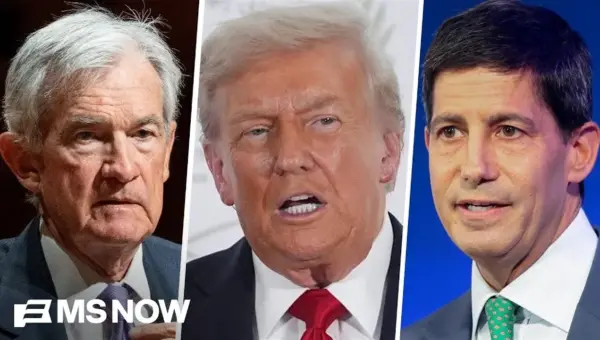
Trump Threatens Fed Chair Powell, Faces Nomination Blockade
President Trump is threatening to fire Fed Chair Jerome Powell over a renovation probe, creating a political stalemate. Senator Tom Tillis is blocking Trump's nominee, Kevin Warsh, until the investigation concludes. Warsh himself faces scrutiny over his vast personal wealth, estimated between $135-226 million, raising conflict of interest concerns.


Trump’s Grip Weakens as Allies Falter, Democracy’s Future Hinges
Donald Trump's approval ratings are plummeting, even among his core supporters, signaling a potential collapse of the MAGA movement. Global events, like Hungary's shift to democracy, and domestic economic woes are fueling discontent and opening doors for broader political coalitions.