Enniskillen Bombing: New IRA Suspects Emerge in Investigation
A podcast investigation into the 1987 Enniskillen Poppy Day bombing has reportedly uncovered new leads, identifying at least two living individuals allegedly linked to the Provisional IRA unit responsible. The breakthrough comes after extensive efforts to gather information, offering a glimmer of hope for victims' families seeking truth.

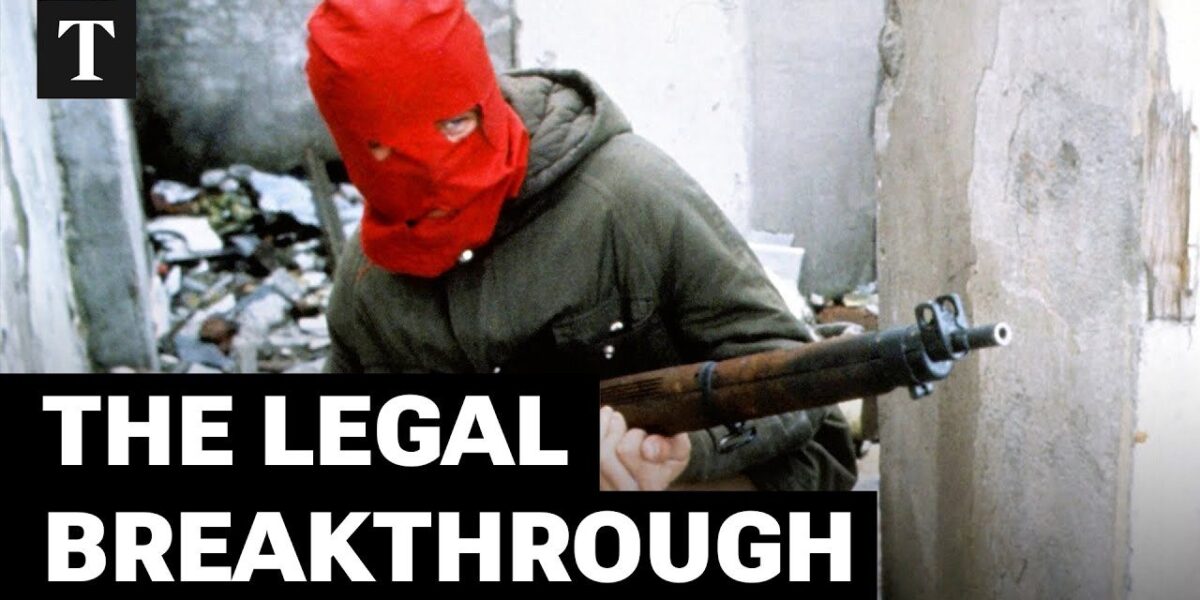
Enniskillen Bombing: New IRA Suspects Emerge in Investigation
A podcast investigation into the 1987 Enniskillen Poppy Day bombing has reportedly uncovered new leads, identifying at least two living individuals allegedly linked to the Provisional IRA unit responsible for the attack. The breakthrough comes after months of efforts to persuade individuals within or close to the IRA and security services to speak, offering a glimmer of hope for victims and their families seeking truth and justice two decades after the Good Friday Agreement.
Unmasking the Perpetrators: A Difficult Pursuit
The Enniskillen bombing, which claimed 12 lives and injured dozens more on Remembrance Sunday in 1987, has long remained a painful and unresolved chapter of the Troubles. The podcast series, “The Poppy Deborn,” has painstakingly pursued contacts within the IRA and security services, encountering a pervasive veil of silence.
However, a significant breakthrough occurred when a trusted contact, closely linked to the Irish security services, provided a name. This individual, described as “definitely involved” by the Gardaí (Irish police) at the time, is reportedly still alive and based in Donegal.
“The big question all along I guess in this investigation has of course been who was involved you know who was behind the poppy day bomb.”
The name provided by the contact was not unfamiliar to the investigative team. It had been mentioned by other sources, painting a picture of an individual described as “not a very pleasant character.” To corroborate this lead, the investigation sought confirmation from an IRA source. In a discreet meeting, the name was presented, and the IRA source confirmed, “Yeah, I’ve also been told he was involved.” This dual confirmation from opposing sides of the conflict marks a significant step forward in identifying those responsible.
The IRA’s Internal Response and Shifting Dynamics
In the aftermath of the Enniskillen attack, the IRA issued a statement acknowledging a “mistake” and promising an internal investigation. However, the outcomes of such internal inquiries remain shrouded in secrecy, a characteristic of “secret armies.” Danny Morrison, a former senior figure in Sinn Féin, the political wing of the IRA, reflected on the event. He expressed astonishment, anger, and deep annoyance, stating that events associated with the dead were “almost sacrosanct.” Morrison acknowledged the difficulty of defending such an act publicly, even while supporting the right to armed struggle.
Regarding the IRA’s internal investigation, Morrison stated he was unaware of its outcome but explained the rationale behind such secrecy. He suggested that internal opinions likely varied, with some viewing the bombing as an accident and others as a danger to the organization.
The IRA would have likely acted to prevent recurrence, potentially through issuing orders or dismissing individuals. However, he conceded that public accountability was not a feature of such organizations, with accountability primarily stemming from their support base.
The investigation also highlighted the evolving nature of IRA operations. A former IRA volunteer active in the 1970s recalled that the Remembrance Day parade had been considered for an operation but deemed “ludicrous.” This starkly contrasts with the 1987 attack, suggesting a change in leadership or decision-making within the organization over time. Morrison attributed this to the “nature of conflict” and the “length of the war,” leading to regular turnover in local leadership, meaning lessons from the past were not always consistently applied.
The Quest for Justice and the Legacy of Trauma
Despite these potential breakthroughs in identifying individuals, the question of justice for the Enniskillen victims and their families remains complex. The Good Friday Agreement, while ending the conflict, did not necessarily provide peace or justice for all affected. The podcast highlights the challenges faced by victims in obtaining truth and redress, particularly those caught in indiscriminate attacks without the backing of organized groups.
David Bolton, a social care and trauma specialist from Enniskillen, spoke about the long-term impact of the bombing on the community. He noted that while individual tragedies were often overshadowed by subsequent events, the Enniskillen bombing left a deep scar.
Bolton emphasized that politics and diplomacy often struggle with empathy, leaving victims and survivors feeling overlooked. He pointed out the absence of specific provisions for victims’ rights in the Good Friday Agreement, despite extensive rights outlined for other areas.
“I think the issue of justice is a very complex one. I think if we think in terms of courtroom justice, we’re into diminishing returns… But there is another sense of justice as well. And maybe we could call it um uh social justice or just fairness.”
Bolton suggested that while courtroom justice might be unattainable due to the passage of time and deteriorated evidence, a form of “social justice” or “just fairness”—an acknowledgment of suffering and endurance—is still crucial. The investigative journalist also grappled with the ethical implications of their work, questioning whether shining a light on such raw events is helpful or reopens wounds. He concluded that in the absence of judicial accountability, journalism plays a vital role in telling these stories, though the containment and presentation of these narratives remain challenging.
New Frameworks and Lingering Questions
In a significant development, the British and Irish governments have agreed on a new framework for dealing with the legacy of the Troubles. This includes the establishment of a Legacy Commission tasked with investigating unsolved cases. The Irish state has committed to setting up its own unit to cooperate with British investigations, a move welcomed by the podcast’s producers, who encountered reluctance to talk in both jurisdictions.
The investigation has identified a second potential suspect, a known Republican locally, who was among names reportedly given to Prime Minister Margaret Thatcher in 1988 as being connected to the violence in the Fermanagh area. Circumstantial evidence and reporting suggest this individual may be someone the podcast team has already spoken with, despite their denial of any knowledge of the Enniskillen bombing. The intelligence linking this individual to the bombing is believed to have come from security services and has not been tested.
Despite these advances, the investigation acknowledges that many questions remain unanswered. The identities of all those involved, the precise motives, and the full extent of accountability within the IRA are still subjects of ongoing inquiry. The podcast concludes by revisiting the Enniskillen war memorial, a poignant reminder of the lives lost and the enduring quest for truth and reconciliation in the shadow of unresolved conflict.
Source: The IRA's Poppy Day Enniskillen Bombing: A Breakthrough (YouTube)

Related Articles
Retirement Savings Fall Short for Most
Many believe saving diligently in 401(k)s and IRAs is enough for wealth. However, this "accumulation mindset" often falls short due to limited savings potential and life's unpredictability. Real wealth building requires more than just saving; it needs active income generation and strategic growth.


Rory’s Masters Dream Fulfilled: Hollywood Celebrates
Rory McIlroy has finally captured the Masters, completing his career Grand Slam and bringing immense joy to his hometown of Holywood. The victory capped a long and often difficult journey, overcoming years of pressure and doubt at Augusta National.
UK Crumbles? Independence Movements Gain Unforeseen Traction
The United Kingdom faces a growing challenge from independence movements in Scotland, Wales, and Northern Ireland. With pro-independence parties gaining traction and legal pathways to separation, the centuries-old union is under increasing pressure, a reality largely unknown to many outside the UK.