Taiwan’s Nuclear Dilemma: Deterrence or Disaster?
As China expands its nuclear arsenal and military presence, the question of whether Taiwan should possess nuclear weapons or host U.S. nuclear arms gains urgency. The debate weighs the potential for deterrence against the risks of escalation, drawing parallels to Ukraine's disarmament and Taiwan's own past nuclear ambitions.

Taiwan’s Nuclear Dilemma: Deterrence or Disaster?
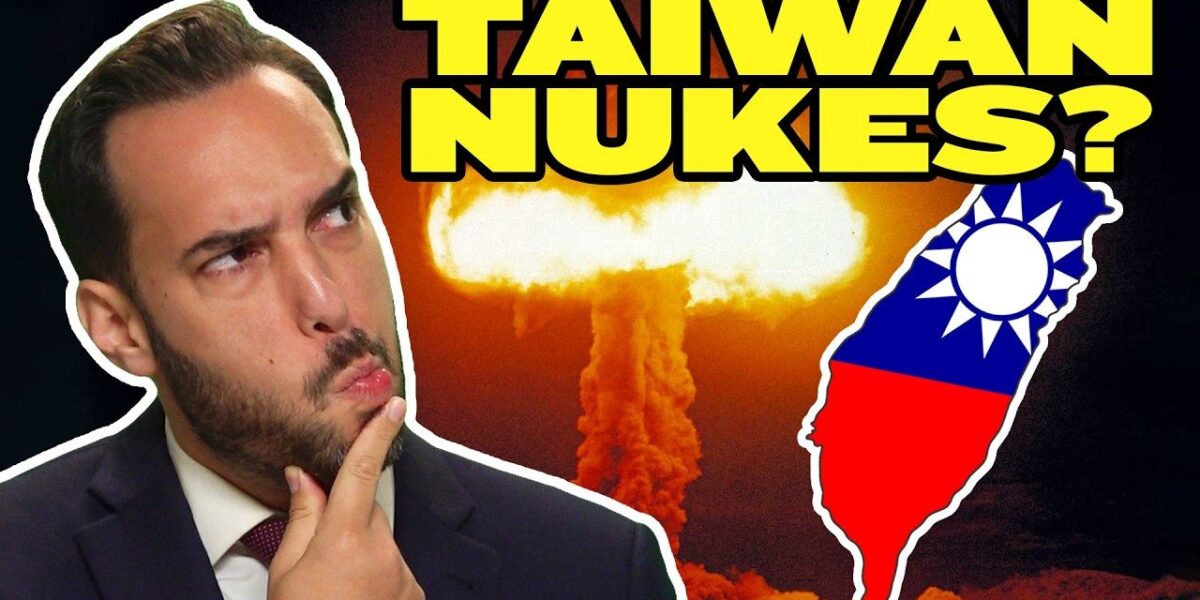
In the shadow of escalating tensions with China, a provocative question is resurfacing: should Taiwan develop nuclear weapons? This debate intensifies as reports suggest China has secretly conducted nuclear tests and massively expanded its arsenal, raising fears of a potential conflict, possibly even a nuclear one, over the self-governing island. The discussion is further fueled by historical parallels, particularly Ukraine’s decision to relinquish its nuclear arsenal in exchange for security assurances that have since proven fragile.
China’s Nuclear Ambitions and Escalating Threats
Recent U.S. intelligence assessments, cited by CNN, indicate that China conducted a secret nuclear test in 2020, despite a self-imposed moratorium since 1996. This, coupled with reports of a massive expansion of China’s nuclear arsenal, suggests a strategic shift towards developing next-generation nuclear capabilities. A study by the Center for Strategic and International Studies (CSIS) and the MIT Security Studies Program Wargaming Lab highlighted a distinct possibility that China might resort to nuclear weapons if it believed it was losing a conventional war, especially if the survival of the Chinese Communist Party (CCP) was perceived to be at stake.
These developments occur against a backdrop of increasingly frequent and assertive Chinese military incursions into Taiwan’s air defense identification zone and its rapidly expanding military power. The potential for China to use nuclear weapons in a conflict over Taiwan, even a conventional one, has prompted analysts and officials to reconsider the island’s security posture.
The Ghost of Ukraine: A Nuclear Past
The situation in Ukraine serves as a stark cautionary tale. In 1994, Ukraine voluntarily surrendered its vast nuclear arsenal, inherited from the Soviet Union, under the Budapest Memorandum. In return, the United States, the United Kingdom, France, China, and Russia provided security assurances. However, Russia’s annexation of Crimea and its ongoing invasion have dramatically undermined the credibility of these assurances. Ukrainian President Volodymyr Zelensky has publicly described the decision to give up nuclear weapons as “stupid, illogical, and very irresponsible,” a sentiment that resonates with those questioning Taiwan’s own nuclear history.
Taiwan’s Own Nuclear Journey and US Intervention
Like Ukraine, Taiwan once possessed a covert nuclear weapons program. From the 1960s to the late 1980s, Taiwan operated a secret research reactor and a reprocessing plant. However, the program was ultimately halted under significant pressure from the United States. U.S. concerns centered on preventing nuclear proliferation, fearing that a nuclear-armed Taiwan could trigger a regional arms race, potentially drawing in allies like South Korea and Japan. Additionally, the U.S. worried that a nuclear Taiwan would escalate regional conflicts and complicate diplomatic efforts to normalize relations with mainland China, which at the time was hoped to be on a path toward liberalization.
The U.S. intervention, reportedly involving a CIA informant, successfully dismantled Taiwan’s nuclear ambitions before it could develop deployable nuclear weapons. Despite this, the idea of acquiring nuclear capabilities has resurfaced periodically. During the Third Taiwan Strait Crisis in the 1990s, when China launched missiles near Taiwan, then-President Lee Teng-hui publicly stated that Taiwan was reconsidering its “nuclear option.” However, this stance was later softened once the immediate missile threat subsided.
The Push for US Nuclear Weapons on Taiwanese Soil
Given the current geopolitical climate, some U.S. officials and China analysts are advocating for the deployment of American tactical nuclear weapons in Taiwan. Proponents argue that such a move could act as a potent deterrent, preventing a Chinese invasion rather than provoking one. They point to the precedent set by the U.S. itself, which previously stationed nuclear weapons in Taiwan during the Cold War.
Between the 1950s and 1970s, under administrations like Dwight D. Eisenhower and Lyndon B. Johnson, the U.S. deployed a significant number of nuclear weapons on Taiwanese soil, totaling over 200 at their peak. These weapons were withdrawn in 1974 under President Richard Nixon. The argument for reintroducing them centers on bolstering deterrence in an era where conventional warfare is proving to be resource-intensive and where U.S. missile supplies could be depleted rapidly in a conflict with China.
“At this point, because things are so dire, there really needs to be an open dialogue with Taiwan immediately about how we can introduce tactical nuclear weapons into Taiwan.”
– Captain Jim Fenel, former director of intelligence and information operations for the U.S. Pacific Fleet
Figures like Captain Jim Fenel and Bradley Aer, a former senior intelligence officer for China at the Office of Naval Intelligence, have proposed deploying U.S. B-61 tactical nuclear weapons to Taiwan. China analyst Gordon Chang has gone further, suggesting the U.S. should help Taiwan develop its own nuclear weapons.
Arguments Against and Broader Implications
However, the proposal to station U.S. nuclear weapons in Taiwan is not without its detractors. Critics argue that such a deployment could provide China with a pretext for military action, despite China’s demonstrated willingness to act without clear justification. Others suggest that advanced precision conventional weapons might be sufficient to deter an invasion, rendering nuclear deployments unnecessary or overly provocative.
Furthermore, deploying nuclear weapons could potentially galvanize international opposition against the U.S. and its allies, potentially forcing diplomatic concessions to de-escalate. There is also the argument that if China is determined to invade, it will do so regardless of the nuclear deterrent, accepting the risk of nuclear retaliation.
The core of the issue, as highlighted by the transcript, is the CCP’s perception of reunification with Taiwan as an existential threat. This deep-seated ideology drives China’s actions and complicates any strategy aimed at maintaining peace and stability in the region. The risks, whether of inaction or provocative action, appear significant for all parties involved.
What’s Next?
The debate over Taiwan’s nuclear future, whether indigenous or U.S.-hosted, highlights the escalating strategic challenges in the Indo-Pacific. As China’s military capabilities and assertiveness grow, the calculus for deterrence is constantly being reassessed. The coming months will likely see continued discussions among policymakers, military strategists, and international observers on the efficacy and wisdom of deploying nuclear weapons as a deterrent against a potentially nuclear-armed adversary. The decisions made in Washington and Taipei, and Beijing’s reactions, will be critical in shaping the future of regional security.
Source: After Iran’s Fall, Should Taiwan Have Nukes? (YouTube)

Related Articles


Oil Prices Surge to $91 Amid Geopolitical Tensions
Oil prices have surged to $91 a barrel, driven by disruptions in the Strait of Hormuz. This is leading to higher gas prices across the U.S., with California facing particularly steep costs. The situation is fueling debate on energy policy, exports, and the transition to renewable fuels.

China’s Iran Gambit: Deception or a New World Order?
President Trump claims China will stop sending weapons to Iran, but deep skepticism remains due to China's past support and use of spy satellites to aid Iran. This move could be a strategic ploy to weaken the US military.
China Aids Iran Amid US Conflict Escalation
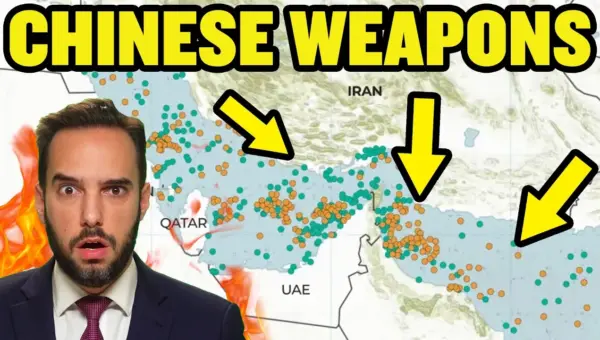
Recent intelligence suggests China is secretly supplying Iran with weapons like MANPADS and sharing critical intelligence, a significant escalation from its previous stance. This move, if confirmed, could deepen regional conflict and lead to severe US economic retaliation, while highlighting long-standing strategic ties between Beijing and Tehran.