Russia’s Budget: A $90 Billion Illusion of Control
Russia's federal budget is under intense scrutiny for its reliance on unrealistic oil price forecasts and optimistic growth projections, despite significant downward revisions. A staggering $90 billion amendment highlights a shift in priorities towards defense spending, while other sectors face cuts. This approach is seen as a strategy to project stability and delay difficult economic truths.

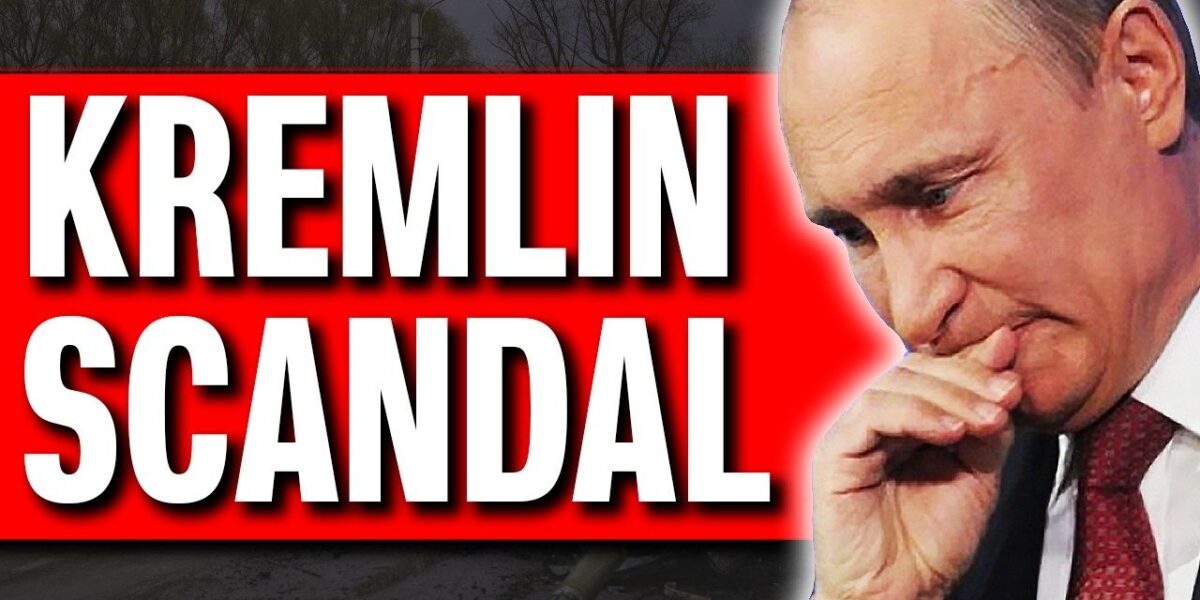
Russia’s Federal Budget Faces Scrutiny Amidst Astronomical Miscalculations
In a move that has raised significant concerns among financial observers, Russia’s federal budget bill, currently in its second reading, appears to be built on a foundation of optimistic assumptions and significant numerical discrepancies. Far from a dry financial document, the proposed budget has been characterized as a “performance,” a “carefully staged ritual” where underlying mathematical realities are seemingly secondary to the imperative of projecting stability. The core of the issue lies not in isolated errors, but in the fundamental logic underpinning the budget, which forecasts revenues and economic growth in a manner detached from current market conditions and domestic economic pressures.
Forecasts Built on Shifting Sands: Oil Prices and Inflation
A central pillar of the budget’s projected revenue is its assumption regarding oil prices. The government has based its calculations on Urals crude oil trading at significantly higher levels than current market realities suggest. With Urals crude consistently trading closer to $30-$40 per barrel, rather than the $60 per barrel factored into the budget, the discrepancy directly impacts projected tax revenues.
This optimistic outlook has already resulted in a loss of approximately a quarter of expected oil and gas revenues compared to earlier projections, even before the year’s end. The transcript notes that global pressures, including intensifying export competition and increasing output from major producers, are leading to structural price discounts, factors that are not being honestly reflected in the approved budget numbers.
The budget’s approach to inflation has been described as equally creative. Despite the government’s own actions, such as raising consumption taxes, easing monetary conditions, and expanding borrowing – all of which are known to drive prices upward – the official forecast anticipates inflation falling to target levels within a year.
This presents a clear contradiction, likened to accelerating a vehicle while simultaneously claiming it is slowing down. These internal inconsistencies are not viewed as mere oversights but as structural elements designed to maintain a specific narrative.
Questionable Economic Growth Projections
The budget’s reliance on economic growth for tax revenue is another area of concern. While official forecasts place GDP expansion at around one percent, this figure has been steadily revised downwards from earlier, more ambitious projections.
What is particularly striking is that tax revenue projections have remained largely unchanged despite these downgrades in expected growth. This suggests an economic model where less growth is anticipated, yet the same amount of tax income is expected, a scenario that defies basic mathematical principles.
Investment indicators further complicate the picture, with major industrial groups anticipating a shrinkage in fixed investment. Falling export revenues and domestic demand under pressure from rising taxes and credit burdens do not align with the narrative of expansion.
The budget’s insistence on a better upcoming year, a recurring theme that has seen gradual deterioration in reality, points towards growth figures being selected not for their realism, but for their necessity in maintaining the illusion of fiscal balance. Without these assumed growth figures, the deficit would become uncomfortably large, prompting the government to seemingly “assume growth into existence” on paper, even as the real economy faces contraction.
The Staggering 7 Trillion Ruble Amendment
A significant development during the budget’s review was a “minor amendment” totaling a staggering 7 trillion rubles (approximately $90 billion USD). This figure alone dwarfs the entire budget of Moscow, Russia’s capital, for 2025, which was just over 5 trillion rubles.
While presented as a sign of flexibility, this amendment is seen as revealing a deeper rigidity in priorities. The overwhelming majority of these newly allocated funds are directed towards classified expenditures and defense-related needs, signaling these as non-negotiable priorities around which all other spending must adjust.
While there are selective increases in funding for areas like medical treatments and rehabilitation programs, these are described as relatively small compared to the sums channeled into defense. Concurrently, cuts are being made in other areas, including subsidies for regions previously highlighted as strategic successes, suggesting a waning interest or budget exhaustion. This uneven distribution of resources leaves cultural projects with minimal support, tech initiatives with symbolic funding, and social programs struggling to survive, indicating that only sectors serving the immediate priorities of the state are receiving adequate attention.
Optimism as a Survival Strategy: The Psychology of Control
The broad strategy behind the budget’s optimistic, yet detached from reality, projections appears to be rooted in psychology and politics rather than sound economic policy. The document is not designed to convince the general public or guide economic policy effectively.
Instead, its primary audience is the highest echelons of the Russian system, intended to reassure them that control is maintained. This “optimism weaponized as a survival strategy” allows financial authorities to avoid confronting the full scale of the problem at once.
A more honest portrayal of the deficit would necessitate immediate and potentially destabilizing decisions, such as drastic spending cuts or the admission of failure. By presenting manageable deficits and modest growth, the government opts for a gradual approach, slowly preparing the public for future economic realities through incremental adjustments and quiet revisions.
This method also is a form of self-protection, diffusing responsibility across various forecasts and external factors, making it difficult to assign blame to any single decision-maker. The budget is passed, numbers are optimistic, and the system moves forward not out of confidence in its projections, but out of a necessity to avoid exposing its fragility.
The Inevitable Reckoning
The inherent danger in this approach is that reality does not negotiate. As debt accumulates, reserves dwindle, and export revenues fluctuate, the ability to sustain overspending will eventually disappear.
This could lead to a rapid contraction in demand, stalled investment, and suffocating credit burdens, transforming perceived resilience into overextension. The current situation is described as the early stages of such a shift, where previously alarmist predictions are proving understated, and the pace at which assumptions are invalidated is accelerating.
The persistence of optimism, therefore, is not based on credibility but on the immediate need to keep the system functioning. Russia’s latest federal budget is less a roadmap for prosperity and more a delay mechanism, a mirror reflecting a system caught between its current reality and a refusal to acknowledge it. The numbers are not designed to add up but to reassure, postpone an inevitable reckoning, and preserve the appearance of control as that control is slipping away.
While immediate collapse is not predicted, the margin for error is rapidly shrinking. Each revision, each optimistic forecast, increases the eventual cost of correction.
The fiction of the budget will eventually become unsustainable, leading to an abrupt adjustment, not due to a failure to warn, but due to a deliberate ignorance of those warnings. The process of rewriting and recalculating the budget will continue, each iteration insisting on a better future, proof of how power perceives the world until it can no longer afford to.
Source: HUGE SCANDAL IN KREMLIN: Central Bank of Russia MISCALCULATED SEVEN TRILLION Rubles of Budget Money (YouTube)

Related Articles

US Markets Surge as Iran Tensions Ease, Oil Prices Steady
U.S. stock markets are hitting new highs as tensions with Iran ease, with the S&P 500 reaching record levels. Despite persistent oil prices around $92 a barrel, the U.S. economy shows resilience, boosted by record oil exports. The focus is shifting to the economic confrontation with Iran, including the non-renewal of oil sales waivers, and long-term strategies to bypass the Strait of Hormuz.


Trump Sees Iran Conflict Near End, Analysts Urge Caution
President Trump believes the conflict in Iran is "very close to over," but former advisor Keith Kellogg urges a cautious approach. The potential de-escalation could impact global markets, particularly oil prices. Investors should monitor the specifics of any resolution and its long-term implications for regional stability.


Oil Prices Surge to $91 Amid Geopolitical Tensions
Oil prices have surged to $91 a barrel, driven by disruptions in the Strait of Hormuz. This is leading to higher gas prices across the U.S., with California facing particularly steep costs. The situation is fueling debate on energy policy, exports, and the transition to renewable fuels.