Beneath the Gavel: Trump’s Unprecedented Legal War on the Federal Reserve Threatens Global Financial Order
Donald Trump's administration has launched an unprecedented legal assault on Federal Reserve Chair Jerome Powell, serving grand jury subpoenas over alleged renovation cost overruns—a move Powell explicitly called retaliation for the Fed's refusal to set interest rates based on presidential preferences. This marks a radical departure from historical presidential pressures, weaponizing the Department of Justice against the central bank's independence and sending a chilling message about the rule of law and financial stability, both domestically and globally.

Beneath the Gavel: Trump’s Unprecedented Legal War on the Federal Reserve Threatens Global Financial Order
In the annals of American financial history, the Federal Reserve has long stood as a bastion of stability, its actions often shrouded in deliberate, measured silence. Moments of unscheduled weekend announcements from the U.S. central bank are rare, historically signaling crises of profound magnitude – the collapse of Bear Stearns, the emergency liquidity injections of 2020, or the regional banking turmoil that claimed Silicon Valley Bank. These are the times when global markets hold their breath, awaiting clarity before Tokyo opens on Monday morning, a practice former Fed Vice Chair Donald Kohn once recounted as the source of Ben Bernanke’s wry joke about his memoirs being titled ‘Before Japan Opens’.
Yet, the profound silence typically surrounding the Fed was shattered last Sunday, not by a failing bank or a credit freeze, but by a direct, legal broadside from the White House. Jerome Powell, the data-driven Fed chair appointed by Donald Trump in 2018, appeared in an extraordinary video message, announcing that the Department of Justice had just served the Federal Reserve with grand jury subpoenas. The threat was a criminal indictment, ostensibly over cost overruns in the renovation of the Fed’s headquarters. Powell, eschewing polite central bank code, stated plainly that the building project was a mere pretext. The true motivation, he argued, was retaliation – a criminal cudgel wielded because the Fed had refused to set interest rates based on the preferences of the president. It was a moment of profound clarity, a stark alarm bell rung by the head of the world’s most important financial institution, signaling that its independence, a cornerstone of global capital markets, was in immediate jeopardy.
A Climate of Fear and the Erosion of Norms
The environment leading up to this unprecedented announcement has been characterized by an unusual silence from corporate America, a telling indicator of pervasive fear. A recent article in the Financial Times highlighted this trepidation, quoting the CEO of a major Wall Street firm who requested anonymity to avoid becoming a target of the president. In an era where prosecutorial power is being wielded as a policy tool, corporate leaders have learned that even expressing an independent opinion can have dire consequences. This chilling effect on free speech and open debate among business leaders underscores the gravity of the situation, suggesting a systemic breakdown of the institutional safeguards that once encouraged robust, independent discourse.
To fully grasp the radical departure a criminal subpoena represents, one must examine the long and often rocky relationship between American presidents and the Federal Reserve. Friction is not a new invention; since the Fed’s founding in 1913, presidents have routinely expressed displeasure with interest rates and have not been shy about vocalizing their concerns. Lyndon B. Johnson provided perhaps the most famous example of this tension. In 1965, furious that William McChesney Martin Jr. had raised interest rates, LBJ summoned him to his ranch in Texas for what he famously called a ‘trip to the woodshed’. Legend has it that the president shoved Martin against a wall, demanding that he lower rates because ‘my boys are dying in Vietnam’ and he needed cheap money to fund the war. Despite this physical and verbal intimidation, Martin stood his ground, maintaining the Fed’s independent stance. Eventually, the storm passed, and LBJ, recognizing the institutional importance of the Fed’s independence, went on to reappoint Martin to the post in 1967.
Decades later, Ronald Reagan’s administration faced the formidable challenge of Paul Volcker’s aggressive fight against double-digit inflation. Volcker hiked rates as high as 20% in the early 1980s to break the back of the price increases that had plagued the 1970s. While Reagan’s Treasury Secretary publicly criticized the Fed, Reagan himself famously refused to comment on monetary policy, adhering to a mantra of non-interference and ultimately allowing Volcker to finish the job, a decision widely credited with restoring economic stability. By contrast, George H.W. Bush was never quiet about his belief that Alan Greenspan’s refusal to cut rates fast enough cost him the 1992 election, openly expressing his frustration and assigning blame.
However, these historical instances, while demonstrating presidential pressure, pale in comparison to the current situation. Past presidents used the ‘bully pulpit’ or private harangues; they did not weaponize the Department of Justice to threaten criminal prosecution. As former Fed Vice Chair Alan Blinder noted, while other presidents have griped, sometimes noisily, none have ever threatened a member of the Federal Reserve Board with criminal charges. This shift moves the conflict out of the realm of political disagreement and into an unprecedented legal assault, a tactic unheard of in advanced economies. Critics have described the use of grand jury subpoenas to influence interest rates as ‘thuggish’, a kind of tactic usually observed in ‘banana republics’ where central bankers don’t just risk being fired for failing to provide cheap money, they risk being jailed. By targeting Jerome Powell with a criminal indictment, the administration has turned a policy debate into a fight for personal liberty.
A Calculated Campaign: Beyond Powell
The timing and nature of this legal assault feel less like a well-thought-out investigation and more like a blunt warning. Jerome Powell’s term as Fed chair is set to expire this May, and the president is expected to announce a successor within weeks. If the goal were simply a change in leadership, the administration could have waited for the clock to run out. Instead, by launching a criminal probe now, the White House is possibly aiming to send a clear message to the entire Federal Reserve staff and any potential successor: ‘If you don’t obey the president, you might be dragged through the courts and possibly jailed.’
This isn’t an isolated threat; it’s part of a broader campaign to bring the Fed’s board to heel. While Powell faces the DOJ, Governor Lisa Cook is currently fighting for her job in a case that has reached the Supreme Court. While the administration claims she committed mortgage fraud, the courts have so far blocked her removal. By keeping multiple board members in the crosshairs simultaneously – one for alleged fraud and another for misleading testimony – the administration is creating an environment where caving to political pressure feels like the only way to survive.
The cost overrun pretext, specifically a 35% increase in the Fed’s decade-long headquarters renovation project involving the removal of toxic asbestos and lead from 1930s-era buildings, is particularly transparent when compared to the administration’s own projects. At the very same time, the White House’s project to replace the East Wing with a new ballroom has seen its estimated cost double from $200 million to $400 million in just six months. By bypassing standard oversight to launch a criminal grand jury investigation while ignoring its own runaway costs, the administration has made one thing clear: this isn’t about fiscal responsibility. It’s a thuggish attempt to not just control Powell, but to send a chilling message to any public official trying to do their job for the benefit of the American people. It demonstrates that the penalty for professional integrity is no longer just a loss of status; it’s a full-scale assault on one’s reputation, savings, and freedom.
The financial pressure on targeted officials is immense. While Jerome Powell’s salary of $246,000 per year places him well above the average American worker, it’s a pittance compared to the cost of a top-tier criminal defense. Defending against a Department of Justice grand jury investigation can easily run into the millions of dollars. For Powell and Governor Lisa Cook, the reality is that the legal process itself, even without a conviction, can lead to financial ruin. This financial pressure is made worse by what appears to be a calculated effort to isolate them. The administration has reportedly used a series of executive orders to target major law firms, signaling that representing ‘enemies of the administration’ could lead to the loss of government contracts or retaliatory investigations. By making it professionally dangerous for top-tier attorneys to even take these cases, the White House is essentially dismantling the right to a fair defense, leaving independent public servants to face the full weight of the state’s legal machinery entirely alone.
The Architects of Disruption: Py and Piro
The current crisis didn’t emerge in a vacuum; it has been steered by a new guard of officials who view institutional norms as obstacles to be dismantled. Chief among them is Bill Py, the director of the Federal Housing Finance Agency (FHFA). While he carries the name of the legendary home builder William J. Py, his family’s company, Py Group, has distanced itself from him, notably after he was ousted from its board in 2020 following clashes with established directors. Py’s adult life has largely been spent as an online oddball and self-styled ‘Twitter philanthropist’, a transition to federal prosecutor-in-chief made seamless by years of practicing on his own family, including accusing his grandfather’s widow of insider trading and blasting his own aunt as a ‘fake Christian’ on a dedicated website. One might surmise that if one can survive a Thanksgiving dinner with Bill Py, a DOJ subpoena might feel like a polite thank you note.
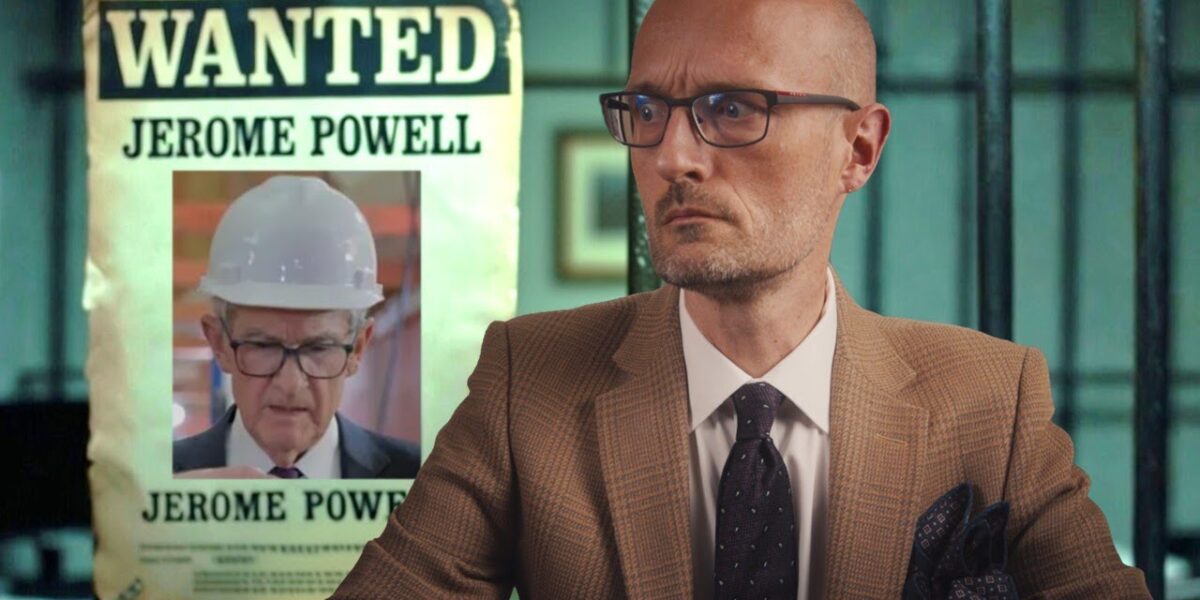
Py first came to wider attention not as a policy expert but as a central figure in James Johnny’s video ‘The Cult of the Dead Stock’, which chronicled a community of meme stock investors clinging to the hope that shares in the bankrupt Bed Bath & Beyond would somehow make them rich. Py cultivated this group, even turning up at bizarre live-streamed ‘Pyfest’ events in airplane hangars where attendees, having paid hundreds of dollars, slapped each other on the face with green dildos – a visual metaphor for the ‘green candles’ of a rising stock price, putting a new spin on ‘market penetration’. His ‘Twitter philanthropy’ involved stunts like handing cash to strangers in parking lots, giving away free cars, or announcing a $30,000 donation to a military veteran if President Donald Trump retweeted him – which Trump did in 2019, tweeting, ‘Thank you, Bill,’ to his 63 million followers. Critics, however, have characterized his online presence as a series of pump-and-dump schemes, ranging from failed business ventures to dubious cryptocurrency promotions. Before taking his current post, Py reportedly deleted around 25,000 tweets, an apparent attempt to obscure his temperament and past policy positions from public scrutiny. Now, the man from the dildo-slapping videos is the director of the typically staid FHFA, where he reportedly lobbies the president with literal ‘wanted posters’ of Jerome Powell. His disruptive presence is such that it recently led to a physical confrontation with Treasury Secretary Scott Basent at a private dinner in September, where Basent reportedly had to be restrained after threatening to punch Py in the face for badmouthing him to the president and overstepping his authority. One can only hope that while the dollar is being debased, the art of 19th-century dueling, perhaps with ‘green dildos at dawn,’ is making a spirited comeback in the cabinet.
Working alongside Py is Judge Janine Piro, the U.S. Attorney for D.C., who has spearheaded the move toward grand jury subpoenas. To the American public, Piro is best known not as a prosecutor but as ‘Judge Jeanine’, the host of a long-running Fox News show where she was famous for delivering fiery monologues in defense of Donald Trump. Her transition to the nation’s most powerful prosecutor’s office has been described as a federal takeover of D.C. law enforcement by the president’s closest allies. Piro’s loyalty has been tested and rewarded repeatedly; she was a vocal proponent of the claims that the 2020 election was rigged, a stance that eventually placed segments of her show at the heart of the $787.5 million defamation settlement with Dominion Voting Systems. Despite being disgraced in that lawsuit, she was still tapped to lead the D.C. office in 2025. While Piro frames the legal escalation as a simple matter of the Fed ignoring emails, the speed of her office’s actions, skipping standard inquiries to go straight to a criminal grand jury, suggests a coordinated effort. It’s an attempt to attack the institutional independence of the Federal Reserve with the threat of a jail cell, moving the conflict from the realm of policy disagreement into the territory of personal survival.
Executive Overreach and the ‘Trump Conundrum’
With the Fed’s leadership under siege, the administration has begun an aggressive end run to bypass the central bank’s control over interest rates entirely. In what some are calling ‘executive QE’, the president has ordered Fannie Mae and Freddie Mac to purchase $200 billion in mortgage bonds. The goal of this action is to force mortgage rates down by presidential decree, effectively doing what the Fed has refused to do. This move is paired with a broader playbook aimed at reducing borrowing rates, such as temporarily capping credit card interest rates at 10% up until right after the midterm elections. While economists warn that such a cap could cause banks to stop lending to millions of Americans, the administration is betting that the immediate optics of lower rates will outweigh the longer-term risk of a credit crunch. By seizing control of these levers, the White House is attempting to shift rate-setting authority from the independent Fed directly to the Oval Office.
The administration’s ideas around getting rates lower rely on a form of magical thinking – the belief that the president can simply decree lower interest rates to fund a ballooning $38.6 trillion national debt. This approach treats interest rates like a retail price tag that can be marked down at will, rather than a reflection of what investors actually demand in exchange for their savings. The president is focusing on the Fed funds rate, an overnight interest rate that the Federal Reserve sets. But the rates that matter most for the U.S. budget and for American mortgages are much longer-term and are ultimately set by the global bond market. This is where the ‘Trump conundrum’ takes hold: if the Fed is seen as a political puppet, investors might begin to fear that the dollar is being debased. To protect themselves, they would then demand a risk premium, pushing long-term rates even higher, even as the Fed tries to push short-term rates lower.
To mask this potential disconnect, Treasury Secretary Scott Basent has engaged in a high-stakes gamble referred to as ‘activist Treasury issuance’. Despite once criticizing Janet Yellen for the same tactic, Basent has flooded the market with short-term T-bills while restricting the supply of 10-year bonds. By keeping 10-year bonds scarce, the Treasury is artificially propping up their price and keeping their yields lower than they would be in a truly free market. This is essentially a massive bet that interest rates will fall lower than they are today, allowing the Treasury to roll this mountain of short-term debt into hopefully cheaper long-term loans later. If this doesn’t work and rates go higher, the losses will start to mount quickly, potentially creating a fiscal crisis. Some large-scale investors are already pushing back; PIMCO, which manages $2.2 trillion, has stated that they’ve begun a multi-year period of diversification away from U.S. assets, citing the unpredictability of the administration’s governance. If this capital flight starts to gain momentum, no amount of Treasury gymnastics will be able to keep rates low. The U.S. could soon find itself in a stagflationary trap where low interest rates, a weak dollar, and tariffs cause inflation, and the government is forced to fund its massive deficits at punishingly high interest rates because it traded institutional credibility for a temporary political win.
The Senate Stand-off: A Fragile Firewall
While the administration attempts to use these administrative levers to bypass the Federal Reserve, the battle for control has now moved to the floor of the United States Senate. The White House’s strategy to replace Jerome Powell with a more obedient chair has hit a significant political roadblock, turning the selection of the next Fed leader into a high-stakes strategic standoff. The plan to install a loyalist has been thrown into doubt by Senator Tom Tillis. Immediately after Powell’s ‘hostage video’ was released, Tillis vowed to block the confirmation of any Federal Reserve nominee until the DOJ’s criminal investigation into Powell is fully resolved. Because the Senate Banking Committee is narrowly divided, Tillis’s opposition is enough to deadlock the panel. Tillis, who is retiring at the end of the year, has framed his stand as a defense of the Fed’s paramount independence against what he called an ‘attempt at coercion by the White House.’ This blockade creates a peculiar problem for the administration’s most prominent internal voice on the board, Steven Moran. Moran was only confirmed to fill a temporary seat that expires on January 31st, 2026. Since joining the board last September, Moran, a Trump loyalist, has been a vocal advocate for jumbo rate cuts, voting for a 50-basis-point reduction in three consecutive meetings and famously confirming that he was the ‘ultra-dove’ in the Fed’s ‘dot plot’, projecting that rates should fall a full percentage point below the median of his colleagues. Under the Tillis blockade, Moran cannot be confirmed for a permanent 14-year term. While federal law allows him to remain in his seat as a holdover after January 31st, he remains in a state of administrative limbo, unable to be promoted and unable to be replaced. By attempting to use a criminal investigation to clear the path for a new chair, the administration may have inadvertently ensured that no new chair can be seated at all, leaving the Federal Open Market Committee (FOMC) to potentially elect its own interim leadership in May.
Global Implications and the Defense of Decency
The true cost of the war on the Fed is the erosion of what former Dutch central banker Klaas Knot calls ‘leading by example.’ For nearly a century, the U.S. has been the leader of the free world precisely because its institutions, like the Federal Reserve, were seen as independent and objective. By turning the Fed into a battlefield, the administration is sending an alarming message to the world about the resilience of the American rule of law. The parallels are sobering: The Financial Times notes that while President Erdogan of Turkey famously sacked his central banker in 2019, triggering a plummeting lira and a surge in inflation, not even his administration suggested that the country’s top banker was a criminal. By weaponizing the Department of Justice, the U.S. has moved past the Turkey model into uncharted territory, particularly in the developed world. Harvard professor Gita Gopinath warns that the insidious long-term effect of this siege will be to silence dissent within the Fed, leaving future governors terrified that they too could be the subject of a criminal investigation for setting interest rates based on evidence rather than political preference.
The Economist provides an important historical anchor, arguing that America has coped with worse things than Donald Trump. From the Alien and Sedition Acts of 1798 to the repression of the Wilson era and the partisan bending of law enforcement during Watergate, the republic has faced presidents who treated critics as enemies of the state. In each of those crises, decency and institutional norms ultimately survived because Americans chose to defend them. The current standoff with Senator Tillis suggests that the system’s guardrails are holding, even if they are under immense strain.
One argument against the need for independent central banks in democracies is that nothing upsets voters more than inflation, so even without an independent central bank, politicians hoping to be reelected would want to run a sensible monetary policy to keep inflation under control. However, the global movement towards independent central banks has been on an upward trajectory since the 1950s in high, middle, and low-income countries alike, and for good reason: as independence rose, inflation fell. In recent years, especially in the wake of the pandemic, rich countries have become not just heavily indebted, but increasingly comfortable with spending more than they bring in in taxes. This means that now that rates are higher, the effect of monetary policy on government budgets has become enormous. Populists on both the left and right, like both the Greens and Reform in the U.K., are pushing policies that they think would improve the budget, such as taking control of the central bank and implementing policies like no longer paying interest on bank reserves. These political parties are good at stirring up voters, but a move towards political control of central banks would be a real step backward. Hopefully, the U.S. and the world won’t have to learn this the hard way. The current struggle for the Federal Reserve’s independence is more than a political skirmish; it is a critical test of America’s commitment to the rule of law and the stability of its financial future, with global ramifications that cannot be overstated.
Source: "Will No One Rid Me of This Turbulent Priest?": Trump’s Fed War (YouTube)

Related Articles
Trump Threatens Fed Chair Powell, Faces Nomination Blockade
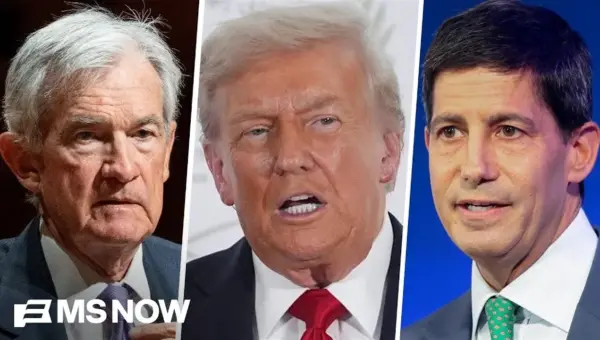
President Trump is threatening to fire Fed Chair Jerome Powell over a renovation probe, creating a political stalemate. Senator Tom Tillis is blocking Trump's nominee, Kevin Warsh, until the investigation concludes. Warsh himself faces scrutiny over his vast personal wealth, estimated between $135-226 million, raising conflict of interest concerns.
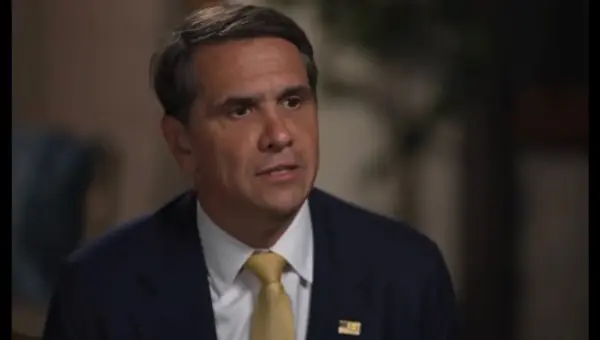
AG’s Shocking Defense: Trump’s DOJ is a ‘Good Thing’!
Acting Attorney General Todd Blanch's comments suggest the Department of Justice should openly serve the president's political agenda. This radical departure from tradition raises alarms about the politicization of justice and its impact on democracy.


Global Oil Crisis Fuels US Economic Divide
A massive influx of oil tankers to the Gulf of Mexico signals a global supply crisis, not American victory. While some celebrate, the reality points to soaring prices and economic hardship for average Americans, benefiting only big oil companies and traders.