Iran’s Supreme Leader Dead: Regime Stability Questioned
Ayatollah Ali Khamenei, Iran's Supreme Leader for over three decades, has died. His passing follows a period of intense regional conflict and internal unrest, raising questions about the future stability of the Islamic Republic. International reactions range from condemnation to cautious optimism, while regional powers fear being drawn further into the escalating tensions.

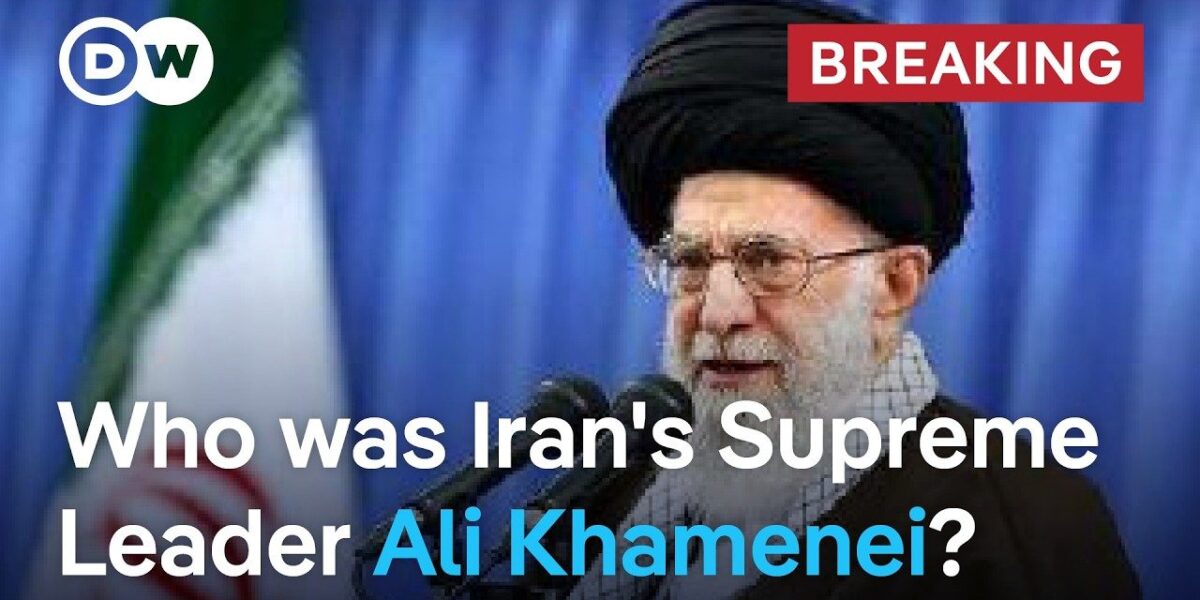
Ayatollah Ali Khamenei’s Death Marks End of Era in Iran
Ayatollah Ali Khamenei, the Supreme Leader of Iran, has died, marking the end of a turbulent period in Iranian history. Khamenei, who came to power in 1989, maintained a firm grip on the nation, overseeing decades of confrontation with the United States, which the regime famously labeled “the great Satan.” For over three decades, Khamenei was the most powerful figure in Iran, viewed by some as a revolutionary hero and by others as a brutal dictator.
From Cleric to Supreme Leader: Khamenei’s Rise
Born in Mashhad, Iran’s religious heartland, Ali Khamenei began his clerical training at the age of 11. At the time, Iran was a secular monarchy under the Shah. Khamenei joined the religious opposition led by Ayatollah Ruhollah Khomeini, his teacher, and was repeatedly arrested by the Shah’s secret police. Following the 1979 Islamic Revolution, which overthrew the Shah, Khamenei rapidly ascended through the ranks of the new Islamic Republic. Upon Khomeini’s death in 1989, Khamenei, despite acknowledging his own lack of the requisite religious standing, was elected Supreme Leader, famously stating, “I know that and you gentlemen know it too. You have to cry tears of blood for any Islamic society which is even contemplating electing me as their leader.”
Decades of Authoritarian Rule and Regional Tensions
As Supreme Leader, Khamenei wielded ultimate authority over Iran’s political and religious spheres. He intensified animosity towards Israel and the United States, repeatedly denying the Holocaust. Khamenei reinforced the Islamic Republic’s strict religious framework, expanding its control over daily life, curtailing free speech, and building a formidable surveillance and security apparatus. The Revolutionary Guard was transformed into a powerful entity overseeing civil society and suppressing dissent. This role came into sharp focus in 2009 during widespread protests against alleged election fraud, and in subsequent years, mass demonstrations erupted due to economic hardship, soaring fuel prices, and water shortages. The most significant challenge to his rule occurred in 2022 following the death of Mahsa Amini while in the custody of the so-called morality police, sparking protests that led to hundreds of demonstrators being killed and countless others detained and tortured.
Khamenei’s Final Days and Disappearance
In his final years, particularly in 2025, as Israeli and US airstrikes targeted Iran’s nuclear program and killed senior commanders, Khamenei became increasingly reclusive. He appeared only in pre-recorded statements, reportedly hiding in an undisclosed location, inaccessible even to top officials. This disappearance during a critical period for the Islamic Republic created a power vacuum and further eroded any remaining trust in his leadership.
International Reactions and the Question of Succession
The death of Ayatollah Khamenei has drawn significant international attention. In the United States, President Trump confirmed the death via Truth Social, referencing a “major operation” and “coordinated airstrikes with the Israeli air force.” Defense Secretary Peter called the operation “the most lethal, the most complex and most precision aerial operation in history.” However, questions have been raised regarding the transparency and timing of these actions, especially given conflicting reports about Iran’s nuclear capabilities. In Congress, reactions were sharply divided along partisan lines. Republicans largely praised the strike as decisive action against Iran’s nuclear threat, while Democrats expressed concerns about its constitutionality and the risk of wider regional conflict, demanding a congressional vote on the use of military force.
On the ground in the US, public reaction was mixed. Protests against the military escalation occurred near the White House, while members of the Iranian diaspora expressed happiness and thanked the President. This presents a challenge for the Trump administration, as it appears to contradict his campaign promise to end “endless wars,” given the multiple strikes conducted in various countries during his second term.
Israel’s Perspective: A Historic Turning Point?
From Jerusalem, the death of Khamenei is viewed as a significant, potentially historic, turning point. Ayatollah Khamenei was seen as the primary architect of decades of hostility, funding groups like Hamas, Hezbollah, and the Houthis, which have inflicted considerable pain on Israel. The killing of Khamenei and Major General Mohammad Reza Zahedi of the Revolutionary Guard is considered a major military success. However, Israeli officials acknowledge that this does not guarantee an immediate regime change. Reports suggest that preparations for succession are underway, with Iran’s president, head of the judiciary, and a jurist of the Guardian Council tasked with managing a transitional period.
Regional Impact: Strikes on Israel and the UAE
The events have not been without immediate repercussions. Overnight, Israel experienced multiple air raid alerts, with air defenses working to intercept missiles and drones. A ballistic missile struck an apartment block in Tel Aviv, causing significant damage and injuring several people, including children. In the United Arab Emirates, Dubai experienced explosions following the interception of drones launched from Iran. While most of the incoming fire was intercepted, some debris landed in residential areas, and two people were injured. Dubai and Abu Dhabi airports also sustained damage. The attacks on civilian infrastructure have shocked residents, who had anticipated potential strikes on US bases in the region rather than on their own infrastructure.
The UAE’s Response and Fears of Escalation
The UAE has condemned the strikes as a violation of sovereignty and international law, while attempting to project stability. There has been no talk of retaliation, and US military bases within the UAE have not been authorized to launch attacks on Iran. The primary goal appears to be enduring the current situation, hoping that air defenses, supported by the Americans, can fend off further attacks. However, there is a significant concern that the Gulf region could be drawn directly into the conflict. Gulf countries have reportedly been trying to dissuade the US administration from escalating actions against Iran, seeking de-escalation rather than direct involvement. The current situation raises questions about the long-term relationship between the UAE and Iran, potentially damaging the UAE’s image as an oasis of stability. The fear is that Iran’s actions are intended to pressure Gulf states, allies of the US, to exert influence for a de-escalation, though the effectiveness of this strategy remains uncertain.
The Future of Iran’s Regime
The death of Ayatollah Ali Khamenei undoubtedly represents a pivotal moment for Iran and the wider Middle East. While the immediate aftermath has seen a coordinated military response and retaliatory strikes, the long-term implications for Iran’s theocratic regime remain to be seen. The internal succession process, the response of regional and international powers, and the potential for further instability will be critical factors to monitor in the coming weeks and months.
Source: Why the killing of Ayatollah Khamenei does not signify the decapitation of Iran's theocratic regime (YouTube)

Related Articles
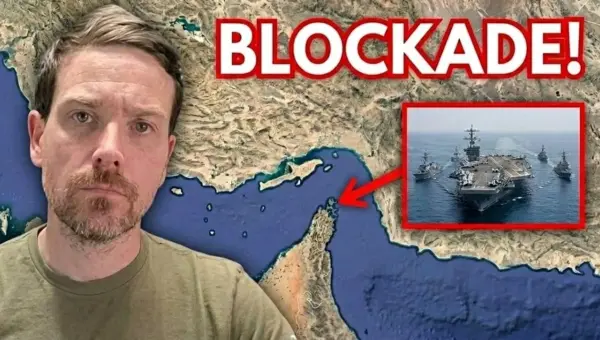
US Navy Blockade Tightens Grip on Iran’s Oil
The US Navy has imposed a strict blockade on Iranian ports, aiming to cripple the nation's oil exports and economy. With warships enforcing the closure, Iran faces significant financial pressure. The long-term effectiveness and potential for escalation remain key concerns.


Trump’s Iran Deal Talk: A Mirror of His Own Desires?
Donald Trump's repeated claims that Iran "wants a deal very badly" might be more about his own desire for an agreement than Iran's. This analysis explores his rhetoric and its potential implications for foreign policy.
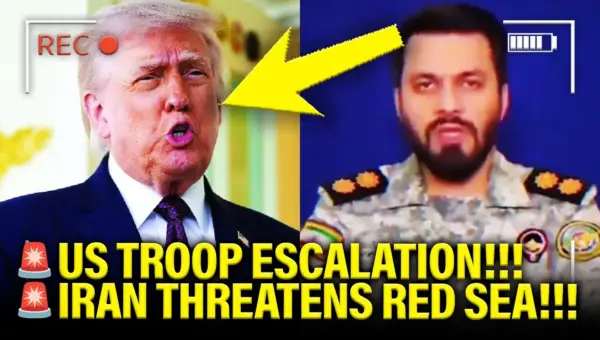
Trump’s Middle East Gambit: Escalation or Empty Threat?
The US is sending troops and imposing a blockade in the Middle East, signaling escalation. Yet, conflicting messages from Donald Trump suggest peace is near. This analysis explores the contradictory actions, Iran's defiant response, and the potential global economic and political fallout.