IRA’s Enniskillen Bombing: Who Ordered the Attack?
A deep dive into the IRA's 1987 Enniskillen bombing reveals lingering questions about who ordered the attack and why truth remains elusive. The investigation explores former IRA perspectives, internal dissent, and the controversial role of Martin McGuinness, whose transition to a peace process leader may have shielded him from accountability.

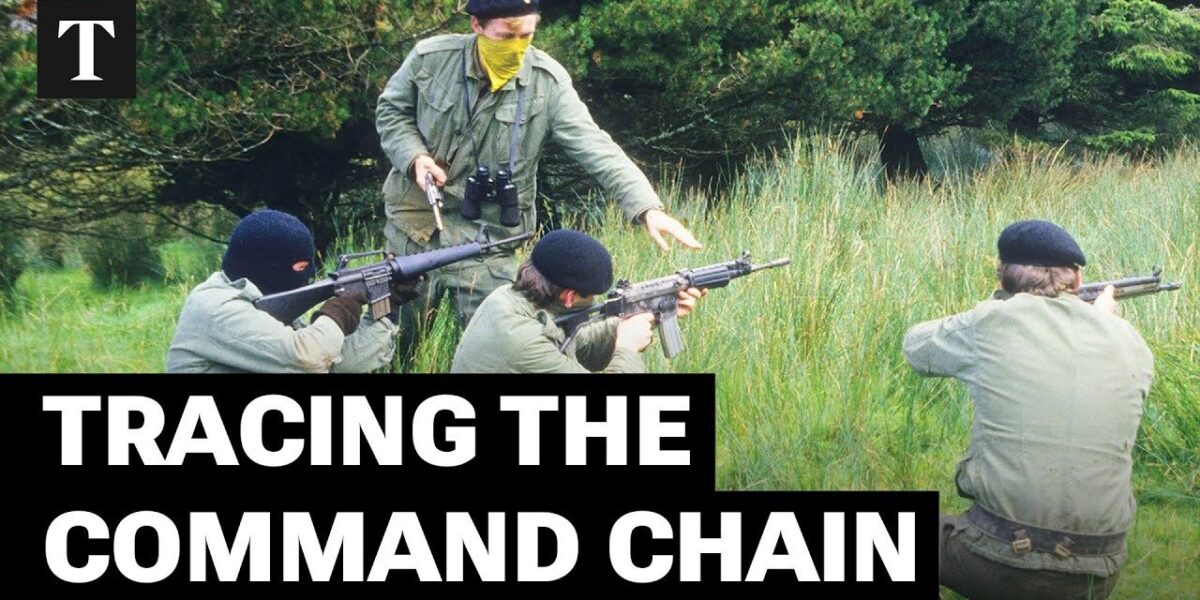
Unraveling the Enniskillen Bombing: The Search for Responsibility
On a solemn Sunday afternoon in November 1987, a Provisional IRA bomb detonated at the Remembrance Day parade in Enniskillen, Northern Ireland, claiming 12 innocent lives and injuring many more. This devastating act of terrorism, which targeted civilians commemorating fallen soldiers, has remained a deeply painful and controversial event. Decades later, questions persist about who gave the order for the attack and why the truth has remained so elusive, a central theme explored in “The Poppy Debunk,” a podcast series from The Times and Sunday Times.
Inside the IRA: A Young Volunteer’s Perspective
The investigation delves into the mindset and operational realities of the IRA through the recollections of a former volunteer, codenamed “Ushin,” who spoke anonymously. Ushin joined the IRA in Enniskillen as a teenager in the early 1970s, a period marked by intense conflict. He described a unit with limited resources, where weapons were earned through “kills,” exclusively targeting members of the crown forces. “To my mind, it was a war situation. And it was a justifiable response the way we were being treated,” Ushin stated, reflecting on his motivations at the time.
Intriguingly, Ushin revealed that he and another volunteer had scoped out the Remembrance Day parade in Enniskillen as a potential target around 1972 or 1973. However, they deemed the operation “absurd” due to the high risk of civilian casualties. “We sat and observed. We seen girl guides in procession. We seen Boys’ Brigade, Boy Scouts, what have you. Loads of kids. We seen a family occasion,” he recalled. This earlier assessment starkly contrasts with the IRA’s decision to proceed with the bombing 15 years later, leaving a critical question unanswered: what changed?
The Turning Point: Bloody Sunday and IRA Recruitment
The podcast traces the evolution of the conflict, highlighting Bloody Sunday in January 1972 as a pivotal moment. The shooting of 14 unarmed civil rights protestors by British paratroopers in Derry profoundly affected many Catholics, including Ushin’s father, who was seen crying. “The straw that broke the camel’s back was Bloody Sunday,” the podcast explains, detailing how it galvanized nationalist sentiment and fueled recruitment for groups like the IRA.
Ushin’s own path into the IRA was influenced by this atmosphere. “The straw that broke the camel’s back was Bloody Sunday. A mass civil rights movement had grown in the late 60s. It was driven by the overwhelming feeling of many Catholics that they were second-class citizens discriminated against over housing, jobs, and voting,” the narrative states. He was sworn into the IRA shortly after, a decision he later described as a response to perceived injustices.
Internal Backlash and Political Fallout
The Enniskillen bombing generated significant backlash not only from the public but also from within the Republican movement itself. Anthony McIntyre, a former IRA prisoner who served 18 years, recounted the reaction in the Maze prison. “We didn’t hear civilian casualties. We felt that civilian casualties were an inevitable result of the conflict,” McIntyre said. However, upon witnessing the news coverage and hearing a comment from a non-political prisoner that disparaged the Protestant victims, other prisoners reacted with anger, leading to a near-physical altercation. “Well, what are you mouthing off for? These people are innocent,” one prisoner reportedly stated.
The bombing also created immense pressure for Sinn Féin, the IRA’s political wing. The party had to navigate the delicate balance of defending the armed campaign while simultaneously seeking to build political support. The loss of half their seats in the Fermanagh District Council election following the bombing underscored the public’s anger and the difficulty of reconciling the IRA’s actions with Sinn Féin’s democratic ambitions. The then-Sinn Féin chairman of Fermanagh District Council faced intense scrutiny, with protestors demanding that those responsible be brought to justice.
The Shadow of Martin McGuinness
A central figure in the investigation is Martin McGuinness, a prominent IRA commander who later transitioned into a key political leader and architect of the peace process. The podcast raises critical questions about his potential involvement and the subsequent reluctance to investigate him.
“On the Thursday before Remembrance Sunday in 1987, a car carrying four alleged members of the IRA was picked up by Irish police on a rural road in Donegal about 30 miles from Enniskillen. One of the men in the car was Martin McGuinness.”
McGuinness, who had a conviction for IRA membership and was reportedly the IRA’s Northern Commander at the time, was allegedly in proximity to Enniskillen days before the bombing. Journalist Peter Taylor, who interviewed McGuinness for his documentary “Age of Terror,” recalled McGuinness denying he was Northern Commander at the time. “He looked me straight in the eye and said, ‘I wasn’t.’ And I said, ‘But I understand from my intelligence sources that you were.’ I think his standard answer was, ‘Yeah, but that’s uh that’s Brit propaganda.'” Taylor stated he did not believe McGuinness.
The investigation suggests that McGuinness’s crucial role in secret talks with the British government and his later position as a leading negotiator in the peace process may have shielded him from scrutiny. “If the ultimate responsibility for so many civilian deaths lay with Martin McGuinness, but he was also an IRA leader the British government had had dealings with, could that be one reason why the truth about Enniskillen has remained so elusive?” the podcast posits.
Obstacles to Truth and Reconciliation
The podcast highlights significant obstacles faced by investigators and victims’ families seeking accountability. In 2011, during a cold case review, a request to interview McGuinness was reportedly met with resistance from British government officials who deemed it “not a good idea.” Peter Taylor explained the sensitivity: “I think that would have been a consideration, but I can understand why police officers who wanted to interview McGuinness were told to be careful because of the sensitivity of the political situation… because it could be dynamite.”
The police declined to participate in the podcast, citing legal prohibitions on continuing Troubles-related investigations. The British government did not directly answer questions about blocking inquiries but pointed to the Independent Commission for Reconciliation and Information Recovery as the body for reviewing such cases. Victims’ families, like Clive Armstrong and Cathy Gormley, express feelings of being “forgotten” and collateral damage in the pursuit of peace, lamenting the lack of a public re-examination or inquiry into the bombing.
The Path Forward: Demanding Justice for Victims
Despite the passage of time and the complexities of the peace process, the podcast concludes by emphasizing the enduring need for truth and accountability for the victims of the Enniskillen bombing. “It is something that deserves to be investigated properly, thoroughly and without cover-up,” the narrative urges. The final episode of “The Poppy Debunk” promises further revelations as new leads emerge, continuing the search for answers to one of Northern Ireland’s most tragic events.
Source: The IRA's Enniskillen Bombing: Who Gave the Order? (YouTube)

Related Articles
Retirement Savings Fall Short for Most
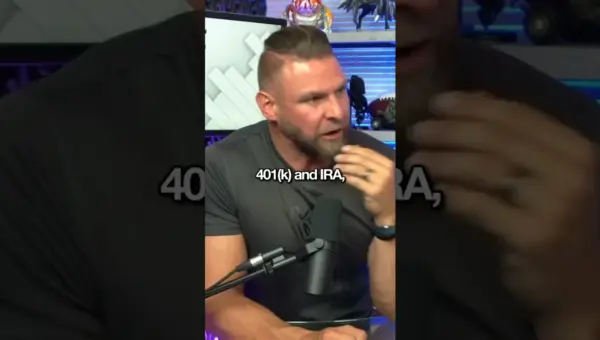
Many believe saving diligently in 401(k)s and IRAs is enough for wealth. However, this "accumulation mindset" often falls short due to limited savings potential and life's unpredictability. Real wealth building requires more than just saving; it needs active income generation and strategic growth.
Rory’s Masters Dream Fulfilled: Hollywood Celebrates
Rory McIlroy has finally captured the Masters, completing his career Grand Slam and bringing immense joy to his hometown of Holywood. The victory capped a long and often difficult journey, overcoming years of pressure and doubt at Augusta National.
UK Crumbles? Independence Movements Gain Unforeseen Traction
The United Kingdom faces a growing challenge from independence movements in Scotland, Wales, and Northern Ireland. With pro-independence parties gaining traction and legal pathways to separation, the centuries-old union is under increasing pressure, a reality largely unknown to many outside the UK.