The Illusion of Roles: How Expectations Fuel Disappointment
This analysis explores the provocative idea that disappointment arises from the roles we assign to others. By deconstructing these self-imposed expectations, we can potentially alleviate frustration and foster healthier relationships.


The Illusion of Roles: How Expectations Fuel Disappointment
In the intricate tapestry of human relationships, we often find ourselves weaving narratives, assigning roles to the people who populate our lives. From the casual acquaintance to the closest confidant, each individual is subtly – or not so subtly – cast in a part within our personal drama. This video transcript delves into a provocative idea: that our persistent disappointment stems not from the actions of others, but from the roles we ourselves have assigned to them. It suggests a radical reframing of our expectations, urging us to shed these self-imposed constructs and embrace a life free from the inherent frustrations they breed.
The Architect of Expectations
The core argument presented is that we are the sole arbiters of the roles people play in our lives. While others might suggest or imply certain capacities they can fulfill, the ultimate decision rests with us. “Ultimately, it is you who assigns people roles,” the transcript asserts, highlighting that this assignment is an internal process, regardless of whether the other person agrees or is even aware of it.
This act of assigning roles, the transcript argues, lays the groundwork for disappointment. When an individual’s behavior deviates from the script we’ve written for them – the girlfriend who misses a birthday, the sibling who doesn’t check in after a stressful event – we experience frustration. This disappointment is framed as a direct consequence of the gap between our assigned role and their actual conduct. The transcript poses a powerful question: “If we had not assigned those roles to them, they could not have failed at them, failed, so to speak.” This suggests that the failure isn’t inherent in the person, but in our rigid expectation of their performance within a predefined capacity.
The Cycle of Obligation and Resentment
The transcript further explores the transactional nature of these assigned roles. We often grant people roles in our lives with the implicit understanding that they will reciprocate, fulfilling our needs and expectations. This creates a subtle, often unconscious, web of obligation. “I give them a role in return. I am something for them in their life. Yeah, but you only give it in return because you ask for something in return,” the text points out. This reciprocal dynamic, however, is presented as the very engine of our problems. If we were to cease asking for something in return, if we were to operate without these pre-assigned obligations, the transcript posits that our problems would vanish.
The constant monitoring and enforcement of these roles consume significant mental and emotional energy. We spend our time “servicing your own roles that you think you have in other people’s lives and checking up on the roles that you have assigned to people in your life.” This energy, the transcript suggests, could be redirected towards a more fulfilling and less fraught existence, one where we live our lives without owing anything to anyone and without demanding anything from them.
A Radical Experiment in Letting Go
The proposed solution is a radical experiment: to stop assigning roles altogether. The transcript encourages readers to try this on a small scale, perhaps by removing one role from one person. The idea is to observe the outcome, to see if life improves when expectations are suspended. “Let’s take one role away from one person. Let’s not expect anything of that person and let’s just have them be,” the text advises.
This approach extends to our own perceived roles in others’ lives as well. We are encouraged to question whether we truly owe anything to anyone, or if anyone owes anything to us. By dismantling these self-imposed structures, the transcript argues, we can demonstrate that “problems are not real. That in fact problems do not exist.” The ultimate promise is that by letting go of these assigned roles, we not only improve our own well-being but also foster healthier, more authentic relationships.
Why This Matters
The implications of this perspective are profound. It challenges the very foundation of how we navigate our social world. Instead of viewing relationship issues as stemming from external factors or the failings of others, this viewpoint places the locus of control squarely within ourselves. It suggests that much of our suffering is self-inflicted, a byproduct of our own mental frameworks and expectations.
This idea resonates with certain philosophical traditions, particularly those emphasizing mindfulness, acceptance, and non-attachment. By releasing the need to categorize and dictate the behavior of others, we can cultivate a greater sense of peace and resilience. It encourages a more present-moment awareness, appreciating people for who they are rather than for who we wish them to be. The trend towards greater self-awareness and emotional intelligence in contemporary society makes this a timely and relevant concept.
Historical Context and Future Outlook
The concept of managing expectations in relationships is not new. Philosophers and spiritual leaders throughout history have spoken about the dangers of attachment and the importance of detachment from outcomes. From Stoicism’s emphasis on accepting what we cannot control to Buddhist teachings on the nature of suffering arising from desire and attachment, the underlying sentiment echoes the transcript’s message. However, the transcript offers a uniquely practical and actionable framework by focusing specifically on the mechanism of ‘assigned roles’ as the primary culprit for disappointment.
Looking ahead, as our lives become increasingly interconnected through digital platforms, the tendency to assign roles and expectations might even be amplified. Social media profiles can become curated versions of individuals, leading us to form expectations based on these constructed identities. The ability to consciously deconstruct these assigned roles, as suggested by the transcript, will be an invaluable skill for fostering genuine connection and maintaining emotional equilibrium in an ever-complex social landscape. The future outlook suggests that embracing this perspective could lead to more authentic, less burdensome relationships, fostering personal growth and a more harmonious existence.
Source: If you get disappointed, you are wrong (YouTube)

Related Articles


Comedian Brad Williams Found Love on Dating App
Comedian Brad Williams shared how a joke dating profile led to him meeting his wife, a taekwondo instructor. He detailed their unique courtship, his views on dating preferences within the dwarf community, and his wife's impressive strength, including a story where she knocked out a man in Vegas.

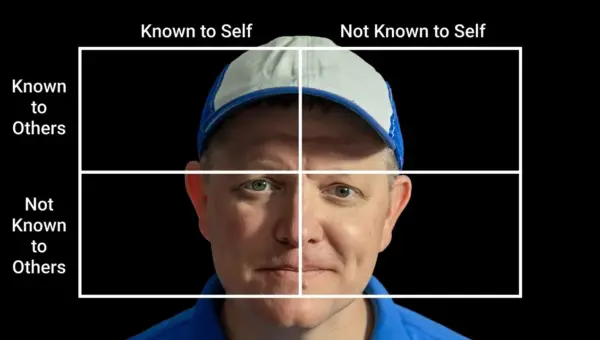
Master Self-Awareness: Unlock Your Potential with the Johari Window
The Johari Window is a psychological tool that helps individuals understand their self-awareness and how they are perceived by others. By dividing self-knowledge into four panes—Arena, Facade, Blind Spot, and Unknown—it offers a framework for personal growth and improved relationships.


Aging Well: Navigating Challenges and Finding Purpose
Discover practical strategies for navigating the challenges of aging, from managing complex trauma triggers to finding new purpose and wisdom. Learn how to care for aging parents while protecting your own well-being.