The Price of Envy: Unmasking the Illusion of Easy Success
A deep dive into the nature of envy reveals it as a fundamental misunderstanding of success, rooted in the illusion that rewards come without cost. By reframing effort as the reward itself and learning to 'follow our judgment home,' we can dismantle envy and cultivate genuine self-awareness and fulfillment.


The Price of Envy: Unmasking the Illusion of Easy Success
In the relentless pursuit of happiness and fulfillment, many find themselves entangled in the corrosive grip of envy. We observe others, seemingly blessed with effortless success, enviable possessions, or serene contentment, and a familiar pang of jealousy arises. Yet, a deeper examination, as explored in a recent discourse, suggests that envy is not merely an emotional response but a profound misunderstanding of reality, rooted in an illusion of things being free and unearned. The core argument is simple yet powerful: nothing is free, and every perceived reward comes with a hidden cost.
The Illusion of Undeserved Success
The transcript posits that much of our envy stems from a flawed perception. We see the glittering prize – the successful career, the beautiful home, the peaceful demeanor – but we remain blind to the arduous journey, the sacrifices, and the unseen struggles that paved the way. The notion that someone else ‘doesn’t deserve’ what they have, or conversely, that ‘we deserve it and don’t have it,’ is presented as a fundamental illusion. This illusion is perpetuated because we only witness the outcome, the curated highlight reel of another’s life, not the behind-the-scenes reality of their efforts and challenges.
This perspective echoes ancient philosophical wisdom, particularly the Socratic emphasis on ‘knowing thyself.’ The discourse highlights that for the ancient Greeks, the work itself was the reward. The process of striving, learning, and growing was intrinsically valuable, not merely a means to an end. True fulfillment, in this view, is found not in the acquisition of external markers of success, but in the internal transformation that occurs through dedicated effort. When we envy, we typically envy superficial attributes – possessions, status, perceived ease – rather than the profound inner peace and self-awareness that come from genuine self-mastery.
The Work as the Reward
The central thesis is that the work required to achieve anything of value is not a burdensome precursor to reward, but the reward itself. This is a radical reframing of our relationship with effort. Instead of viewing work as a necessary evil to attain a desired outcome, it is presented as the very engine of self-discovery and personal growth. The process of engaging in challenging tasks, overcoming obstacles, and refining one’s skills is what allows us to truly know ourselves. The transcript argues that if we were truly engaged in this work, we would have no time or inclination for envy.
The very act of focusing on our own plate, on what is in front of us, is framed as a significant, if not the entirety of, the ‘work.’ This self-directed focus naturally precludes the outward gaze of envy. When we are immersed in our own efforts, we are less likely to compare, to covet, or to feel the sting of inadequacy. The discourse suggests that the absence of envy is a natural consequence of being fully present and engaged in one’s own life and endeavors.
Following Judgment Home: A Path to Self-Awareness
The transcript introduces a powerful diagnostic tool: ‘follow your judgment home.’ This means investigating the root causes of our judgments, particularly those that stem from envy and jealousy. Instead of suppressing these negative emotions, the advice is to trace them back to their origin. This process, it is argued, reveals not only the illusions we hold but also the very mechanisms for overcoming them.
For instance, if our judgment is fueled by envy of someone’s possessions, following that judgment home might reveal a false belief that external wealth equates to happiness. The work then becomes challenging this belief and focusing on what truly brings contentment. Similarly, if our judgments are based on a perceived moral or intellectual superiority – perhaps stemming from religious or philosophical convictions – the ‘work’ is to recognize that judging others is, in itself, a vice that contradicts the very virtues we claim to uphold. The transcript emphasizes that true virtue lies in fairness and compassion, not in pity or condemnation.
“Our own judgments can teach us so much. They can teach us everything. Because once we stop judging, we have learned everything.”
This insight is profound. Judgment, especially when rooted in negative emotions like envy, acts as a mirror, reflecting our own internal conflicts and false beliefs. By confronting these judgments, we gain the opportunity to dismantle the underlying illusions. If jealousy is the source of judgment, addressing the jealousy directly resolves the issue. If a belief in one’s own superior virtue leads to judgment, then the work is to let go of that self-righteousness and embrace humility.
Why This Matters
The implications of this perspective are far-reaching. It offers a constructive framework for dealing with envy and other negative emotions, transforming them from debilitating burdens into catalysts for personal growth. By reframing the concept of ‘work’ as intrinsically rewarding and the source of self-knowledge, it provides a pathway to a more fulfilling and less comparative existence. The emphasis on self-focus and internal development challenges the prevailing societal narrative that often equates success with external validation and material accumulation.
Historical Context and Background
The ideas presented resonate with several philosophical traditions. Stoicism, for example, emphasizes focusing on what is within our control – our thoughts, judgments, and actions – and accepting what is not. Envy, being an external comparison, falls outside of this domain of control. Similarly, Buddhist philosophy teaches detachment from desires and the illusion of a permanent self, which directly combats the roots of envy and dissatisfaction. The ancient Greek ideal of *eudaimonia*, often translated as flourishing or living well, is achieved through virtuous activity and the cultivation of reason, aligning with the notion of the work itself being the reward.
Trends and Future Outlook
In an era dominated by social media, where curated images of success and happiness are constantly on display, the illusion of effortless achievement is amplified. This makes the message of the transcript even more relevant. The trend towards valuing authenticity and mental well-being may offer a counter-narrative, encouraging individuals to seek fulfillment through internal growth rather than external comparison. The future outlook suggests a growing awareness that true contentment is an inside job, cultivated through diligent self-work and a realistic understanding of the costs associated with any perceived success.
Ultimately, the discourse challenges us to shift our focus from what others have to what we are building within ourselves. By recognizing that everything has a price, and that the most valuable rewards are earned through the process of work itself, we can begin to dismantle the illusions that fuel envy and cultivate a more grounded, fulfilling, and self-aware existence. The journey of ‘following our judgment home’ is not just about eradicating envy; it is about embarking on the most important work of all – the work of knowing ourselves.
Source: You have no time for envy (YouTube)

Related Articles


Michael Pollan Explores Consciousness Beyond the Brain
Michael Pollan's latest work challenges the idea that consciousness is merely the brain's computation. He explores the mystery of subjective experience and questions if our current scientific methods can truly grasp the inner world. Pollan suggests that modern life pollutes our consciousness, but moments of awe and certain substances might offer pathways to deeper awareness.

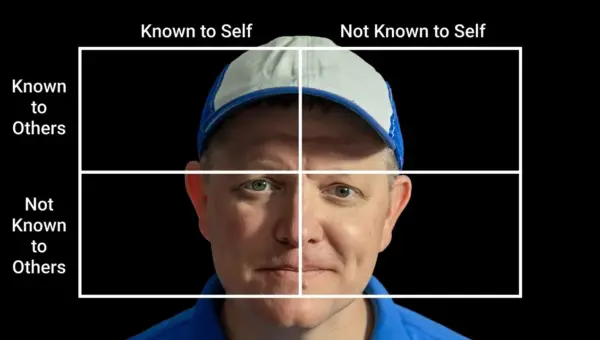
Master Self-Awareness: Unlock Your Potential with the Johari Window
The Johari Window is a psychological tool that helps individuals understand their self-awareness and how they are perceived by others. By dividing self-knowledge into four panes—Arena, Facade, Blind Spot, and Unknown—it offers a framework for personal growth and improved relationships.


Man Claims Women Are Evil, Then Says He Follows Them
A man's surprising statements about women, leadership, and morality reveal a complex personal philosophy. He initially questions women's roles but later admits he follows them, deriving his sense of good from them.