Shadow Fleet: China’s ‘Fishing’ Militia Unveils Sophisticated Blockade Drills, Raising Taiwan Alarm
China's 'fishing' fleet recently executed unprecedented, highly coordinated maneuvers in the East China Sea, widely interpreted as sophisticated blockade drills by its maritime militia. These 'grey zone' tactics, involving thousands of vessels forming precise formations, are seen as a serious threat to Taiwan, aiming to disrupt vital commercial traffic and challenging international law by blurring the lines between civilian and military actions. Global governments and industries are urged to plan for potential sea lane blockades and enhance identification of these dual-purpose vessels.

Shadow Fleet: China’s ‘Fishing’ Militia Unveils Sophisticated Blockade Drills, Raising Taiwan Alarm
In a chilling display of strategic ambiguity and military precision, China’s vast fishing fleet has executed highly coordinated, large-scale maneuvers in the East China Sea, sparking alarm among international observers and intelligence communities. These unprecedented formations, far removed from typical fishing behavior, are widely interpreted as drills for a potential blockade of Taiwan, leveraging a ‘maritime militia’ that blurs the lines between civilian and military assets. The sophistication and sheer scale of these operations suggest a new, escalated dimension to Beijing’s ‘grey zone’ tactics in the Indo-Pacific, demanding urgent attention from global governments and industries.
The Unsettling Spectacle in the East China Sea
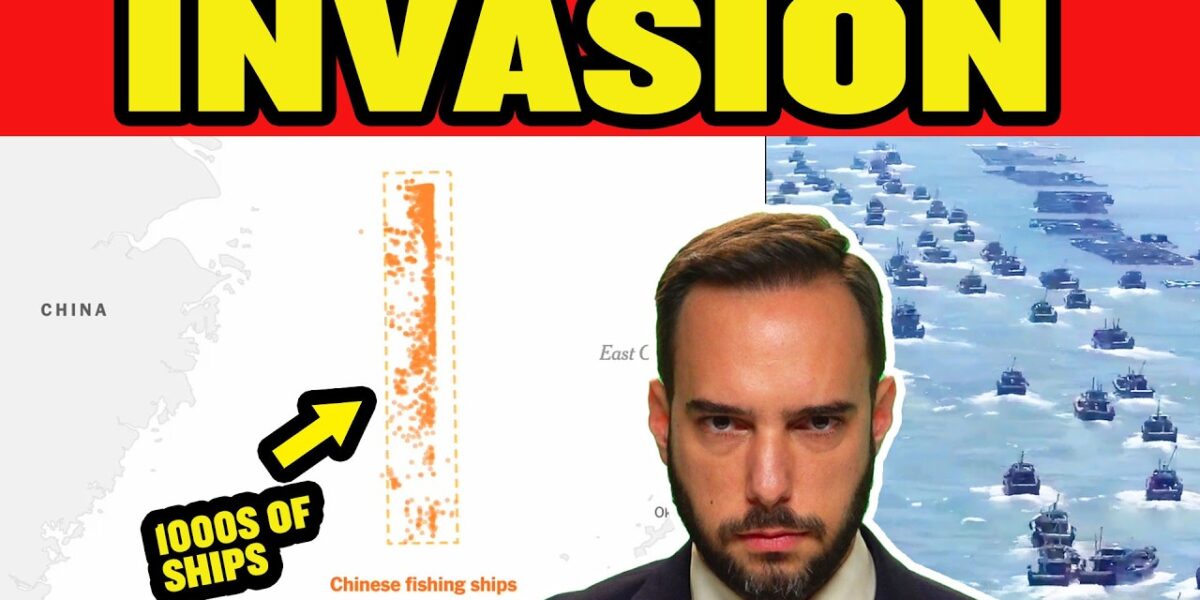
The unusual activity first captured attention on December 25th, Christmas Day, when hundreds, if not thousands, of Chinese fishing vessels abruptly ceased their normal operations in the East China Sea. Instead of dispersing to hunt for marine life, they began forming precise, geometric patterns. A New York Times graphic illustrated their initial formation: a colossal reverse L-shape stretching approximately 290 miles from north to south. This was no random gathering; the coordination spoke of deliberate intent.
The maneuvers continued into the new year. Between January 9th and January 12th, the same area witnessed another remarkable display. The ships reformed, this time into a nearly straight line, an estimated 200 meters long, maintaining this formation for an astonishing 30 hours. The number of vessels involved in these synchronized movements was staggering – thousands of boats, all executing their roles with remarkable precision. This level of coordination, scale, and duration immediately raised red flags for maritime security analysts globally.
China’s Enormous Fishing Fleet: A Global Powerhouse with a Dual Purpose
To understand the significance of these maneuvers, one must first grasp the sheer magnitude and operational reach of China’s distant-water fishing (DWF) fleet. It is, by far, the largest in the world, renowned for its pervasive presence across the globe’s oceans. This fleet is so vast that its activities are visible from space, with satellite imagery often capturing an eerie red glow emanating from ships hunting giant squid at night, a testament to its industrial scale.
According to Oceana, a leading ocean conservation organization, China’s fishing fleet comprises an estimated 57,000 industrial fishing vessels. This colossal armada accounted for a staggering 44% of the world’s visible fishing activity between 2022 and 2024. While ostensibly engaged in commercial fishing, this fleet’s extensive global footprint and state backing have long raised concerns about overfishing, illegal, unreported, and unregulated (IUU) fishing practices, and environmental degradation in the waters of other sovereign nations. Its aggressive expansion into foreign exclusive economic zones (EEZs) has frequently led to diplomatic disputes and confrontations, particularly in Southeast Asia, Latin America, and Africa.
However, the recent formations in the East China Sea transcended the typical concerns associated with commercial fishing. As the deputy director of the Asia Maritime Transparency Initiative (AMTI) at the Center for Strategic and International Studies (CSIS) noted, “the number of ships involved is more than anything I’ve seen before.” This sentiment underscored the unprecedented nature of these synchronized movements, signaling a purpose far beyond the pursuit of seafood.
Dismissing the Official Narrative: ‘Normal Fishing Behavior’ vs. Military Precision
Beijing’s official response to the international scrutiny was characteristically dismissive. The Chinese embassy in Washington stated that these waters are rich in seafood, and the peak winter fishing period runs from November to February, implying the activities were nothing more than routine commercial operations. This narrative, however, strains credulity when juxtaposed with expert analysis.
A professor at the U.S. Naval War College unequivocally stated that “the scale, geometry, coordination, and rapid assembly, and dispersal of these formations are simply irreconcilable with normal fishing behavior.” The expert highlighted the “military precision” evident in the maneuvers, a level of formality incongruous with the ad-hoc nature of typical fishing expeditions. Fishermen, often characterized by their independent spirit and bumper stickers proclaiming ‘I’d rather be fishing,’ do not spontaneously coalesce into miles-long, geometrically precise formations for extended periods. This stark contrast between Beijing’s explanation and the observed reality solidified suspicions that these were, in fact, exercises by China’s maritime militia.
China’s Maritime Militia: A ‘Grey Zone’ Force
The concept of a ‘maritime militia’ is central to understanding China’s strategy in its territorial disputes and geopolitical ambitions. It refers to a fleet of ostensibly civilian vessels – primarily fishing boats – that are covertly organized, trained, and paid by the Chinese Communist Party (CCP) to serve dual purposes beyond commercial fishing. These ships are equipped and available for state-directed missions, acting as an irregular, para-military force that operates in the ‘grey zone’ – actions below the threshold of conventional warfare but above routine peacetime activities.
The maritime militia has a documented history of involvement in Beijing’s assertive claims in the South China Sea. Examples include:
- Blocking Foreign Vessels: Militia ships have been deployed to physically block resupply vessels belonging to other countries, such as the Philippines, from reaching their outposts in disputed territories. They also harass and impede the movement of coast guard ships from neighboring nations.
- Asserting Territorial Claims: These vessels are frequently sent to anchor in contested waters for weeks or even months, establishing a persistent Chinese presence that aims to solidify Beijing’s illegal territorial claims. This tactic, akin to a metaphorical ‘girlfriend standing in a parking space,’ creates facts on the ground (or at sea) that are difficult to challenge without escalating to direct military confrontation.
- Surveillance and Intelligence Gathering: Many militia vessels are equipped with high-tech surveillance equipment, enabling them to gather intelligence on foreign naval movements, commercial shipping patterns, and underwater topography, providing valuable data to the People’s Liberation Army (PLA).
The Pentagon has consistently highlighted the increasing size and sophistication of the CCP’s maritime militia over the last decade. However, the recent East China Sea formations represent a significant escalation in their capabilities, demonstrating a new level of coordinated operational readiness that has profound strategic implications.
Taiwan: The Most Likely Target of These Sophisticated Drills
The consensus among military analysts is that the primary target of these advanced exercises is Taiwan. The strategic value of these maneuvers lies in their potential application for a naval blockade of the self-governing island, which Beijing views as a renegade province that must be reunified with the mainland, by force if necessary.
While the lines formed by the fishing vessels are not solid and could not, by themselves, enforce a complete blockade, their role would be to assist the People’s Liberation Army Navy (PLAN) or the China Coast Guard (CCG). As the expert from CSIS explained, these formations could be instrumental in “dissuading, rerouting, and ultimately stopping commercial traffic, cargo, fuel shipments to Taiwan.” Imagine a scenario where thousands of ‘civilian’ vessels swarm around Taiwan, creating a maritime traffic jam worse than the most congested urban highways. This deliberate obstruction would choke Taiwan’s vital lifelines, disrupting its economy, depleting its resources, and undermining public morale – effectively a form of economic warfare that could precede or accompany a direct military invasion.
The concept of a “floating great wall” – a term coined to describe such a blockade – underscores the sheer scale of the threat. Given the immense size of China’s maritime militia and its distant-water fleet, it is not difficult to envision these combined forces, alongside the PLAN, encircling the entirety of Taiwan. Such an encirclement would present an unprecedented challenge to international shipping and global trade, with Taiwan being a critical node in the global supply chain, particularly for semiconductors.
The ‘Trojan Seahorses’ Dilemma: Challenges for International Response
One of the most insidious aspects of China’s maritime militia strategy is the deliberate ambiguity it creates, posing significant challenges for international responses. Striking back or even confronting these vessels is fraught with legal and operational complexities. The ‘Trojan seahorses’ dilemma arises from the difficulty in distinguishing between genuine civilian fishing boats and those acting as militia assets.
Under international maritime law, specifically the Convention on the International Regulations for Preventing Collisions at Sea (COLREGs), naval ships, with few exceptions, are required to give way to vessels engaged in fishing. This ‘pedestrian right of way’ for boats means that a US Navy destroyer, for example, would be legally obligated to avoid collision with a vessel displaying fishing gear, even if that vessel is part of a coordinated militia operation. Proving that any given vessel is, in fact, not fishing but acting as a state-sponsored paramilitary unit is exceptionally difficult in the heat of the moment, especially without clear, undeniable evidence of hostile intent or direct military command.
This confusion is by design. It allows Beijing to project power and assert claims without crossing the clear threshold of armed conflict, thereby complicating the calculus for potential adversaries and making de-escalation far more intricate. Moreover, these militia operations could work to block crucial sea lanes vital for global trade, impacting not only regional economies but also the US and global economy, given the interconnectedness of modern supply chains.
Broader Geopolitical Context and Implications
These sophisticated maritime militia drills are not isolated incidents but fit within China’s broader strategy of asserting its regional hegemony and challenging the existing international order. Beijing’s aggressive actions in the South China Sea, including the construction of artificial islands and militarization of disputed features, and its persistent pressure on Japan over the Senkaku/Diaoyu Islands in the East China Sea, demonstrate a pattern of using ‘grey zone’ tactics to incrementally advance its territorial and strategic goals without triggering a full-scale military conflict.
The weaponization of its massive fishing fleet provides China with a potent, deniable tool for coercive diplomacy. It allows Beijing to test the resolve of its neighbors and international partners, probe their response mechanisms, and gradually alter the status quo in its favor. The economic implications of a potential Taiwan blockade extend far beyond the island itself. Taiwan’s pivotal role in global technology supply chains, particularly in semiconductor manufacturing, means that any significant disruption would send shockwaves through the world economy, impacting everything from consumer electronics to automotive industries.
The increasing militarization of the Indo-Pacific, spurred by China’s assertive actions, necessitates a robust and coordinated response from like-minded nations committed to upholding a free and open international order. The blurring of lines between civilian and military assets represents a significant challenge to traditional notions of maritime security and international law, requiring innovative diplomatic, legal, and operational countermeasures.
Recommendations for a Proactive Response
Given the escalating sophistication of China’s maritime militia tactics, experts are calling for urgent, proactive measures from governments and the private sector alike:
- Strategic Planning for Supply Chain Resilience: According to Jill Goldenzil, an expert on security and business risk, businesses and governments must immediately begin planning for the possibility of sea lanes being blocked. This involves developing comprehensive alternative routes, supply chain diversification strategies, and robust contingency plans (Plan B through Z) to mitigate the economic fallout of such disruptions.
- Enhanced Identification and Exposure: Analysts and intelligence agencies need to intensify efforts to identify and expose vessels belonging to China’s maritime militia and distant-water fleet. This requires advanced satellite imagery analysis, signals intelligence, human intelligence, and open-source intelligence gathering. Publicly exposing these vessels and their affiliations can help strip away the veneer of deniability and build international consensus against these coercive tactics. Some of this work is already underway, but more resources and international cooperation are needed.
- Sustained US Presence and Support: Above all, the United States must maintain an active and robust presence in the Indo-Pacific. This includes regular freedom of navigation operations, joint military exercises with allies and partners, and continued diplomatic, economic, and security support for Taiwan and its neighbors. A strong, visible commitment from the US and its allies signals deterrence and reassures regional partners.
- International Collaboration and Information Sharing: Fostering greater international collaboration among maritime security agencies, navies, and coast guards is crucial. Sharing intelligence, best practices, and developing common protocols for responding to ‘grey zone’ challenges can enhance collective security.
- Technological Countermeasures: Investing in advanced maritime domain awareness technologies, including AI-powered analytics for satellite data, drone surveillance, and underwater sensors, can improve the ability to monitor, track, and identify militia activities in real-time.
Conclusion: A New Era of Maritime Coercion
The recent, highly sophisticated maneuvers by China’s ‘fishing’ fleet in the East China Sea serve as a stark warning. They underscore Beijing’s willingness to employ its vast maritime resources, including its shadowy maritime militia, as a coercive tool to advance its geopolitical ambitions, particularly concerning Taiwan. The deliberate blurring of lines between civilian and military assets presents a formidable challenge to international law and regional stability, demanding a multi-faceted and resolute response. As the Indo-Pacific stands at a critical juncture, understanding and effectively countering these ‘grey zone’ tactics is paramount to safeguarding global trade, upholding international norms, and preserving peace in one of the world’s most vital strategic regions. The time for proactive planning and collective action is now, for the shadow fleet’s drills are a prelude to a potential future where economic lifelines become strategic choke points.
Source: This Was Too Sophisticated To Be An Accident (YouTube)

Related Articles


Oil Prices Surge to $91 Amid Geopolitical Tensions
Oil prices have surged to $91 a barrel, driven by disruptions in the Strait of Hormuz. This is leading to higher gas prices across the U.S., with California facing particularly steep costs. The situation is fueling debate on energy policy, exports, and the transition to renewable fuels.


China’s Iran Gambit: Deception or a New World Order?
President Trump claims China will stop sending weapons to Iran, but deep skepticism remains due to China's past support and use of spy satellites to aid Iran. This move could be a strategic ploy to weaken the US military.
China Aids Iran Amid US Conflict Escalation
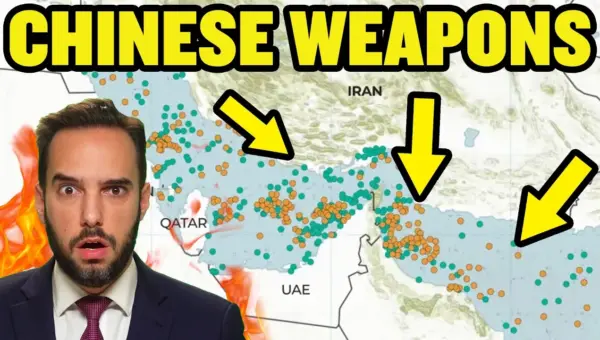
Recent intelligence suggests China is secretly supplying Iran with weapons like MANPADS and sharing critical intelligence, a significant escalation from its previous stance. This move, if confirmed, could deepen regional conflict and lead to severe US economic retaliation, while highlighting long-standing strategic ties between Beijing and Tehran.