Panama Canal Ruling Ignites Geopolitical Firestorm: China Threatens Retaliation Amid US Praise
Panama's Supreme Court has ruled a Chinese-affiliated firm's concession to operate key Panama Canal ports unconstitutional, sparking a fierce geopolitical dispute. While the US praises the decision as a win for national security, China has vehemently condemned it and threatened economic and political retaliation against Panama, further escalating the strategic rivalry in the Western Hemisphere.

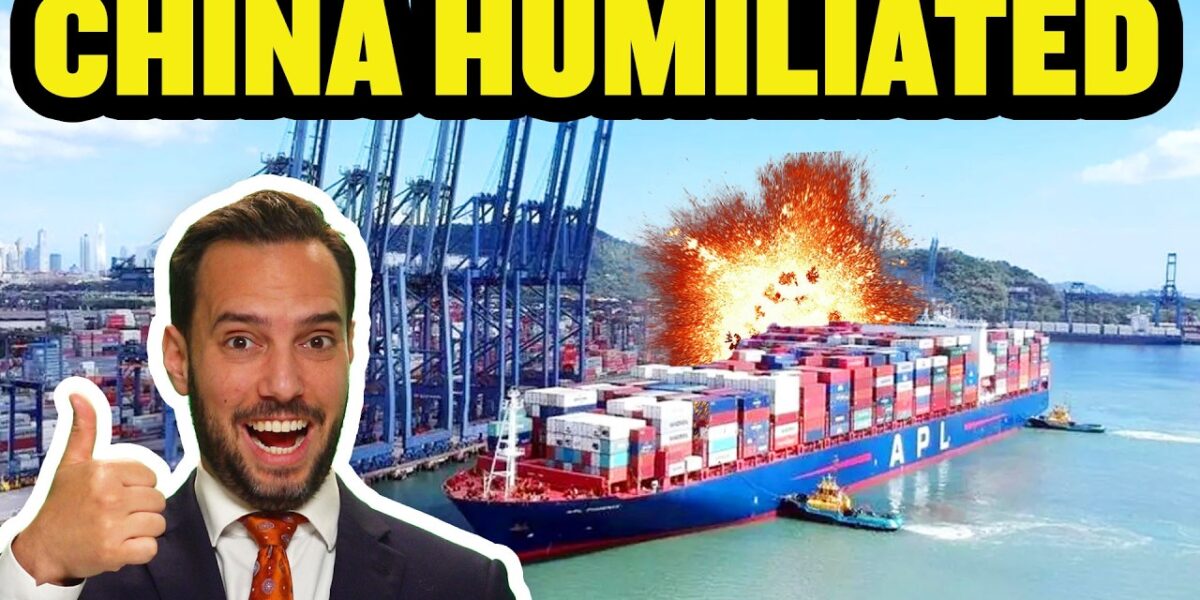
Panama Canal Ruling Ignites Geopolitical Firestorm: China Threatens Retaliation Amid US Praise
In a dramatic turn of events poised to reshape geopolitical dynamics in the Western Hemisphere, Panama’s Supreme Court has delivered a landmark ruling declaring the concession granted to CK Hutchinson Holdings, a Hong Kong-based firm with alleged ties to the Chinese Communist Party (CCP), to operate key ports along the Panama Canal as unconstitutional. This decision, hailed by Washington as a victory for national security and global economic stability, has simultaneously triggered a furious backlash from Beijing, which has issued stern warnings of economic and political repercussions against Panama.
The ruling marks a significant escalation in the ongoing strategic competition between the United States and China for influence in Latin America, particularly over critical infrastructure. While the immediate implications involve a potential shift in control over vital maritime assets, the broader ramifications touch upon international trade, sovereignty, and the delicate balance of power in a region historically considered America’s strategic backyard.
The Unconstitutional Concession: A Deep Dive into Panama’s Audit Findings
The Panamanian Supreme Court’s decision, which effectively nullifies CK Hutchinson’s long-standing operational rights over the Atlantic port of Cristóbal and the Pacific port of Balboa, stems from a rigorous audit conducted by Panama’s Comptroller. This audit unearthed a litany of alleged irregularities surrounding the 25-year extension of the concession granted to CK Hutchinson in 2021, as well as questions regarding the original operations of the ports.
Among the most damning findings, the audit reportedly identified payments that were never made, significant accounting errors, and the startling revelation of a “ghost concession” purportedly operating within the ports since 2015. Furthermore, the extension itself was reportedly granted without the essential endorsement of the Comptroller’s office, a procedural requirement that appears to have been bypassed. These alleged lapses, as detailed by the Comptroller, have not only raised serious questions about transparency and adherence to legal protocols but have also translated into substantial financial losses for the Panamanian government. The audit indicated that these irregularities could have cost the Panamanian government an estimated $300 million since the concession’s extension, with potential losses soaring to as much as $1.2 billion over the entire 25-year duration of the original contract.
The implications of such findings extend beyond mere financial discrepancies. They touch upon issues of national sovereignty, proper governance, and the integrity of critical national assets. The concept of a “ghost concession” is particularly alarming, suggesting a shadow operation that could have allowed for activities outside the purview of official oversight, raising concerns about national security and economic control over strategic infrastructure.
The Panama Canal: A Geopolitical Linchpin
To fully grasp the magnitude of Panama’s ruling and the fierce reactions it has provoked, one must appreciate the unparalleled strategic importance of the Panama Canal. Connecting the Atlantic and Pacific Oceans, the canal is one of the world’s most vital maritime arteries, facilitating roughly 5% of global maritime trade and significantly shortening shipping routes between the Americas, Europe, and Asia. Its operational efficiency and security are paramount not only for international commerce but also for the strategic interests of numerous global powers, most notably the United States.
Historically, the United States has maintained a profound interest in the canal, playing a pivotal role in its construction and maintaining control over it for much of the 20th century, before its full transfer to Panamanian sovereignty in 1999. The canal’s ability to allow the rapid deployment of naval assets between oceans has long been a cornerstone of American defense strategy. Any perceived threat to its operational integrity or the potential for a hostile power to exert undue influence over its operations is thus viewed with extreme gravity in Washington.
For China, access to and influence over the Panama Canal represents a key component of its broader Belt and Road Initiative (BRI) and its strategy to expand its economic and geopolitical footprint globally. Control or significant operational involvement in such critical choke points provides Beijing with considerable leverage in international trade and strategic positioning. The presence of a Chinese-affiliated firm operating key ports along this vital waterway has, for years, been a source of unease and concern for US policymakers.
Washington’s Relief and the Echoes of the Monroe Doctrine
The Panamanian Supreme Court’s decision has been met with palpable relief and unequivocal praise from the United States. The sentiment in Washington underscores a long-standing concern regarding the growing presence of Chinese entities in infrastructure projects throughout Latin America, a region traditionally viewed through the lens of the Monroe Doctrine. This doctrine, while evolving, generally asserts that outside powers should not interfere with the politics of countries in the Western Hemisphere.
The transcript highlights that concerns about Chinese influence in Panama are not new, dating back to the Trump administration. The former president had reportedly been actively trying to reduce Chinese influence in Panama for nearly a year prior to the ruling. The current response from Washington indicates a continuity of this strategic objective. The Chairman of the House Select Committee on the CCP lauded the court’s decision as a triumph for America, Panama, and all allies who recognize the canal’s indispensable role in national security and the global economy. This statement encapsulates the bipartisan consensus in the US regarding the strategic imperative of mitigating Chinese influence in key logistical hubs.
The US perspective is rooted in a broader concern about China’s global expansion through state-backed enterprises, often perceived as Trojan horses for geopolitical influence rather than purely commercial ventures. The fear is that economic leverage gained through infrastructure control could be weaponized, impacting US trade routes, military mobility, and regional stability. Thus, the Panamanian ruling is seen not just as a legal victory but as a significant step in pushing back against what Washington views as Beijing’s encroaching influence in a critically sensitive region.
Beijing’s Fury and Threats of Retaliation
Unsurprisingly, the Panamanian court’s ruling has ignited a furious reaction from Beijing, which views the decision as a direct affront and a serious blow to its commercial and geopolitical interests. China’s initial response was characterized by strong condemnations and thinly veiled accusations of foreign interference, implicitly pointing fingers at the United States.
The Hong Kong and Macau Affairs Office, a Chinese government body, vehemently denounced the ruling as “absurd,” “shameful,” and “pathetic.” In an official statement, it asserted that the court had “ignored the facts, breached trust, and seriously damaged the legitimate rights and interests of enterprises in Hong Kong, China.” The deliberate phrasing “Hong Kong, China” served as a subtle yet firm reminder of Beijing’s ultimate authority over the special administrative region.
Beyond rhetoric, China has escalated its response to concrete threats of economic and political retaliation. The office warned that Panama would face “economic and political prices” if it upheld its own Supreme Court ruling, effectively demanding that Panama disregard its sovereign judicial process. According to reports, Beijing is also reportedly calling on its state-owned enterprises to suspend all new deals and projects in Panama, a move that could translate into billions of dollars in lost investment for the Central American nation. Furthermore, anonymous sources indicate that Chinese customs officials are increasing inspections of Panamanian goods, such as coffee and beans, a tactic often employed by Beijing to exert economic pressure on countries it deems to have acted against its interests.
These retaliatory measures underscore China’s willingness to use its economic might as a political tool, a strategy that has been observed in its dealings with other nations. The message is clear: challenging Beijing’s interests, particularly those involving strategically important infrastructure, will come at a significant cost. This aggressive posture, however, runs the risk of alienating other potential partners, reinforcing narratives about China’s “wolf warrior diplomacy” and its disregard for international norms and the sovereignty of smaller nations.
Panama’s Defiant Stance and the Path Forward
Despite the explicit threats emanating from Beijing, Panama’s leadership has signaled a firm and dignified resolve to uphold its sovereign decision. The Panamanian president has publicly stated that Panama is a “dignified country and will not allow itself to be threatened by any country on Earth,” a clear rebuke to China’s coercive tactics. He also expressed hope that legal battles would not escalate, but affirmed his country’s unwavering stance on the court ruling.
In the immediate aftermath of the ruling, Panama’s maritime authority (AMP) announced that Denmark’s Maersk, one of the world’s largest shipping companies, would temporarily operate the ports. This move provides a reputable and internationally recognized operator for the critical ports, potentially mitigating immediate disruptions while a more permanent solution is sought. However, the path forward is likely to be protracted. CK Hutchinson is consulting with lawyers, indicating the strong possibility of a lengthy legal process before any final Chinese withdrawal from the canal operations. This legal battle could involve international arbitration and significant diplomatic maneuvering.
Panama’s decision to stand firm against Chinese pressure is a testament to its commitment to national sovereignty and the rule of law. It also highlights the growing confidence of some smaller nations in asserting their interests, potentially emboldened by tacit support from powers like the United States. The situation presents a complex diplomatic challenge for Panama, balancing its economic relations with China against its sovereign rights and its long-standing strategic ties with the US.
The Taiwan Dimension: A Double Insult for Beijing
Adding another layer of complexity and perceived insult for Beijing, the Panamanian court ruling coincides with a significant uptick in diplomatic engagement between Panama and Taiwan. For China, the loss of the two canal ports, whether temporary or permanent, pales in comparison to the perceived affront of Panamanian delegations visiting Taiwan.
Back in November, the CCP reportedly attempted and failed to block a Panamanian delegation from visiting Taiwan. More recently, another delegation of Panamanian lawmakers arrived in Taipei, Taiwan’s capital. According to Taiwan’s Ministry of Foreign Affairs, these delegations have engaged in discussions concerning high-tech and AI ventures, potential cooperation, and sought to gain a deeper understanding of Taiwan’s vibrant democracy. These visits are particularly sensitive given Panama’s official adherence to a “One China” policy, which acknowledges Beijing’s claim over Taiwan and typically restricts official diplomatic ties with the island nation.
While the Panamanian Foreign Ministry has sought to distance itself from these trips and reaffirm its “One China” commitments, the very occurrence of such high-level engagements sends a strong signal. For Taiwan, these visits are crucial for maintaining international relevance and countering Beijing’s relentless efforts to isolate it diplomatically. For China, they represent a direct challenge to its “One China” principle and are seen as an unacceptable breach of diplomatic protocol by a country that maintains formal relations with Beijing.
The transcript suggests that China’s consistent bullying tactics and “temper tantrums” might be inadvertently pushing countries like Panama, and potentially others in the region such as Honduras or Saint Vincent and the Grenadines, to reconsider their diplomatic alignments. The perceived broken promises from Beijing, coupled with its heavy-handed approach, could be making the US and Taiwan more attractive partners. This dynamic creates a self-fulfilling prophecy where China’s aggressive diplomacy, intended to enforce its will, instead fosters resentment and drives nations into the arms of its rivals, particularly in America’s strategic backyard.
Broader Implications and the Future of US-China Rivalry in Latin America
The Panama Canal ruling and its ensuing fallout represent a microcosm of the broader geopolitical struggle between the United States and China. This event underscores several critical themes:
- Sovereignty vs. Economic Leverage: The case highlights the tension between a nation’s sovereign right to govern its own affairs and the economic leverage that major powers, like China, can exert through investments and trade.
- Strategic Infrastructure as a Battleground: Critical infrastructure, particularly ports and logistical hubs, will continue to be a key battleground in the US-China rivalry, as both nations seek to secure their economic and military interests globally.
- Shifting Alliances in Latin America: The incident could encourage other Latin American nations to re-evaluate their relationships with China, particularly concerning large-scale infrastructure projects and the potential for political strings attached. It may also strengthen the resolve of those already leaning towards closer ties with the US and Taiwan.
- The Backfiring of Coercive Diplomacy: China’s aggressive and threatening response, while intended to deter, may instead solidify opposition and push countries towards alternatives, including strengthening democratic alliances.
The situation in Panama is far from resolved. The legal challenges, diplomatic negotiations, and economic pressures will continue to unfold, shaping not only Panama’s future but also the trajectory of US-China relations in a strategically vital region. The decision by Panama’s Supreme Court is a bold assertion of national sovereignty, one that has undoubtedly sent ripples across the international stage and heralded a new, more confrontational chapter in the ongoing contest for influence in the Western Hemisphere.
Conclusion: A Defining Moment in Geopolitical Competition
The Panamanian Supreme Court’s ruling against CK Hutchinson Holdings is more than just a legal decision; it is a defining moment in the escalating geopolitical competition between the United States and China. By asserting its sovereignty over crucial national infrastructure, Panama has inadvertently placed itself at the epicenter of a major power struggle. While the immediate future promises a period of intense legal and diplomatic wrangling, the long-term implications are profound.
This event serves as a stark reminder of the strategic value of critical global choke points and the relentless pursuit of influence by global powers. It also highlights the increasingly complex choices faced by smaller nations navigating the intricate landscape of international relations, caught between the economic allure of one superpower and the strategic security assurances of another. As the dust settles, the world will be watching to see whether Panama’s courageous stance inspires other nations to similarly assert their sovereignty, or if China’s retaliatory measures prove to be a deterrent, ultimately shaping the future of global trade and diplomatic alignments.
Source: 🚨 China Threatens Retaliation After Panama HUMILIATION (YouTube)

Related Articles


Oil Prices Surge to $91 Amid Geopolitical Tensions
Oil prices have surged to $91 a barrel, driven by disruptions in the Strait of Hormuz. This is leading to higher gas prices across the U.S., with California facing particularly steep costs. The situation is fueling debate on energy policy, exports, and the transition to renewable fuels.

China’s Iran Gambit: Deception or a New World Order?
President Trump claims China will stop sending weapons to Iran, but deep skepticism remains due to China's past support and use of spy satellites to aid Iran. This move could be a strategic ploy to weaken the US military.
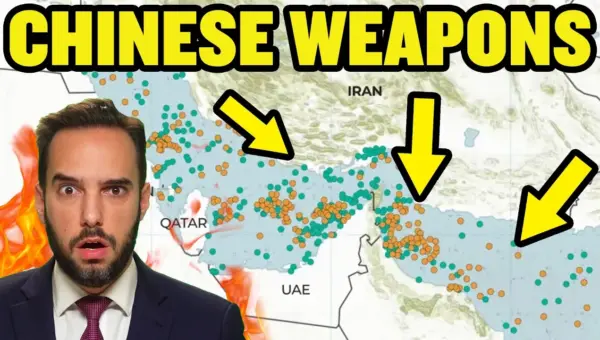
China Aids Iran Amid US Conflict Escalation
Recent intelligence suggests China is secretly supplying Iran with weapons like MANPADS and sharing critical intelligence, a significant escalation from its previous stance. This move, if confirmed, could deepen regional conflict and lead to severe US economic retaliation, while highlighting long-standing strategic ties between Beijing and Tehran.